
AAPC Anesthesia Practice Test Study Guide
$69.00
- Buy to unlock unlimited access to all Quiz questions and Answers in this Quiz.
- After purchase you can print a PDF of the whole quiz at any point. The PDF will contain the questions and the correct answers.
About this Exam
The Certified Anesthesia and Pain Management Coder (CANPC)
certification is a specialized credential designed for medical coders who wish
to validate their expertise in coding for anesthesia and pain management
procedures. This exam, offered by the American Academy of Professional Coders
(AAPC), assesses an individual's proficiency in accurately assigning codes from
the ICD-10-CM, CPT, and HCPCS Level II code sets for these specific medical
services. Obtaining the CANPC certification demonstrates a high level of
competency and commitment to accuracy in a complex and frequently audited area of
medical coding.
Ready to test your knowledge?
Buy Now to Access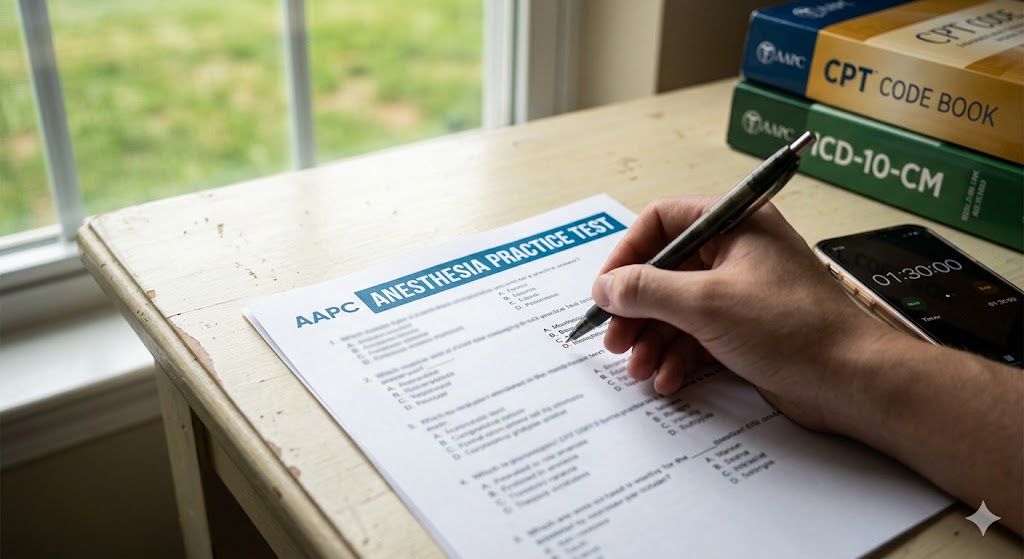
Additional Information
What the Course Entails and Exam Details
The AAPC Anesthesia Practice Test is a comprehensive
evaluation of a candidate's knowledge and practical skills in several key
areas. The exam covers a broad spectrum of topics essential for accurate
anesthesia and pain management coding, including:
- Anesthesia
CPT Coding: Proficiency in selecting the correct CPT codes for various
anesthesia services, including those associated with surgical, obstetric,
and diagnostic procedures. This includes understanding the specific
modifiers used in anesthesia billing.
- Medical
Terminology and Anatomy: A strong foundation in medical terminology
and anatomy, particularly as it relates to the systems often involved in
anesthesia and pain management, such as the musculoskeletal, nervous, and
cardiovascular systems.
- Pain
Management Coding: Understanding the codes for chronic pain management
procedures, including spinal injections, nerve blocks, and other
interventional techniques.
- HCPCS
Level II Coding: Familiarity with the use of HCPCS Level II codes for
reporting supplies, equipment, and other services not covered by the CPT
code set.
- Modifiers:
Expertise in applying the relevant modifiers for anesthesia services, such
as physical status modifiers, concurrency modifiers, and other specific
anesthesia-related modifiers.
- Compliance
and Regulation: Knowledge of relevant healthcare regulations and
compliance issues, particularly as they relate to billing and
reimbursement for anesthesia and pain management services.
What to Expect in the Final Exam
The CANPC exam is a timed, proctored test consisting of
multiple-choice questions. While the exact format can vary, candidates should
generally expect:
- Multiple-Choice
Questions: The majority, if not all, of the questions on the exam will
be in a multiple-choice format.
- Timed
Examination: There is a strict time limit for completing the exam,
requiring strong time management skills from the candidate.
- Proctored
Setting: The exam is typically administered in a proctored
environment, either at an authorized testing center or via an online
proctoring service. This ensures the integrity and security of the testing
process.
- Passing
Score Requirements: To earn the CANPC certification, candidates must
achieve a minimum passing score set by the AAPC. This score is subject to
change, so candidates are advised to verify the current passing
requirement with the AAPC.
- Allowed
Materials: Candidates may be permitted to use certain code books
during the exam, such as the current editions of ICD-10-CM, CPT, and HCPCS
Level II.
How to Study and Exam Centers
Preparation is crucial for success on the CANPC exam. Here
are some actionable study strategies:
- Practice
with Official AAPC Study Materials: Utilize the official study guides,
practice tests, and other resources provided by the AAPC. These materials
are specifically designed to align with the content and format of the
actual exam.
- Review
Relevant CPT and ICD-10-CM Codes: Dedicate significant study time to
reviewing the CPT and ICD-10-CM code sets, paying close attention to the
guidelines for anesthesia and pain management coding.
- Take
Practice Exams: Regularly taking timed practice exams is one of the
most effective ways to prepare. This helps you become familiar with the
types of questions asked and to develop efficient time management
strategies.
- Focus
on Modifiers: Ensure a deep understanding of the unique modifiers used
in anesthesia coding and their proper application.
- Review
Medical Terminology and Anatomy: Brush up on medical terminology and
anatomy, specifically focusing on the areas most relevant to anesthesia
and pain management procedures.
Regarding exam centers and how to take the exam:
The AAPC offers the CANPC exam both in-person at physical
testing centers and online via a live remote proctor. In-person testing is
available at authorized sites, which may include dedicated testing facilities
or approved educational institutions. Candidates can typically schedule their
exam through the AAPC website, where they will find information on available
dates and locations. The online proctoring option allows candidates to take the
exam from a private location, such as their home or office, as long as they
meet the technical and environmental requirements set by the AAPC.
Job Opportunities from the Course
Earning the CANPC certification can open doors to various
specialized medical coding and billing roles. The following are examples of
career paths and job titles for those who hold this credential:
- Specialty
Coder (Anesthesia and Pain Management): A coder dedicated specifically
to assigning codes for anesthesia and pain management services within a
hospital or clinic.
- Anesthesia
Billing Specialist: Focusing on the complete billing and reimbursement
process for anesthesia services, including coding, claim submission, and
denial management.
- Revenue
Cycle Analyst (Specializing in Anesthesia): Analyzing data related to
the revenue cycle for anesthesia practices to identify areas for
improvement and ensure compliance.
- Compliance
Auditor (Specializing in Anesthesia and Pain Management): Conducting
audits of anesthesia coding and billing practices to ensure accuracy and
compliance with healthcare regulations.
- Instructor
or Trainer in Specialized Coding: Teaching others the complexities of
anesthesia and pain management coding in an educational setting or within
a large healthcare organization.
Frequently Asked Questions
Reviews
5.0
Based on 0 reviews
Leave a Review
No reviews yet. Be the first to review!