
AASA Aviation Practice Exam
$69.00
- Buy to unlock unlimited access to all Quiz questions and Answers in this Quiz.
- After purchase you can print a PDF of the whole quiz at any point. The PDF will contain the questions and the correct answers.
About this Exam
This examination serves as a comprehensive assessment tool
designed for individuals aiming to achieve their aviation certification through
the Aviation Association of Southern Africa (AASA) framework. It is tailored
specifically for aspiring pilots, cabin crew members, flight operations
personnel, and ground staff seeking to validate their theoretical knowledge and
practical understanding of aviation principles within the region. The AASA
certification signals to employers that candidates possess the rigorous
training and safety mindset required to excel in the dynamic aviation industry.
Whether you are aiming for a private pilot license (PPL) theory credit or a
commercial certification, this practice exam is a crucial step in your journey
to becoming a qualified aviation professional.
Ready to test your knowledge?
Buy Now to Access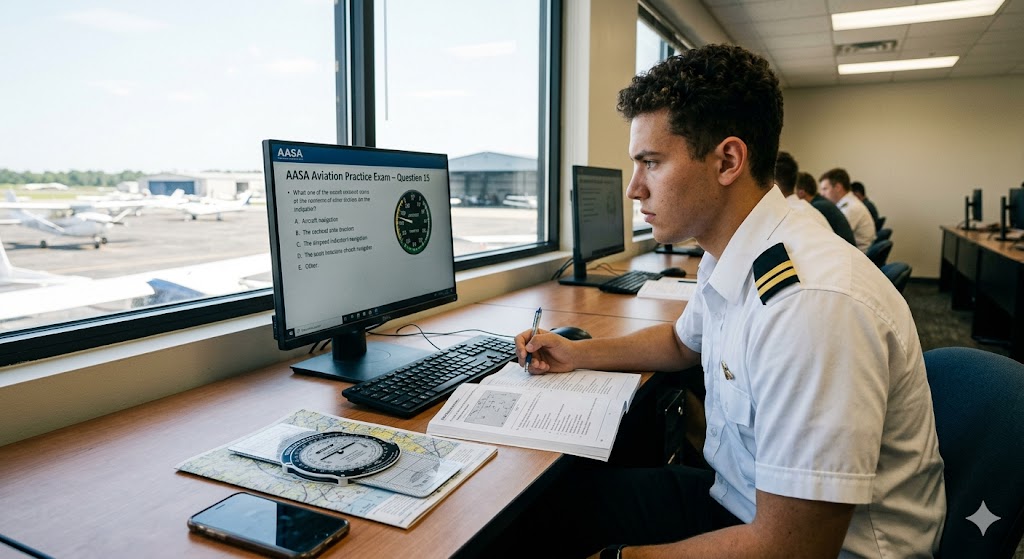
Additional Information
What the Course Entails and Exam Details
The syllabus covering the AASA Aviation exam is extensive,
ensuring all candidates have a robust foundation in essential aviation
concepts. Students preparing for this exam typically undergo coursework that
covers several key domains. These core topics include a thorough understanding
of Air Law and Operational Procedures specific to South African and regional
regulations. Candidates must also master Navigation and Flight Planning,
Meteorology, Aircraft General Knowledge (including principles of flight and
aircraft systems), Human Performance, and Radiotelephony. The overarching goal
of the material is to ensure safety, efficiency, and professionalism across all
facets of flight operations.
What to Expect in the Final Exam
The final exam is a structured evaluation intended to
simulate real-world knowledge application under pressure. While specific
details may vary depending on the particular certification level, candidates
should generally expect a multiple-choice question format for the theoretical
portion. The exam is typically computer-based and must be taken in a controlled
environment. A high level of proficiency is required, with passing scores often
set around 75%. The time limit for the exam is carefully monitored and is
designed to test both accuracy and decision-making speed, reflecting the nature
of aviation operations. Candidates must adhere strictly to all examination
rules, which typically forbid the use of unauthorized external aids or
communication devices during the session.
How to Study and Exam Centers
Success in the AASA Aviation exam requires a dedicated and
structured study approach. Effective strategies involve utilizing official AASA
training manuals and recommended textbooks as your primary resources. Joining
structured ground school courses offered by accredited aviation training
organizations (ATOs) provides invaluable instructor-led guidance and peer
support. Complement your theoretical study by taking multiple practice exams,
which are essential for identifying knowledge gaps, improving time management,
and familiarizing yourself with the questioning style. Utilize tools such as
flight computers and navigational charts during your preparation. The official
exams are conducted at authorized testing centers across South Africa, which
frequently include major ATOs and specialized assessment facilities managed by
the relevant aviation authorities. Candidates typically need to register and
book their exam slots well in advance through these recognized portals.
Job Opportunities from the Course
Achieving certification through AASA opens doors to a wide
array of fulfilling career paths within the African aviation sector and beyond.
Potential job titles and career opportunities include:
- Commercial
Pilot (Charter or Airline)
- Flight
Instructor
- Flight
Operations Officer / Flight Dispatcher
- Cabin
Crew Member
- Air
Traffic Controller
- Airport
Operations Manager
- Aviation
Safety Inspector
- Drone
Pilot (RPAS Operator)
- Aircraft
Maintenance Technician
Frequently Asked Questions
Reviews
5.0
Based on 0 reviews
Leave a Review
No reviews yet. Be the first to review!