
Ace the New Jersey EMD Practice Exam
$69.00
- Buy to unlock unlimited access to all Quiz questions and Answers in this Quiz.
- After purchase you can print a PDF of the whole quiz at any point. The PDF will contain the questions and the correct answers.
About this Exam
The New Jersey Emergency Medical Dispatch (EMD) certification is the key to becoming a critical link between the public and life-saving emergency medical services. This program is specifically designed for public safety telecommunicators, including 911 dispatchers, who are responsible for processing and prioritizing requests for medical assistance. EMDs play a vital role by using a standardized set of medical protocols to provide crucial pre-arrival instructions to callers, ensuring that patient care begins even before an ambulance arrives. If you are a calm under pressure, have excellent communication skills, and are dedicated to making a difference in critical situations, this is an essential step in your career.
Ready to test your knowledge?
Buy Now to Access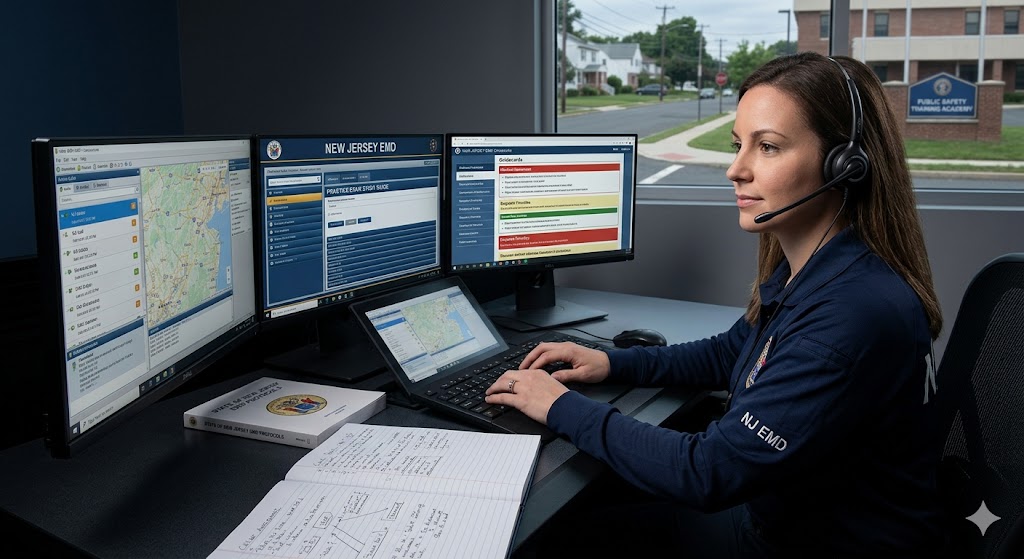
Additional Information
What the Course Entails and Exam Details
The comprehensive NJ EMD course equips you with the knowledge and skills necessary to handle medical emergencies from a communication center. The curriculum, often mandated as a 32-hour program, covers fundamental topics such as the legal responsibilities of an EMD, interpersonal communication techniques for dealing with hysterical or confused callers, and an in-depth understanding of the various anatomical systems of the human body. Crucially, you will become proficient in using the State of New Jersey’s Emergency Medical Dispatch Guidecards. This protocol-based system guides you through the proper sequence of questions to ask, the correct pre-arrival instructions to give for conditions like cardiac arrest or choking, and how to allocate the appropriate resources, such as Basic Life Support (BLS) versus Advanced Life Support (ALS) units. The learning experience is highly interactive, featuring a mix of lectures, discussions, and extensive hands-on role-playing simulations of medical 911 calls. To gain entry into the EMD course and subsequently the final exam, you will typically need to possess a high school diploma or GED, have current Healthcare Provider CPR certification, and have completed basic 911 communications training.
What to Expect in the Final Exam
To achieve your NJ EMD certification, you must successfully navigate a final evaluation that tests both your theoretical knowledge and practical application. The written portion of the exam typically consists of multiple-choice questions designed to assess your understanding of call prioritizing, medical conditions, legal aspects, and pre-arrival instruction protocols. While specific question counts can vary depending on the training entity (such as a public safety academy or an approved private vendor), a common passing threshold is 80%. Many courses also include a practical skills component, where you will be required to demonstrate your proficiency in a simulated environment. This could involve role-playing a medical call and accurately using the NJ EMD Guidecards to provide correct dispatch instructions and resource allocation. Successful completion of both components demonstrates that you possess the necessary competency to begin working as a certified Emergency Medical Dispatcher in New Jersey.
How to Study and Exam Centers
A strategic approach to studying is crucial for success on the NJ EMD final exam. Your primary resource should be the official EMD course manual and study guide provided during your training. Regularly review this material, focusing on key concepts, medical terminology, and legal responsibilities. We recommend dedicating significant time to mastering the State of New Jersey EMD Guidecards; practice navigating through different protocols for medical chief complaints and traumatic incidents until the process becomes second nature. Engage in extensive role-play with classmates or a study partner to hone your communication skills and ability to give clear instructions under a simulated scenario. To take the final exam, you must enroll in a New Jersey state-approved EMD training course. These courses are administered by a variety of organizations, including county public safety academies, community colleges, and authorized private educational institutions. You can find a list of approved training providers through the New Jersey Department of Health or the Office of Emergency Telecommunications Services (OETS). The specific examination date, time, and physical testing location will be set and communicated by your chosen training provider.
Job Opportunities from the Course
Earning your New Jersey EMD certification opens a clear path to a dynamic and impactful career in public safety and emergency services. Your skills will be in high demand at a range of organizations responsible for emergency response throughout the state. Here are some of the career paths and job titles unlocked by this certification:
Emergency Medical Dispatcher (EMD)
Public Safety Telecommunicator (with EMD focus)
911 Call Taker and Dispatcher
EMS/MICU Dispatcher
Transfer Center Dispatcher (managing inter-facility patient transport)
Communication Specialist (within hospital networks)
Public Safety Communications Supervisor (with experience)
Frequently Asked Questions
Reviews
5.0
Based on 0 reviews
Leave a Review
No reviews yet. Be the first to review!