
Ace Your Septic License Practice Exam: A Comprehensive Study Guide
$69.00
- Buy to unlock unlimited access to all Quiz questions and Answers in this Quiz.
- After purchase you can print a PDF of the whole quiz at any point. The PDF will contain the questions and the correct answers.
About this Exam
The Septic License Exam, also referred to as an Onsite Wastewater Treatment System (OWTS) certification or similar by state and local jurisdictions, is designed to evaluate an individual's knowledge of the regulations, science, and practical skills required to design, install, inspect, maintain, or pump septic systems. This certification ensures that industry professionals possess the necessary competence to protect public health and the environment from the risks associated with improper wastewater management. It is designed for individuals seeking to become licensed septic installers, inspectors, pumpers, soil evaluators, and system designers.
Ready to test your knowledge?
Buy Now to Access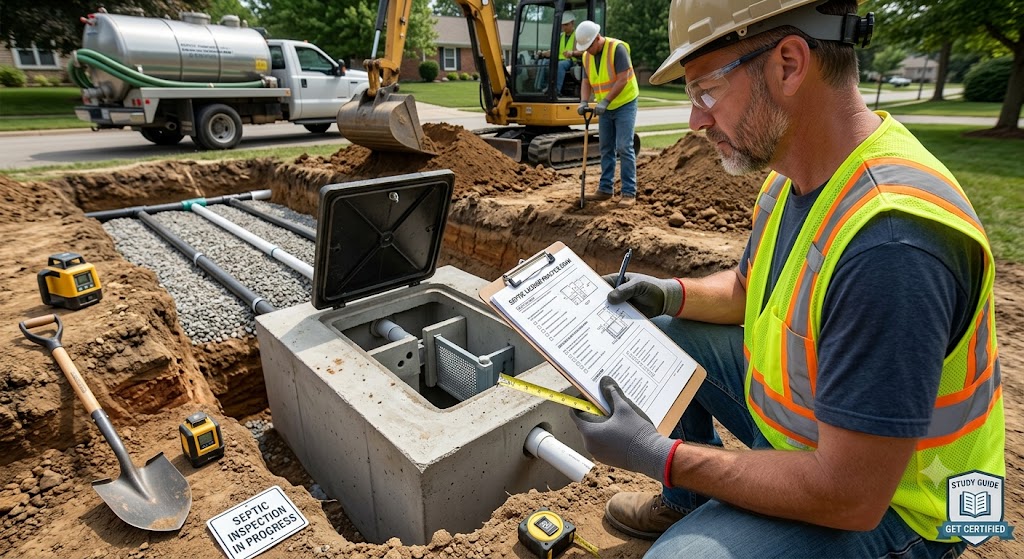
Additional Information
What the Course Entails and Exam Details
While specific requirements vary by location, the core topics covered in septic license exams are generally consistent. The exam will test your understanding across several key domains.
Regulations and Legal Requirements: An understanding of state, county, and local codes, environmental laws, permitting processes, and the legal responsibilities of licensed professionals. This includes knowledge of enforcement actions and ethical standards.
Septic System Components and Function: Comprehensive knowledge of the entire treatment train, including septic tank design, materials, inlets and outlets, baffles, and effluent filters. It also covers the various types of distribution systems (gravity, pressure dosing) and drain field options (trenches, beds, chambers).
Soil Science and Site Evaluation: This is a vital area. You must be able to identify different soil types, evaluate soil structure and permeability, interpret soil logs, and understand how the site's topography, water table, and proximity to wells, buildings, and water bodies affect system design and installation.
Wastewater Treatment Processes: The principles of primary (settling) and secondary treatment (aerobic and anaerobic digestion in the soil), the nitrogen cycle, and the role of microorganisms in breaking down waste.
Construction and Installation Standards: Correct procedures for excavation, backfilling, installing components, ensuring proper slopes, and maintaining appropriate setback distances.
Operation, Maintenance, and Inspection: Protocols for routine inspections, troubleshooting system failures, cleaning and pumping schedules, septage management, and writing accurate inspection reports.
Safety Practices: Understanding the unique hazards of working with wastewater, including confined space entry, gas safety, and disease prevention.
What to Expect in the Final Exam
The final exam is typically a formal, proctored assessment. The format is designed to test your application of knowledge under time pressure.
Format: The primary format is usually a multiple-choice written exam. Some advanced or specialized certifications (such as for soil evaluation) may also include a practical or field-based component where you must perform a site evaluation or interpret a soil profile in person.
Time Limit: Expect a strict time limit, which can range from two to four hours depending on the complexity of the license tier you are seeking.
Passing Score: A minimum passing score is required, typically between 70% and 80%.
Exam Rules: The exam is typically closed-book, although some specific regulations or reference tables may be provided. Electronics and unauthorized reference materials are strictly prohibited. The use of a simple calculator is usually permitted.
How to Study and Exam Centers
Effective preparation requires a multi-faceted approach. Don't rely on one method alone.
Use the Official Study Guide: The single most important resource is the study guide provided by your local or state licensing authority. It is tailored to the exact regulations and construction standards you will be tested on.
Attend a Certified Training Course: Many jurisdictions require or strongly recommend completion of an approved training course. These courses cover the full syllabus and offer invaluable insights from industry experts.
Practice with Example Questions: Seek out practice exams and quiz questions, either from your training provider or reputable online sources. This helps you become familiar with the question style and identifies areas where you need more study.
Gain Field Experience: There is no substitute for practical experience. Working as an apprentice or helper under a licensed professional provides hands-on understanding of system installation and maintenance that is hard to get from books.
Understand Local Codes: Make sure you are focusing your study on the specific regulations of the area where you intend to work, as these can vary significantly.
Exam Centers: The final proctored exam is administered through authorized channels. These include:
Local or County Health Departments: Often the primary location for scheduling and taking the exam.
State Environmental or DEQ Offices: In some states, a central agency manages all environmental licensing.
Authorized Training Providers: Schools or associations that provide the certified courses are often authorized to host the final exam.
Job Opportunities from the Course
A septic license is a necessary credential that unlocks specialized roles in a steady, essential industry. Once certified, you can pursue various career paths.
Licensed Septic System Installer (Basic/Advanced/Level I/II)
Licensed Septic Tank Pumper/Hauler
Certified Onsite System Inspector/Evaluator
Onsite Wastewater Site Evaluator (Soil Evaluator)
Certified Septic System Designer
Environmental Health Specialist/Sanitarian (often within a health department)
Designated Representative (responsible for overseeing multiple installers for a company)
Septic Service Technician
Wastewater Operations and Maintenance (O&M) Specialist
To generate an image based on the content above, I will create a realistic photo of a professional on a job site, highlighting the key components of the knowledge tested in the Septic License Exam.# Ace Your Septic License Practice Exam: A Comprehensive Study Guide
Passing the septic license exam is a critical step for anyone aspiring to work in the onsite wastewater industry. This guide provides a detailed breakdown of what to expect, how to prepare effectively, and the career paths that open up once you are certified.
Frequently Asked Questions
Reviews
5.0
Based on 0 reviews
Leave a Review
No reviews yet. Be the first to review!