
Arnold Air Society Candidacy Practice Test
$69.00
- Buy to unlock unlimited access to all Quiz questions and Answers in this Quiz.
- After purchase you can print a PDF of the whole quiz at any point. The PDF will contain the questions and the correct answers.
About this Exam
The Arnold Air Society Candidacy Practice Test is a crucial milestone for any Air Force ROTC or Air Force Academy cadet seeking admission into the prestigious Arnold Air Society (AAS). AAS is a professional, honorary, service organization advocating the support of aerospace power. Its ranks are comprised of highly motivated cadets who demonstrate outstanding potential for leadership within the United States Air Force. Successfully passing the candidacy program, which culminates in the National Test, is a mark of distinction, proving a cadet’s dedication, discipline, and commitment to the highest standards of the military profession.
Ready to test your knowledge?
Buy Now to Access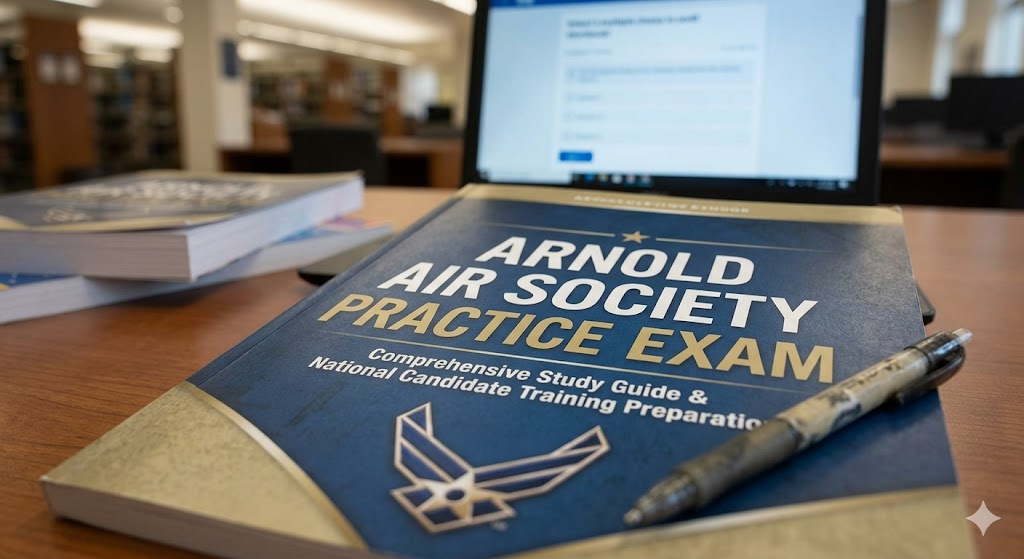
Additional Information
What the Course Entails and Exam Details
The path to AAS membership is a rigorous weeks-long training program known as candidacy. This candidacy program is designed to assess and develop your leadership potential, physical stamina, and, most importantly, your knowledge of the organization you seek to join. The academic portion of the course covers a comprehensive range of topics. You will dive deeply into the official AAS Manual (AASMAN-1), learning the precise rules and procedures that govern the society. The curriculum includes the history and founding of Arnold Air Society, the history of its sister organization, Silver Wings (SW), and a thorough understanding of the current organizational structure from the local squadron level up to National Headquarters. Additionally, you must memorize the current chain of command, the names of key active and honorary leaders, the significance of AAS colors and symbols, and the society's overarching goals and motto.
What to Expect in the Final Exam
While individual squadrons may include local knowledge requirements, the cornerstone of the assessment is the AAS National Test. This exam is known for being challenging and demanding a precise recollection of facts. You should expect a timed exam, often lasting 60 to 90 minutes. The format typically consists of multiple-choice questions, matching sections (often for names and titles), true/false statements, and short fill-in-the-blank questions regarding quotes or mottoes. While requirements can vary slightly by squadron, the common benchmark for passing the National Test is a minimum score of 80 percent. Failing to meet this rigorous academic standard usually results in a candidate being dropped from the training program, emphasizing the importance of dedicated study.
How to Study and Exam Centers
Effective preparation for the Arnold Air Society Candidacy Practice Test requires active learning and repetition. First, treat AASMAN-1 as your primary textbook; memorize key definitions and organizational structures. Because the names of current leadership are crucial, create physical or digital flashcards for all key personnel at the squadron, area, and national levels. Practice mock exams with your fellow candidates, as group study can help identify knowledge gaps. When studying quotes or history, read them aloud to reinforce memory. Regarding exam centers, this test is not administered by third-party vendors like Pearson VUE. It is an internal military organization exam, usually conducted proctored within your specific AFROTC detachment, the Air Force Academy, or an authorized training facility designated by your squadron leadership.
Job Opportunities from the Course
Successful completion of the candidacy process and the subsequent induction as an active member of the Arnold Air Society is not a job certification in itself, but it is a massive differentiator on your military resume. Active membership unlocks premier leadership opportunities that are highly valued by the United States Air Force. This experience translates directly into competitive advantages when applying for specific career paths and leadership roles during your active-duty career. The skills and networking gained from AAS help prepare you for highly sought-after assignments. Some of the career paths that AAS alumni are exceptionally well-prepared for include:
USAF Rated Officer Positions (e.g., Pilot, Combat Systems Officer, Air Battle Manager, Remotely Piloted Aircraft Pilot)
Space Force Officer Roles
USAF Special Warfare Officer
Intelligence Officer
Acquisitions and Engineering Officer
Logistics Readiness Officer
Advanced Leadership roles within the AFROTC Cadet Corps structure
Competitive slots at professional military education schools
The discipline required to pass the candidacy program proves you have the foundation needed to excel in these demanding careers.
Frequently Asked Questions
Reviews
5.0
Based on 0 reviews
Leave a Review
No reviews yet. Be the first to review!