
Asbestos Training Practice Test
$69.00
- Buy to unlock unlimited access to all Quiz questions and Answers in this Quiz.
- After purchase you can print a PDF of the whole quiz at any point. The PDF will contain the questions and the correct answers.
About this Exam
Asbestos certification is a crucial requirement for individuals working in industries where potential exposure to asbestos fibers exists. The presence of asbestos, a dangerous mineral, in older buildings poses significant health risks when disturbed. This certification ensures that workers have the necessary knowledge and skills to identify, handle, and remove asbestos-containing materials safely and legally. This practice exam is designed for professionals across various sectors, including construction, demolition, environmental remediation, and facility maintenance. Whether you are aiming to become an abatement worker, supervisor, inspector, or management planner, mastering the concepts covered in this guide is the first step toward a successful and safe career in asbestos management. By engaging with these practice materials, you will reinforce your understanding of essential safety protocols and regulatory compliance, preparing you for the formal training course and its associated exam.
Ready to test your knowledge?
Buy Now to Access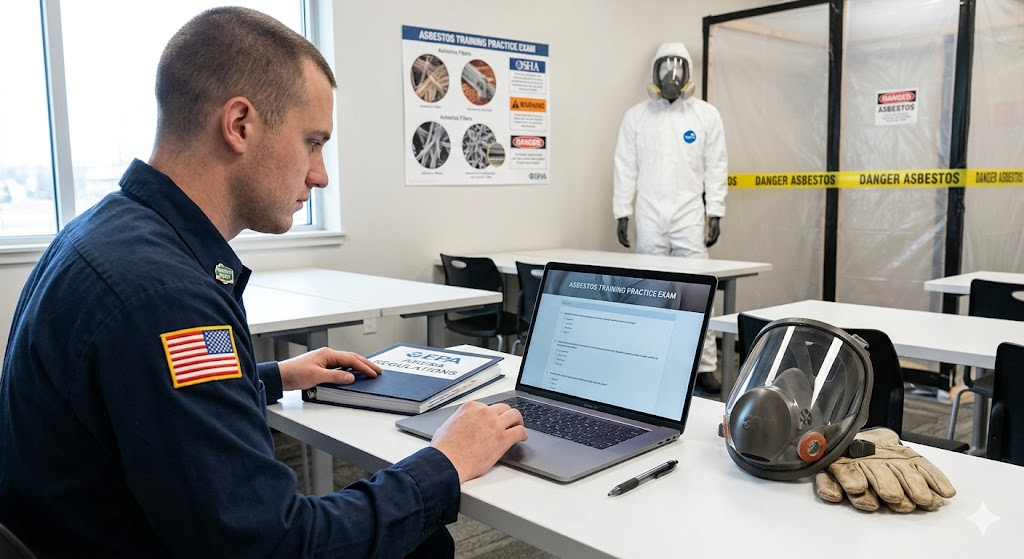
Additional Information
What the Course Entails and Exam Details
Asbestos training courses are comprehensive programs that cover a wide range of topics related to asbestos identification, handling, and safety. While specific details can vary by state and training provider, a typical accredited course will dive deep into key areas. First, you will learn about the history and types of asbestos, its various applications in construction materials, and the severe health risks associated with fiber inhalation, such as asbestosis and mesothelioma. A substantial portion of the course focuses on complex federal and state regulations (e.g., EPA, OSHA) that govern asbestos operations. You will gain a thorough understanding of permissible exposure limits, engineering controls, work practice standards, and safe work practices. The training also heavily covers personal protective equipment (PPE), including the selection, use, and maintenance of respirators and protective clothing. Crucial practical aspects include procedures for building containment, establishing negative pressure, proper wetting techniques, waste disposal, and decontamination. Additionally, advanced courses for supervisors and inspectors cover supervisory duties, air monitoring strategies, and survey methodologies.
What to Expect in the Final Exam
The formal exam associated with your asbestos training course will typically be administered by the accredited training provider immediately following the completion of the instruction. The primary format for the final exam is multiple-choice questions, which evaluate your comprehension of the theoretical knowledge presented throughout the course. There may also be true/false statements or questions that require you to match terms and concepts. In some specialized courses, particularly those involving practical skills like abatement techniques or equipment usage, there might be a hands-on practical assessment components alongside the written test. You will generally be required to achieve a passing score, which is typically around 70% or 80%, to receive your certification. The exam is typically time-limited, often allowing for 1 to 2 hours depending on the number of questions and the course level. Most exams are closed-book, meaning you cannot refer to course materials during the test, and use of electronic devices is strictly prohibited to ensure integrity.
How to Study and Exam Centers
Effective study for the asbestos training exam requires active engagement with the course material. Your primary study resource should be the official training manual and handouts provided by your accredited training institution. During the course, take detailed notes, especially on regulatory standards, safety protocols, and key terms, as these are high-yield areas for the exam. Reviewing these materials repeatedly is essential for long-term retention. Using practice exams, like the one this study guide complements, is one of the most effective strategies; they help you familiarize yourself with the question formats, identify knowledge gaps, and build test-taking confidence. Try to recreate exam conditions by timing yourself when taking practice questions. For the formal exam, you do not typically go to a large general testing center like Pearson VUE. Instead, the exams are usually administered in-person at the end of the required classroom or online training course by the authorized training provider (e.g., environmental training schools, union halls, or specialized training companies). You should always check with your training provider or state regulatory agency to confirm the exact location and requirements for your specific certification exam.
Job Opportunities from the Course
Successfully completing your asbestos training and passing the exam opens doors to numerous important career paths within the environmental and construction sectors. This certification is a fundamental requirement for working on sites involving asbestos disturbance or removal. By obtaining this specialized knowledge and official recognition, you qualify for several key roles. Common job titles that this certification unlocks include:
Asbestos Abatement Worker
Asbestos Abatement Supervisor
Asbestos Inspector
Asbestos Management Planner
Air Monitoring Technician
Environmental Health and Safety Officer
Demolition and Remediation Project Manager
These roles exist in various settings, including general construction firms, specialized environmental remediation companies, consulting agencies, and government departments at all levels. Furthermore, holding this certification often leads to increased job security and potentially higher earning potential within these vital and regulated fields.
Frequently Asked Questions
Reviews
5.0
Based on 0 reviews
Leave a Review
No reviews yet. Be the first to review!