
Asepsis and Infection Control Practice Test
$69.00
- Buy to unlock unlimited access to all Quiz questions and Answers in this Quiz.
- After purchase you can print a PDF of the whole quiz at any point. The PDF will contain the questions and the correct answers.
About this Exam
This comprehensive study guide and practice exam are designed for healthcare professionals, students, and practitioners preparing for critical certifications involving infection prevention. This tool assesses your mastery of crucial aseptic techniques and principles needed to maintain sterile environments and prevent contamination. Mastering asepsis is vital for ensuring patient safety and for successful medical and surgical practice. This practice exam allows learners to evaluate their understanding, identify knowledge gaps, and build confidence before challenging the actual certification.
Ready to test your knowledge?
Buy Now to Access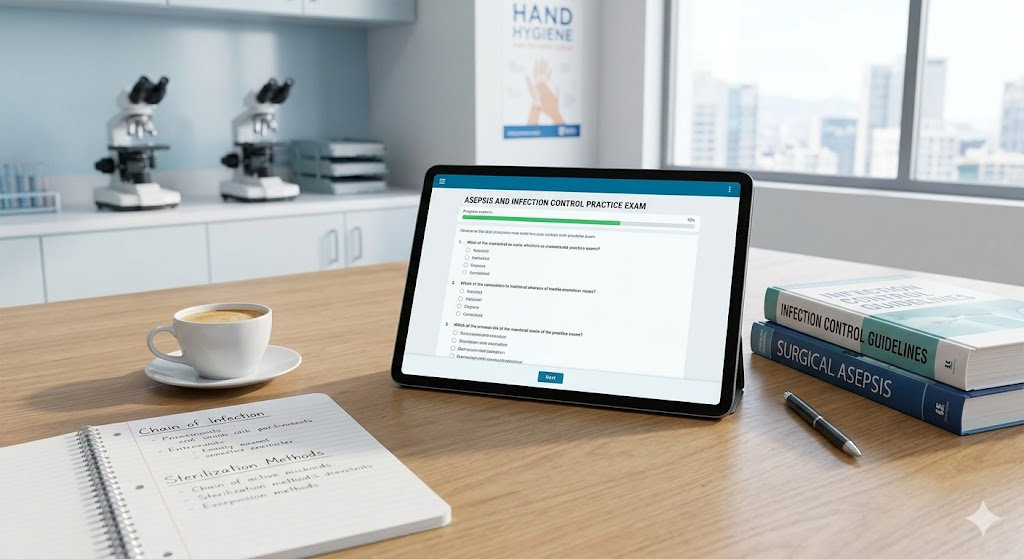
Additional Information
What the Course Entails and Exam Details
The practice test covers the critical principles and practices of both medical and surgical asepsis. Learners will be tested on foundational concepts including sterilization methods, disinfection protocols, and universal precautions. Key topics include rigorous hand hygiene, proper selection and use of personal protective equipment (PPE), correct handling of infectious waste, and the detailed procedures for creating and maintaining sterile fields. It evaluates understanding of the chain of infection principles and evidence-based practices for contamination prevention in diverse clinical settings.
What to Expect in the Final Exam
The final certification exam is typically a computer-based test composed primarily of multiple-choice questions. Depending on the specific certifying body, candidates generally have 90 to 120 minutes to complete approximately 50 to 100 questions. A passing score usually ranges from 70% to 80%, depending on the established standard. Some advanced exams may also include interactive or scenario-based questions that require critical thinking and the application of principles to real-world clinical situations. Testing environments are controlled, and valid identification is always required.
How to Study and Exam Centers
Effective preparation involves a strategic review of current textbooks, medical journals, and the latest CDC guidelines on infection control. Creating detailed flashcards for key terminology, sterilization techniques, and procedural steps is highly recommended for reinforcement. Active recall is a crucial component of learning; utilize multiple reputable practice tests like this one to identify weak areas and track your progress. Engaging in group study sessions can provide different perspectives on complex infection control scenarios. For the actual exam, candidates can schedule appointments at authorized testing centers such as Pearson VUE, which are located worldwide. Many organizations also offer convenient online proctored exams, allowing you to take the test from your home or workplace. Always check the specific certifying body for information regarding their accredited local testing locations or virtual options.
Job Opportunities from the Course
Achieving this certification unlocks numerous rewarding career paths across the healthcare industry, where professionals with proven knowledge in infection control are highly valued and sought after. Potential job opportunities include roles such as Infection Preventionist and Sterile Processing Technician. Key positions that heavily rely on these essential skills include Hospital Epidemiologist, Medical Surgical Nurse, and various roles within surgical teams, such as Surgical Technologists. Additional opportunities are available for Dental Assistants, clinical lab technicians, and healthcare quality assurance administrators.
Frequently Asked Questions
Reviews
5.0
Based on 0 reviews
Leave a Review
No reviews yet. Be the first to review!