
Assessment and Qualifications Alliance (AQA) GCSE Food Technology Practice Exam
$69.00
- Buy to unlock unlimited access to all Quiz questions and Answers in this Quiz.
- After purchase you can print a PDF of the whole quiz at any point. The PDF will contain the questions and the correct answers.
About this Exam
The AQA GCSE Food Technology qualification is an engaging course designed for students interested in exploring the world of food science, nutrition, and preparation. This practice exam is specifically created to help students preparing for their final assessment build confidence and assess their understanding of the key concepts and skills required. The qualification is ideal for students who enjoy cooking and want to develop a deeper knowledge of the principles behind food choice and nutrition.
Ready to test your knowledge?
Buy Now to Access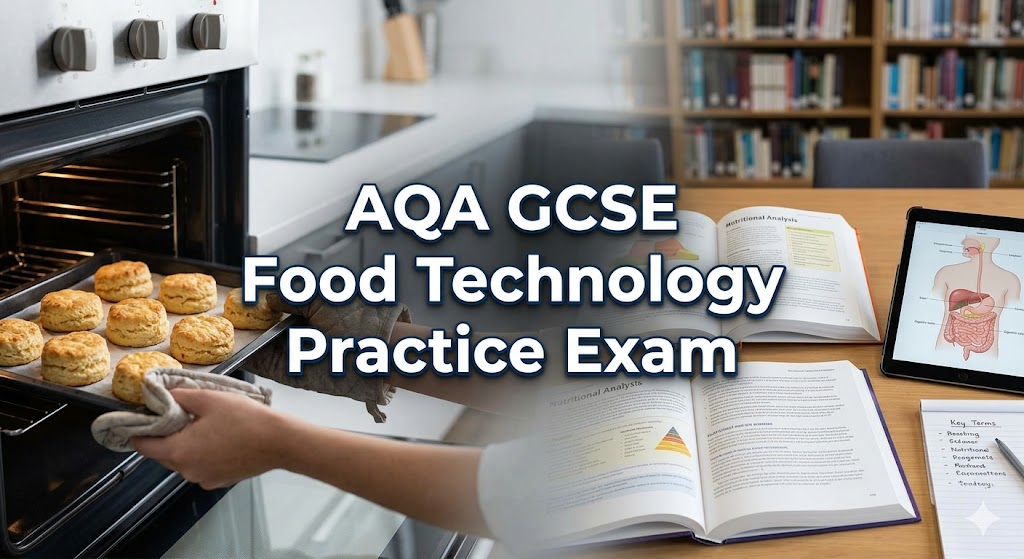
Additional Information
What the Course Entails and Exam Details
This comprehensive course covers a wide range of topics that combine the theory of food science with practical culinary skills. Students will explore:
Food, Nutrition, and Health: Learning about the major nutrients, their functions in the body, and the impact of diet on health and well-being.
Food Science: Understanding the physical and chemical properties of food ingredients and how they change during cooking.
Food Safety: Applying principles of hygiene and safety when preparing, cooking, and storing food to prevent illness.
Food Choice: Exploring the various factors that influence what people eat, including culture, ethics, and sustainability.
Food Provenance: Understanding where food comes from, how it is produced, and the environmental impact of food supply chains.
The course encourages critical thinking and creativity, allowing students to develop both theoretical knowledge and practical skills that are essential for everyday life and future careers.
What to Expect in the Final Exam
The final AQA GCSE Food Technology exam is a single written paper that assesses knowledge across all key subject areas.
Format: The paper typically includes a mix of question styles, such as short-answer questions, multiple-choice options, and structured, longer-answer questions.
Time Limit: Students generally have 1 hour and 45 minutes to complete the written paper.
Weighting: This written exam makes up 50% of the total GCSE grade, with the remaining 50?termined by a non-examination assessment (NEA) task.
Passing Score Requirements: Students receive a grade based on their performance in both the written exam and the NEA, with grades ranging from 9 (highest) to 1 (lowest).
Students are expected to demonstrate their understanding of food science, nutrition, and food preparation principles throughout the exam.
How to Study and Exam Centers
Successfully preparing for the AQA GCSE Food Technology exam requires a combination of theory and practice. Here are some actionable strategies:
Review Class Notes and Textbooks: Ensure you are familiar with the core syllabus content by regularly reviewing your coursework and relevant textbooks.
Practice Past Papers: Utilizing past exam papers is an excellent way to familiarize yourself with the question formats and time constraints.
Develop Revision Cards: Create summary cards for key definitions, nutritional information, and scientific principles related to food science.
Practice Practical Skills: Apply your theoretical knowledge by cooking recipes that demonstrate specific concepts (e.g., aeration or caramelization).
Form Study Groups: Collaborating with classmates can help reinforce learning and provide new perspectives on difficult topics.
The final examination is typically sat at authorized schools or colleges registered as exam centers with AQA, as part of the main GCSE examination series in the UK.
Job Opportunities from the Course
A qualification in AQA GCSE Food Technology opens up various career pathways and further educational opportunities. It is especially beneficial for students interested in continuing their studies at A-Level or in related vocational courses. Specific career paths this qualification can unlock include:
Chef or Sous Chef
Food Scientist or Product Developer
Nutritionist or Dietitian Assistant
Food Stylist or Photographer
Quality Control Technician in food production
Hospitality Manager or Catering Coordinator
Health and Safety Officer in the food industry
This course provides a strong foundation for any career in the food and beverage sector.
Frequently Asked Questions
Reviews
5.0
Based on 0 reviews
Leave a Review
No reviews yet. Be the first to review!