
Aviation Computer Based Training (CBT) Practice
$69.00
- Buy to unlock unlimited access to all Quiz questions and Answers in this Quiz.
- After purchase you can print a PDF of the whole quiz at any point. The PDF will contain the questions and the correct answers.
About this Exam
The Aviation Computer Based Training (CBT) Practice is an essential digital resource designed for aspiring aviation professionals preparing for their official licensing examinations. Whether you are training to become a commercial pilot, an aircraft maintenance technician, a flight dispatcher, or an air traffic controller, mastering technical knowledge is non-negotiable for safety and regulatory compliance.
CBT practice modules simulate the actual learning interface and testing environments mandated by regulatory bodies like the FAA (Federal Aviation Administration) in the United States, EASA (European Union Aviation Safety Agency), or local civil aviation authorities. This preparation tool is specifically designed to transition learners from theoretical knowledge gained in ground school or technical classes to the specific format and rigor required to pass the definitive computerized certification exams.
Ready to test your knowledge?
Buy Now to Access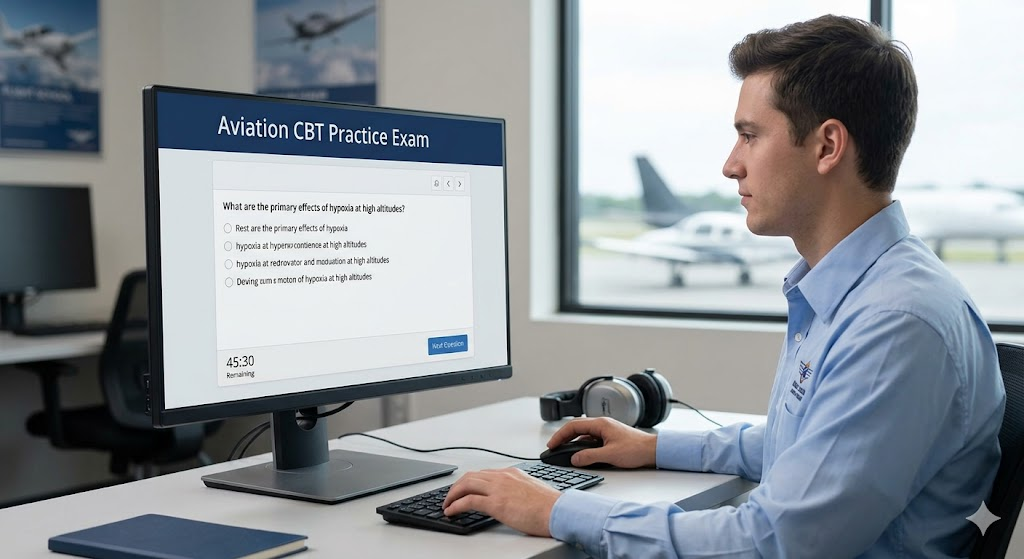
Additional Information
What the Course Entails and Exam Details
This comprehensive practice tool covers the entire spectrum of knowledge required by specific aviation career paths, organized logically to mirror official syllabuses. For flight crew members (pilots), the CBT modules entail deep dives into aerodynamics, aircraft systems (powerplants, electrical, hydraulic), meteorology, air law, flight planning, navigation, human performance, and operational procedures.
For maintenance personnel, the course focuses on topics such as aviation physics, basic electricity, materials and hardware, maintenance practices, and specific airframe or powerplant regulations. The tool provides an exhaustive test bank of hundreds or thousands of sample questions, closely modeled after the type, complexity, and wording of the actual regulatory examination. Detailed explanations are often provided for both correct and incorrect answers, transforming the practice test into an active learning experience rather than mere rote memorization.
What to Expect in the Final Exam
While the exact structure depends heavily on the specific certification you are seeking (e.g., Private Pilot Knowledge Test vs. Airline Transport Pilot Multi-Engine Knowledge Test), aviation CBTs generally share a common format. The actual regulatory exam is a formal, proctored test administered strictly on a dedicated computer terminal, and the practice CBT prepares you for this user interface.
Expect exclusively objective questions, usually multiple-choice, though some sophisticated exams are beginning to include interactive drag-and-drop or hot-spot identifiers on diagrams. Time limits are strictly enforced on the real exam, and they can vary from 60 minutes for shorter technical certifications to over four hours for comprehensive pilot ground exams. The practice CBT usually offers two modes: a study mode (where you see immediate feedback) and a simulation mode, which replicates the precise time constraints, number of questions, and passing score of the live test environment. Passing scores are generally high, typically requiring a minimum of 70% to 80%, depending on the complexity of the subject and the regulatory authority.
How to Study and Exam Centers
Effective preparation using Aviation CBT Practice requires a disciplined and analytical approach. Do not merely memorize answers; use the review features to understand the underlying aeronautical or technical concepts, as regulatory bodies often rewrite questions to prevent rote learning.
Start by taking topic-specific quizzes to identify your weak areas, then use the full-length, timed exam simulations to build the stamina required for the real testing day. Analyze your score reports consistently to track your progress and ensure you are achieving passing grades reliably before scheduling the actual examination.
When you are ready for the final certification, you must register to take the test at an authorized testing location; practice CBTs can be accessed online, but the actual license exam requires a secure environment. In the United States, exams are administered at FAA-authorized Knowledge Testing Centers (KTCs), often located at airports, flight schools, or Pearson VUE centers, and international students should consult their local Civil Aviation Authority (CAA) for specific authorized centers.
Job Opportunities from the Course
Passing the official exams that this Aviation CBT prepares you for is the critical gateway to a successful career in the aerospace industry. Successfully navigating these computer-based tests leads directly to certifications that unlock the following specialized job roles:
Commercial Airline Pilot (First Officer or Captain)
Corporate or Charter Pilot
Flight Instructor (CFI, CFII)
Certified Aircraft Maintenance Technician (A&P Mechanic)
Licensed Flight Dispatcher / Flight Operations Officer
Air Traffic Controller (ATC)
Avionics Technician
UAV (Drone) Operator / Remote Pilot (for advanced certifications)
This structured approach ensures you are not just preparing to pass a test, but mastering the critical knowledge necessary for a safe and proficient career in aviation.
Frequently Asked Questions
Reviews
5.0
Based on 0 reviews
Leave a Review
No reviews yet. Be the first to review!