
Aviation Human Factors Practice Test
$69.00
- Buy to unlock unlimited access to all Quiz questions and Answers in this Quiz.
- After purchase you can print a PDF of the whole quiz at any point. The PDF will contain the questions and the correct answers.
About this Exam
The Aviation Human Factors certification and exam are designed for aviation professionals, including pilots, air traffic controllers, maintenance technicians, and cabin crew, who want to enhance their understanding of the human element in aviation safety.
This course explores the psychological and physiological factors that affect human performance in aviation environments, aiming to reduce errors and improve overall safety.
Ready to test your knowledge?
Buy Now to Access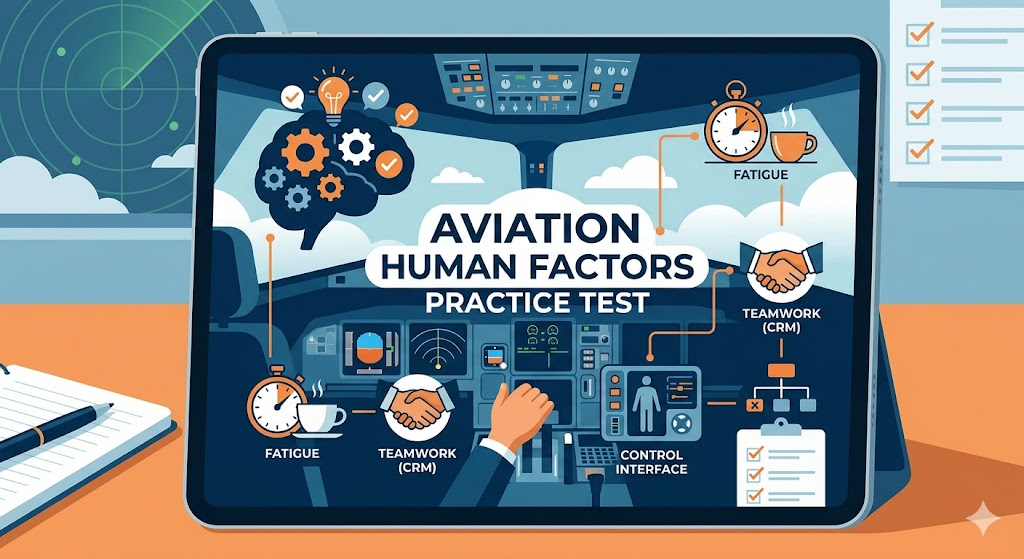
Additional Information
What the Course Entails and Exam Details
The course covers a wide range of topics essential for aviation safety, including:
Human Performance and Limitations: Understanding the cognitive and physical capabilities and limitations of humans.
Aviation Psychology: Examining psychological factors such as perception, memory, and decision-making in aviation contexts.
Fatigue Management: Identifying the signs of fatigue and implementing strategies to mitigate its effects.
Stress Management: Developing coping mechanisms for dealing with stress in high-pressure aviation situations.
Crew Resource Management (CRM): Enhancing communication, teamwork, and leadership skills within aviation crews.
Human Error: Analyzing the causes of human error and developing strategies to prevent them.
Threat and Error Management (TEM): Identifying potential threats and errors in aviation operations and developing strategies to manage them.
The exam typically consists of multiple-choice questions designed to test your knowledge and application of these concepts. The passing score is usually set by the regulatory authority or training provider.
What to Expect in the Final Exam
The final exam for the Aviation Human Factors course is usually a multiple-choice test. The number of questions and the time limit may vary depending on the regulatory authority or training provider.
You can expect questions that test your understanding of the core concepts, your ability to apply them to real-world aviation scenarios, and your knowledge of relevant regulations and standards.
How to Study and Exam Centers
To prepare for the Aviation Human Factors exam, you can:
Take a Certified Course: Enrolling in a certified training course is the best way to ensure you cover all the necessary topics.
Use Study Materials: Textbooks, online resources, and practice tests can help you reinforce your knowledge.
Discuss with Peers: Sharing experiences and insights with other aviation professionals can be highly beneficial.
Exam centers for Aviation Human Factors are typically located at:
Aviation Training Organizations (ATO): Many ATOs offer both the training and the exam.
Regulatory Authorities: Some regulatory authorities may have their own testing centers.
Online Testing Platforms: In some cases, the exam may be available online through approved platforms.
Job Opportunities from the Course
Completing the Aviation Human Factors course and passing the exam can open up a range of career opportunities in the aviation industry, including:
Aviation Safety Officer
Human Factors Specialist
Crew Resource Management (CRM) Instructor
Aviation Accident Investigator
Aviation Training Manager
Air Traffic Controller
Pilot
Cabin Crew Member
This certification demonstrates your commitment to aviation safety and your ability to apply human factors principles to improve operational efficiency and reduce the risk of accidents.
Frequently Asked Questions
Reviews
5.0
Based on 0 reviews
Leave a Review
No reviews yet. Be the first to review!