
Aviation Structural Mechanic Module 3 Practice Exam
$69.00
- Buy to unlock unlimited access to all Quiz questions and Answers in this Quiz.
- After purchase you can print a PDF of the whole quiz at any point. The PDF will contain the questions and the correct answers.
About this Exam
The Aviation Structural Mechanic Module 3 exam is a crucial step for aspiring aircraft maintenance professionals seeking to specialize in the structures of fixed and rotary-wing aircraft. This certification is primarily designed for individuals pursuing a career as an Aviation Structural Mechanic (AM) in the Navy, Marine Corps, or related civilian aviation maintenance sectors. It validates the foundational knowledge and practical skills required to maintain, repair, and inspect aircraft structures, ensuring airworthiness and safety. If you aim to work with composites, sheet metal, and advanced materials that form the backbone of modern aviation, mastering this module is essential for your career progression.
Ready to test your knowledge?
Buy Now to Access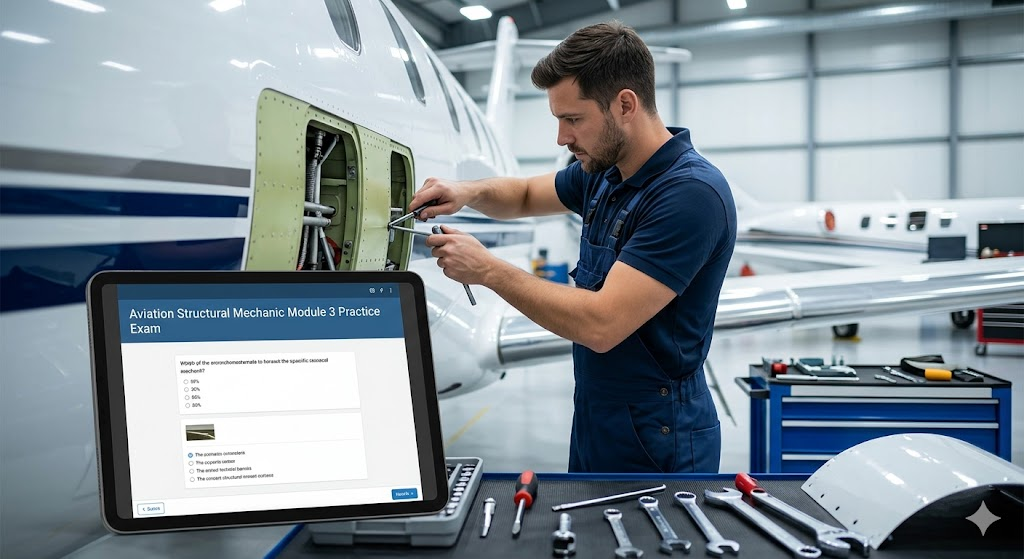
Additional Information
What the Course Entails and Exam Details
The curriculum supporting this module is comprehensive, focusing intensely on advanced structural repair and fabrication techniques. Students can expect a detailed dive into several core areas:
Advanced Composite Materials: This includes in-depth knowledge of fiberglass, carbon fiber, and Kevlar, as well as repair procedures specific to composite structures, such as vacuum bagging and hot bond repairs.
Advanced Sheet Metal Fabrication: Beyond basics, this area covers complex repairs, large-area patchwork, advanced layout techniques, and the use of specialized tools for riveting and forming high-strength alloys.
Structural Repair Manuals (SRMs): Interpreting and accurately applying the data found in SRMs is critical. This section tests your ability to navigate these manuals to find correct repair schemes for complex damage.
Nondestructive Inspection (NDI): Understanding the different methods of NDI (such as dye penetrant, magnetic particle, and eddy current) and how they are applied to assess structural integrity without damaging the component.
Hydraulic and Pneumatic System Integration: Focusing on the structural interfaces of these systems, including bulkheads and mounting structures for critical components.
The exam itself is structured as a closed-book, multiple-choice assessment, designed to rigorously test both the practical application and theoretical underpinning of these critical skills.
What to Expect in the Final Exam
The final Aviation Structural Mechanic Module 3 Exam is a rigorous test of your proficiency. The format is a computer-based, multiple-choice exam consisting of approximately 60 to 80 questions. You will have a strictly enforced time limit, typically around 90 to 120 minutes, which demands quick recall and efficient decision-making.
A minimum passing score is generally 70%, although specific program requirements can vary slightly. The questions are designed to move beyond simple memorization, often presenting scenarios or repair challenges where you must apply the correct procedure according to industry standards or military specifications. There are no practical, hands-on components in this particular module's final written exam, but success here is a prerequisite for moving on to subsequent practical evaluations in your training pipeline. No outside materials or reference manuals are permitted during the testing session.
How to Study and Exam Centers
Effective preparation for this exam requires a blend of focused study and practical application. We recommend a structured approach:
Deep Dive into the Curriculum: Utilize the primary study materials, including the NavEdTra (Naval Education and Training Command) manuals and technical publications relevant to the module. Create concise summaries of key repair processes and material properties.
Use Practice Exams: Maximize your readiness by taking simulated practice tests. This is invaluable for identifying weak knowledge areas and acclimating to the time constraints and question format you will face on the actual test day.
Hands-on Application: Whenever possible, reinforce your theoretical learning in a controlled workshop environment. Seeing the difference between a scarf repair and a step-cut repair firsthand will make the written concepts far more memorable.
Form Study Groups: Collaborating with peers allows for clarifying complex topics and sharing different perspectives on repair techniques.
Regarding test centers, for active-duty military personnel, this exam is typically administered through authorized Navy College Offices or specific military training commands. For civilian candidates or those in affiliated programs, authorized testing centers, such as Pearson VUE or specialized aviation maintenance schools, may provide access to the exam. Be sure to coordinate scheduling with your program coordinator or command's educational services officer.
Job Opportunities from the Course
Successfully passing this module and achieving the broader certification opens direct pathways to critical roles within the aviation industry. Graduate structural mechanics are in high demand across multiple sectors. Potential job titles and career paths include:
Aviation Structural Mechanic (AM) - (US Navy/Marine Corps)
Aircraft Structural Technician
Composite Repair Specialist
Airframe and Powerplant (A&P) Mechanic (with relevant structural focus)
Sheet Metal Fabricator (Aviation)
Aviation Maintenance Technician (AMT)
Nondestructive Testing (NDT) Trainee
Repair Station Technician
This certification serves as a powerful validation of your specialized skill set, signaling to employers that you are prepared to handle the complex structural demands of modern aircraft.
Frequently Asked Questions
Reviews
5.0
Based on 0 reviews
Leave a Review
No reviews yet. Be the first to review!