
Aviation Structural Mechanic Second Class (AM2) Advancement Practice Exam
$69.00
- Buy to unlock unlimited access to all Quiz questions and Answers in this Quiz.
- After purchase you can print a PDF of the whole quiz at any point. The PDF will contain the questions and the correct answers.
About this Exam
The Aviation Structural Mechanic Second Class (AM2) Advancement Practice Exam is a critical stepping stone for U.S. Navy Sailors in the Aviation Structural Mechanic (AM) rating. Specifically designed for Petty Officers Third Class (E-4) who are eligible for advancement, this exam is the formal assessment of the advanced technical knowledge and professional skills required to operate at the E-5 level. Achieving AM2 status signifies that a Sailor has mastered complex aircraft structural maintenance, hydraulic systems, and is ready for increased leadership responsibilities within their work center. This guide provides a comprehensive path to conquering this competitive exam and propelling your career forward in naval aviation.
Ready to test your knowledge?
Buy Now to Access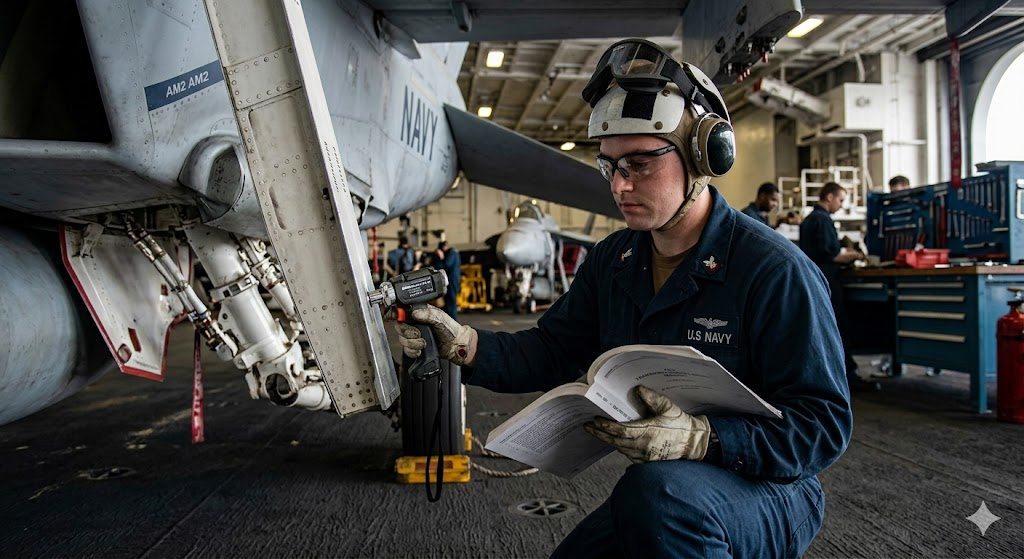
Additional Information
What the Course Entails and Exam Details
Preparation for the AM2 advancement exam is not a single course, but a compilation of professional development and mastered on-the-job training, culminating in a comprehensive technical assessment. The core topics covered are derived from official Navy occupational standards and encompass intermediate and advanced aircraft maintenance. Candidates must demonstrate proficiency in maintaining aircraft primary and auxiliary structures, including the fuselage, wings, and flight control surfaces. Significant emphasis is placed on the troubleshooting, repair, and component replacement of hydraulic and pneumatic power systems, actuating mechanisms, and landing gear. The syllabus also requires a thorough understanding of metallic and non-metallic repairs, composite materials, corrosion control programs, aviation safety procedures, maintenance administration (such as the NAMP), and Quality Assurance (QA) principles at the work center level.
What to Expect in the Final Exam
The final examination is a rigorously controlled, proctored event administered twice a year as part of the Navy-Wide Advancement Exam (NWAE) cycle, typically in March and September. The exam is a comprehensive multiple-choice test, usually containing between 175 and 200 questions. These questions are strictly based on the references listed in the official AM2 Bibliography (BIBs), which is updated for every cycle. Sailors are given a specific time limit, commonly around three hours, to complete the exam. It is vital to understand that this is not a pass/fail test with a set score requirement. Instead, your raw score is converted into a standard score that is combined with other factors, such as performance evaluations (PMA) and time-in-rate, to calculate your Final Multiple Score (FMS). Advancement is then determined competitively, with the highest FMS scorers within the AM rating filling the available quotas.
How to Study and Exam Centers
Effective preparation for the AM2 exam requires a disciplined, strategic approach. Your foundational study material must be the official Navy Advancement Bibliographies and the associated "Topics and Subtopics," which can be accessed via Navy COOL. You should divide this material into manageable sections and create a structured study schedule. Utilize active learning techniques such as creating flashcards for key terms and procedures, engaging in study groups with other eligible peers, and taking reputable online practice exams from services like NavyBMR or other military advancement resources to simulate the test environment. Seek mentorship from senior AMs and Chiefs, as their real-world experience can clarify complex systems and maintenance practices. The AM2 exam is not taken at public testing centers like Pearson VUE or via general online portals. It is administered on-site at your command or a designated physical testing facility within your Naval installation on the prescribed Navy-wide testing dates, managed by your Educational Services Officer (ESO).
Job Opportunities from the Course
Advancing to Aviation Structural Mechanic Second Class opens doors to significantly more challenging and rewarding career paths within naval aviation, preparing you for future leadership. Earning the AM2 rate is a prerequisite for subsequent advancement to AM1, Chief Petty Officer, and potential commissioning programs. Some of the specific job titles and critical roles this advancement unlocks include:
Aviation Structural Mechanic Second Class (E-5)
Work Center Supervisor
Collateral Duty Inspector (CDI)
Quality Assurance Inspector
Maintenance Control Petty Officer
Production Control Petty Officer
Maintenance Team Leader
Technical Instructor
Non-Destructive Inspection (NDI) Technician (with additional qualification)
Frequently Asked Questions
Reviews
5.0
Based on 0 reviews
Leave a Review
No reviews yet. Be the first to review!