
Ayurveda Certification Practice Exam
$69.00
- Buy to unlock unlimited access to all Quiz questions and Answers in this Quiz.
- After purchase you can print a PDF of the whole quiz at any point. The PDF will contain the questions and the correct answers.
About this Exam
The Ayurveda Certification validates an individual's comprehensive knowledge of traditional Indian medicine, covering its foundational philosophy, diagnostic methods, and therapeutic applications.
This professional certification is designed for aspiring Ayurvedic practitioners, holistic health coaches, wellness consultants, and existing healthcare professionals seeking to integrate Vedic wisdom into their practice.
Successfully passing the Ayurveda exam demonstrates a standardized level of competency required to advise clients on diet, lifestyle, and herbal remedies according to their unique constitution.
For students dedicated to mastering this ancient science, utilizing a targeted practice exam is an essential step in identifying knowledge gaps and building the confidence necessary to succeed on test day.
Ready to test your knowledge?
Buy Now to Access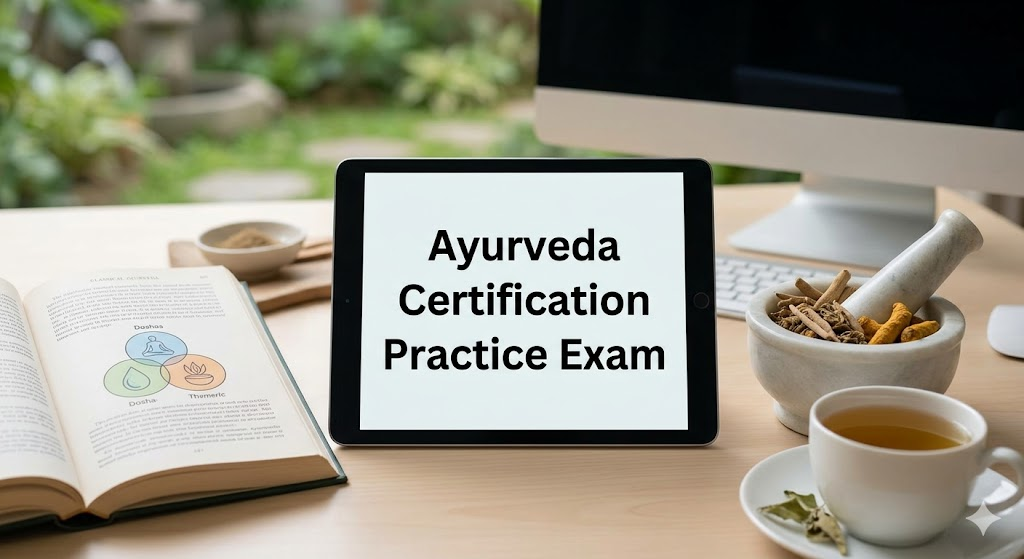
Additional Information
What the Course Entails and Exam Details
Preparing for the certification requires a deep dive into the theoretical and practical aspects of Ayurvedic medicine, often spanning hundreds of hours of study.
Candidates must demonstrate a thorough understanding of the foundational concepts of the five elements (Mahabhutas), the three Gunas, and the essential concept of Prakriti (individual constitution) versus Vikriti (current imbalance).
The curriculum heavily focuses on the mechanics of the three Doshas—Vata, Pitta, and Kapha—including their sub-doshas, locations in the body, and functions.
Beyond philosophy, the exam covers clinical methodologies, such as Nidana (diagnosis) using Ayurvedic methods like pulse and tongue analysis, and Dhatu (tissue) assessment.
Furthermore, students are tested on therapeutic principles, including Dravya Guna (herbal pharmacology), Ahara (dietary therapy), Vihara (lifestyle management), and the foundational aspects of Panchakarma (detoxification).
What to Expect in the Final Exam
While specific formats vary slightly by credentialing bodies (such as NAMA or independent schools), standard Ayurveda certification exams are rigorous and timed assessments.
The exam usually consists of 100 to 150 multiple-choice questions designed to test both factual recall and the clinical application of Ayurvedic principles through case studies.
You will typically have between two and four hours to complete the test, requiring efficient time management.
A passing score generally falls within the 70% to 75% range, though you must verify the exact requirement with your specific certifying board.
The exam environment is strictly proctored, whether taken in-person or online, to ensure academic integrity.
How to Study and Exam Centers
Effective preparation for the Ayurveda exam combines textbook review with practical application and the consistent use of practice tests.
Start by revisiting your foundational notes and standard Ayurvedic texts, focusing heavily on Sanskrit terminology and the specific qualities (Gurvadi Gunas) used for treatment planning.
Create flashcards for herbs, their energetic properties (Rasa, Virya, Vipaka), and their indications for various doshic imbalances.
Dedicate significant time to taking practice exams; this not only helps you get used to the wording of questions but also trains you to manage your time effectively under exam pressure.
Review the rationale behind every question you get wrong in practice to ensure you understand the underlying concepts fully.
Where to Take the Exam
The final certification exam can usually be taken in one of two ways depending on the issuing organization.
Many boards utilize major, authorized physical testing centers, such as Pearson VUE, which offer secure locations worldwide.
Alternatively, many organizations now offer live-proctored online exams that you can take from home, provided you meet strict technical and environmental requirements.
Ensure you check your specific certifying body's website for the exact procedure to register and schedule your test slot well in advance.
Job Opportunities from the Course
Obtaining an Ayurveda certification opens a wide array of career opportunities in the burgeoning field of holistic and integrative wellness.
A clear and encouraging list of job titles and career paths available after certification includes:
Ayurvedic Health Counselor
Clinical Ayurvedic Practitioner
Wellness Consultant in Integrative Medicine Clinics
Ayurvedic Spa Manager or Therapist
Holistic Nutritionist specialized in Ayurvedic Dietetics
Ayurvedic Herbal Supplement Representative
Wellness Content Writer or Educator
Owner of a Private Ayurveda Practice
Frequently Asked Questions
Reviews
5.0
Based on 0 reviews
Leave a Review
No reviews yet. Be the first to review!