
Baby-Friendly Hospital Initiative (BFHI) and Breastfeeding Practice Test
$69.00
- Buy to unlock unlimited access to all Quiz questions and Answers in this Quiz.
- After purchase you can print a PDF of the whole quiz at any point. The PDF will contain the questions and the correct answers.
About this Exam
The Baby-Friendly Hospital Initiative (BFHI) is a global effort launched by the World Health Organization (WHO) and UNICEF to implement practices that protect, promote, and support breastfeeding.
This specialized practice test is designed for healthcare professionals—including nurses, midwives, lactation consultants, and pediatricians—who are preparing for official BFHI competency evaluations or seeking certification in breastfeeding support.
It verifies that a practitioner possesses the essential knowledge and clinical skills required to deliver care aligned with the 'Ten Steps to Successful Breastfeeding,' ensuring optimal health outcomes for mothers and infants.
Ready to test your knowledge?
Buy Now to Access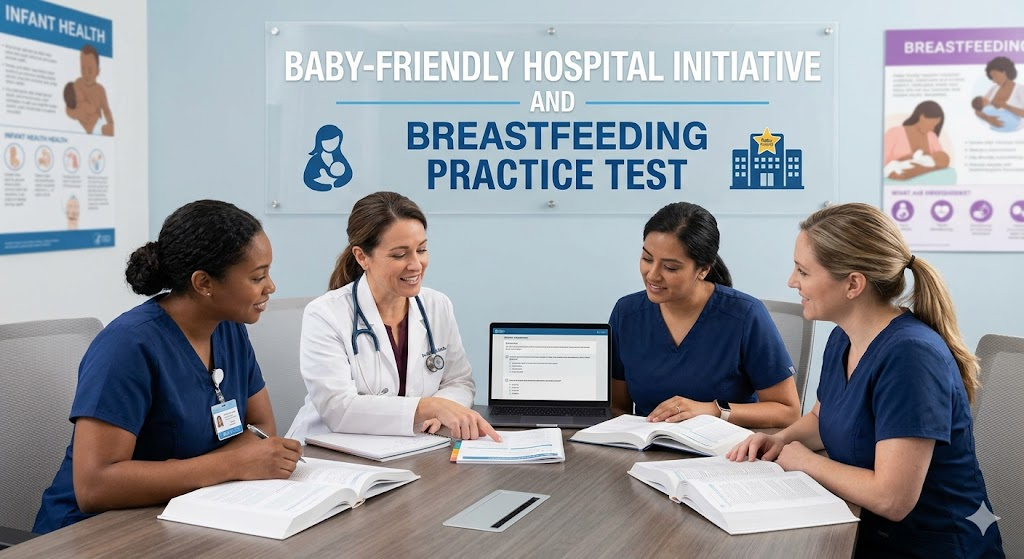
Additional Information
What the Course Entails and Exam Details
The core curriculum leading to this exam is rooted in the current WHO/UNICEF global criteria. Candidates must demonstrate deep understanding across several critical domains:
The Ten Steps to Successful Breastfeeding: Mastering the application of all ten steps, including hospital policies, staff competency, and prenatal/postnatal care.
The International Code of Marketing of Breast-milk Substitutes: Understanding the ethical guidelines and restrictions regarding the promotion of formula and related products.
Physiology of Lactation: Knowledge of how milk is produced and maintained.
Clinical Skills: Demonstrating proper positioning and attachment, assessing milk transfer, and hand expression.
Antenatal and Postnatal Support: Educating families during pregnancy and providing critical support in the first hours and days postpartum.
Managing Common Challenges: Identifying and resolving issues such as sore nipples, engorgement, and low milk supply.
What to Expect in the Final Exam
The final exam structure can vary slightly depending on the specific certifying body (e.g., individual hospital systems, national health ministries, or international boards), but generally follows this format:
Exam Format: The primary component is almost always a standardized multiple-choice exam, which may be administered online or on paper.
Clinical Skills Assessment: Many comprehensive BFHI certifications also require a practical, hands-on skills demonstration or oral structured clinical examination (OSCE) where a proctor observes the candidate interacting with a mother-infant dyad (or mannequin).
Time Limit: Expect a strict time limit for the multiple-choice section, typically ranging from 60 to 90 minutes.
Passing Score: The required passing score is high, often set at 80% or higher, reflecting the precision required in maternal-infant care.
How to Study and Exam Centers
Achieving certification requires a blend of theoretical study and practical application. We recommend a structured preparation strategy:
Review Official WHO/UNICEF Materials: The absolute foundation of your study must be the BFHI Revised, Updated and Expanded for Integrated Care documents.
Take Practice Tests: Utilizing practice exams, like this one, is crucial. It helps identify knowledge gaps, familiarize you with the question format, and improve your pacing under time pressure.
Engage in Hands-On Practice: Do not rely solely on books. Spend time in clinical settings practicing positioning, attachment assessments, and teaching hand expression until they are fluid.
Exam Centers: The final official examination is typically administered through the following channels:
Authorized Online Portals: Many national BFHI coordinating bodies offer secure, proctored online exams.
Hospital-Based Testing: Hospitals pursuing or maintaining BFHI status often conduct in-house testing for their staff.
Designated Training Schools: Authorized maternal-child health training institutes may host the exam upon completion of their coursework.
Job Opportunities from the Course
Successfully passing this test and obtaining BFHI-aligned certification significantly enhances your qualifications in the maternal-infant health sector. It is highly valued in facilities that are already 'Baby-Friendly' designated or are actively seeking the designation.
This certification unlocks and enhances numerous career paths, including:
IBCLC (International Board Certified Lactation Consultant)
Registered Nurse (RN) – Labor & Delivery / Postpartum / NICU
Certified Nurse Midwife (CNM) or Registered Midwife
BFHI Clinical Educator or Coordinator
Pediatric Nurse Practitioner (PNP)
Public Health Nurse (Maternal and Child Health focus)
Postpartum Doula
By solidifying your expertise through this practice test, you are taking a critical step toward improving the standard of care for families worldwide.
Frequently Asked Questions
Reviews
5.0
Based on 0 reviews
Leave a Review
No reviews yet. Be the first to review!