
Bahamas Customs Brokerage Training Practice Test
$69.00
- Buy to unlock unlimited access to all Quiz questions and Answers in this Quiz.
- After purchase you can print a PDF of the whole quiz at any point. The PDF will contain the questions and the correct answers.
About this Exam
The Bahamas Customs Brokerage Training Practice Test is an essential preparatory tool for professionals aiming to become licensed Customs Brokers in the Commonwealth of The Bahamas. This specialized practice assessment is designed for individuals who have already undertaken or are currently enrolled in the formal Customs Brokerage Training Course. It serves as the final, critical step to ensure candidates possess the necessary knowledge and practical skills required to navigate complex import and export regulations. Mastering this material is vital for legally clearing goods, representing clients before the Bahamas Customs Department, and upholding the integrity of the nation's trade borders.
Ready to test your knowledge?
Buy Now to Access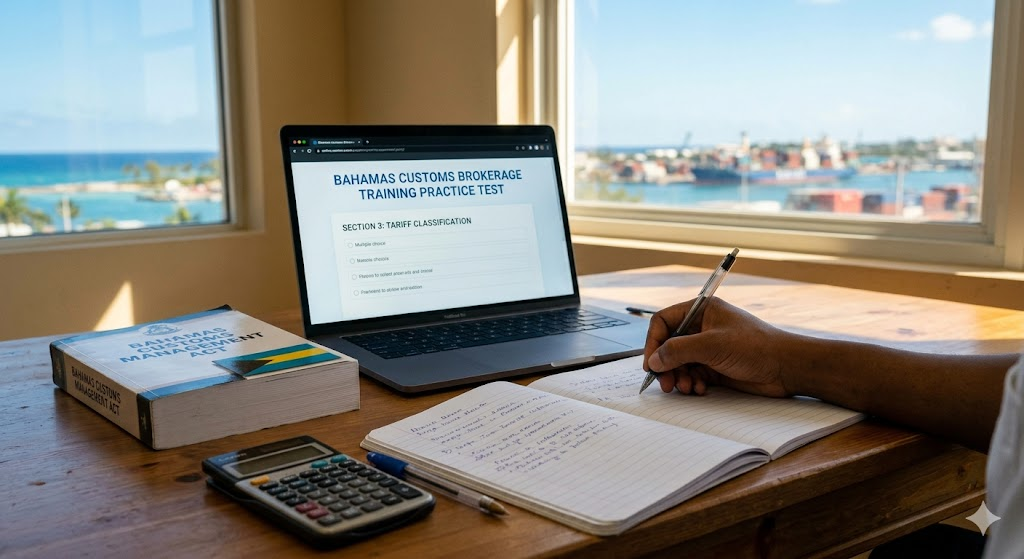
Additional Information
What the Course Entails and Exam Details
This training program and its associated practice test deliver a comprehensive curriculum focused on the regulatory and logistical framework of Bahamian trade. Candidates must develop deep expertise in the Bahamas Customs Management Act and its accompanying regulations. The syllabus places significant emphasis on accurately applying the Harmonized System (HS) for commodity tariff classification. Furthermore, the course requires a strong understanding of customs valuation principles and the precise calculation of duties, taxes, and relevant fees. Learners must also demonstrate proficiency in temporary importation procedures, managing prohibited or restricted items, and the ethical responsibilities inherent to the customs brokerage profession.
What to Expect in the Final Exam
The actual final licensing exam is a formal, proctored assessment that strictly tests a candidate's readiness for professional practice. The structure is typically dominated by multiple-choice questions that evaluate theoretical knowledge of customs laws and classification rules. However, candidates should also expect practical scenarios or case studies that require them to accurately complete sample customs declarations or entry forms based on specific shipping documents. To pass, examinees must achieve a minimum score, often set at 70% or higher, reflecting a standard necessary to avoid costly errors in a real-world environment. The exam is typically strictly timed, emphasizing the need for efficient and accurate decision-making.
How to Study and Exam Centers
Effective preparation for this rigorous exam requires a blend of comprehensive review and practical application. Candidates should dedicate substantial time to actively using the Bahamas Customs Management Act and the current Tariff Schedule as primary references. The practice test itself is the most critical study asset; using it repeatedly in a simulated, timed environment helps identify knowledge gaps and reduces anxiety. Form study groups to discuss complex valuation scenarios and practical classification challenges. Flashcards can be helpful for memorizing key definitions and commonly used HS codes within the Bahamian economy.
The administration of the course and the scheduling of official exams are managed directly by the Bahamas Customs Department in coordination with designated training partners. Authorized educational facilities in Nassau and Freeport serve as the physical testing centers for sitting the license examination. Candidates will receive specific registration instructions and exam venue details upon the successful completion of their required coursework modules.
Job Opportunities from the Course
Successfully completing this training and achieving licensing unlocks specialized, critical career paths within the Bahamian logistics and trade economy. Career opportunities for Licensed Customs Brokers include:
Customs Broker (Independent or within specialized firms)
Freight Forwarder
Supply Chain Manager
Import/Export Compliance Manager for major retail corporations
Logistics Coordinator for international manufacturing businesses
Regulatory Affairs Specialist in shipping companies
Procurement Officer with logistics oversight
Frequently Asked Questions
Reviews
5.0
Based on 0 reviews
Leave a Review
No reviews yet. Be the first to review!