
Bartender School Written Practice Test
$69.00
- Buy to unlock unlimited access to all Quiz questions and Answers in this Quiz.
- After purchase you can print a PDF of the whole quiz at any point. The PDF will contain the questions and the correct answers.
About this Exam
The Bartender School Written Practice Test is the essential rehearsal before the final hurdle.
This exam is designed for aspiring mixologists, hospitality professionals, and individuals seeking certification through comprehensive bartending courses.
Mastering this test signifies that a candidate understands the foundational rules, safety regulations, and beverage knowledge required to operate effectively in a high-pressure hospitality environment.
It bridges the gap between classroom theory and real-world bar execution.
Ready to test your knowledge?
Buy Now to Access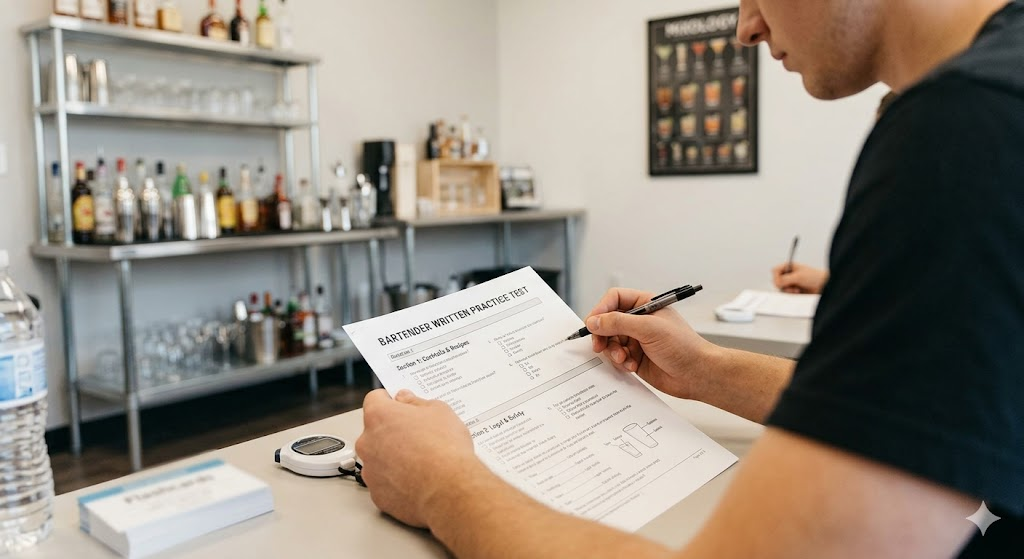
Additional Information
What the Course Entails and Exam Details
A standard bartending school course covers a vast landscape of knowledge that is subsequently assessed in the written exam.
The syllabus usually includes deep dives into extensive classic cocktail recipes and modern mixology techniques.
Candidates must demonstrate proficiency in beverage identification, understanding the unique characteristics of various spirits, liquors, wines, and beers.
Significant emphasis is placed on responsible beverage service, focusing heavily on local liquor laws, identifying intoxicated patrons, and verifying identification for age-restricted sales.
Furthermore, the course details operational skills such as bar setup and breakdown, inventory management, and maximizing efficiency through appropriate tool selection.
What to Expect in the Final Exam
While specific formats may vary by institution, the standard Bartender School Written Exam is generally a robust, multiple-choice assessment designed to challenge recall and situational application.
Many schools require a minimum passing score of at least 80% to demonstrate adequate mastery before advancing to the practical examination behind the bar.
Candidates should expect time limits, commonly ranging from 60 to 90 minutes, to simulate the necessary speed and decision-making required in a real service environment.
The exam rigorously tests recall of recipe ingredients, precise proportions, standard glassware, and applicable local and state liquor regulations.
How to Study and Exam Centers
How to Study
Successful preparation requires consistent, active study.
Utilize flashcards extensively for recipe memorization, detailing ingredients, exact measurements, and garnish requirements.
Create mental simulations, visualizing yourself mixing the drink as you review the written recipe.
Re-read the assigned course materials, specifically the chapters on legal liability and intoxication signs.
The most effective strategy is taking multiple structured practice tests (like the ones this guide supports) to identify knowledge gaps and build testing speed.
Exam Centers
Unlike standardized national exams, written exams for bartending schools are typically administered directly by the authorized school.
In-person courses usually host the written exam on-site in a classroom setting during final test week.
For individuals enrolled in online or hybrid programs, the exam is frequently conducted through the school’s secure digital learning portal.
Always confirm specific scheduling logistics and requirements with your specific school administration.
Job Opportunities from the Course
Completing a comprehensive bartending course and passing the written and practical examinations opens numerous doors within the vibrant hospitality industry.
Graduates possess the certified credibility sought by employers in diverse settings, from local pubs to high-end resorts.
Successfully mastering these certifications unlocks career paths including:
Professional Bartender (In Restaurants, Hotels, Pubs, and Nightclubs)
Lead Bartender or Head Mixologist (A specialized role focusing on menu creation and refinement)
Bar Manager or Beverage Director (Overseeing staff, inventory, and operations)
Event or Catering Bartender (Working weddings, corporate functions, and private parties)
Brand Ambassador for Spirits or Beverage Companies (Utilizing product knowledge for marketing)
Frequently Asked Questions
Reviews
5.0
Based on 0 reviews
Leave a Review
No reviews yet. Be the first to review!