
Basic Competency on Local Treasury Examination (BCLTE) Practice Exam
$69.00
- Buy to unlock unlimited access to all Quiz questions and Answers in this Quiz.
- After purchase you can print a PDF of the whole quiz at any point. The PDF will contain the questions and the correct answers.
About this Exam
The Basic Competency on Local Treasury Examination, widely known as the BCLTE, is a crucial certification for professionals aspiring to work within the local government financial sector in the Philippines.
Administered by the Civil Service Commission (CSC) in close partnership with the Department of Finance – Bureau of Local Government Finance (DOF-BLGF), this exam is the primary gateway to establishing eligibility for local treasury positions.
It is specifically designed for current local treasury employees seeking promotion, as well as individuals aiming to enter the government service as Local Treasurers, Assistant Local Treasurers, or in other specialized financial roles within local government units (LGUs).
Passing the BCLTE is not just about gaining eligibility; it is a demonstration of your command over the essential competencies required to manage public funds with integrity and efficiency.
Ready to test your knowledge?
Buy Now to Access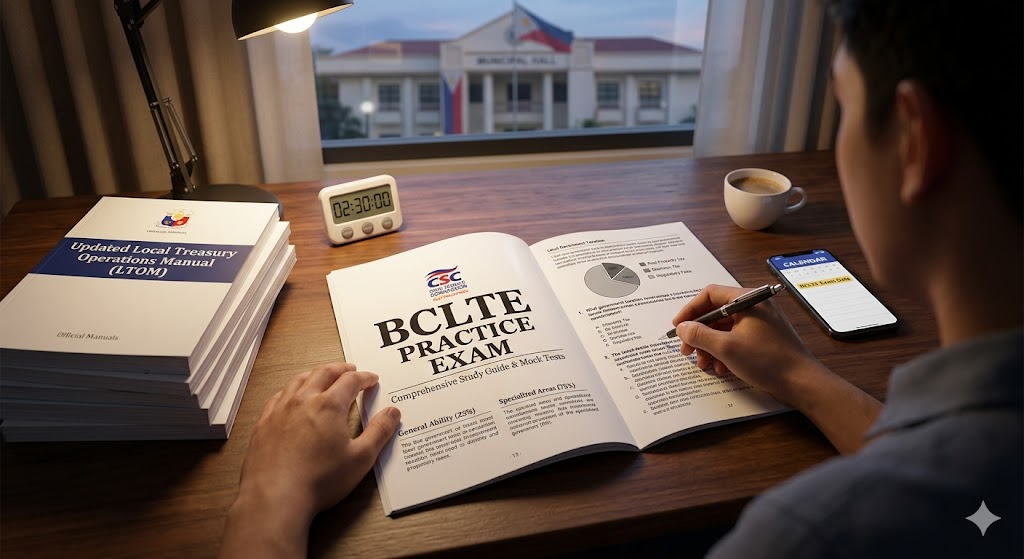
Additional Information
What the Course Entails and Exam Details
The BCLTE is comprehensive, aiming to assess both general aptitude and specialized technical knowledge relevant to local treasury operations.
The exam syllabus is structured around two main areas:
General Ability (weighted at 25%): This section covers Verbal Aptitude, Analytical Ability, and leadership and management concepts. A significant portion focuses on R.A. 6713, also known as the Code of Conduct and Ethical Standards for Public Officials and Employees, ensuring candidates understand the ethical obligations of public service.
Specialized/Technical Area (weighted at 75%): This is the core of the exam. It delves deeply into the practicalities of local finance. Topics include the mobilization of resources (principles of local taxation, real property tax, and business taxes), local treasury services management, safekeeping of local funds and records, and the analysis and preparation of treasury-related reports. It also tests coordination with stakeholders and management of inter-government fund transfers.
What to Expect in the Final Exam
When you sit for the actual BCLTE, you should be prepared for a rigorous evaluation.
The final exam is entirely in a multiple-choice format, usually consisting of approximately 180 items. You will have a strict time limit to complete the test, typically around 3 hours and 5 minutes.
To pass the BCLTE and obtain Local Treasurer Eligibility, candidates must achieve a general rating of at least 80.00%. This high standard emphasizes the importance of thorough preparation and a genuine understanding of the material. There is no practical component or essay writing involved; your success depends solely on your performance in the multiple-choice section.
How to Study and Exam Centers
Actionable study strategies are key to conquering the BCLTE. We highly recommend starting with the official sources: the Local Treasury Operations Manual (LTOM) provided by the DOF-BLGF is your most vital resource.
Complement your reading with targeted practice using a standard BCLTE Practice Exam. These mock tests are excellent for familiarizing yourself with the framing of questions and managing your time. Focus your study efforts on the specialized technical areas, as they carry the heaviest weight. Create flashcards for key taxation principles and ethical rules.
The BCLTE is not administered online or through third-party portals like Pearson VUE. Instead, applications must be filed personally at the CSC Regional Office or Field Office that has jurisdiction over your preferred testing center. The exams are conducted periodically in designated physical testing centers across the Philippines, often located in major provincial capitals or cities. Check the official CSC examination announcements regularly for the current schedule and specific testing locations.
Job Opportunities from the Course
Achieving a passing score on the BCLTE unlocks specific, sought-after career paths within the Philippine civil service. This eligibility is required or highly preferred for the following roles:
Local Treasurer
Assistant Local Treasurer
Cashier (in Local Government Units)
Other positions in Financial Services within LGUs that do not require a separate professional board license.
By passing this exam, you don’t just earn a certificate; you prove you possess the specialized skillset needed to maintain the fiscal health of local communities.
Frequently Asked Questions
Reviews
5.0
Based on 0 reviews
Leave a Review
No reviews yet. Be the first to review!