
Basic Driver Improvement Practice Test
$69.00
- Buy to unlock unlimited access to all Quiz questions and Answers in this Quiz.
- After purchase you can print a PDF of the whole quiz at any point. The PDF will contain the questions and the correct answers.
About this Exam
The Basic Driver Improvement (BDI) course is a comprehensive program designed to enhance driver safety, refresh knowledge of traffic laws, and promote defensive driving techniques. Often referred to as "traffic school" or "defensive driving," this course is primarily intended for individuals who have received a non-criminal traffic citation, are seeking to reduce points on their driver's license, or want to qualify for an insurance premium discount. It's an excellent resource for anyone looking to become a more responsible and confident driver, ultimately contributing to safer roads for everyone. Completing this course and passing its associated exam can provide significant benefits, protecting your driving record and potentially lowering your automotive costs.
Ready to test your knowledge?
Buy Now to Access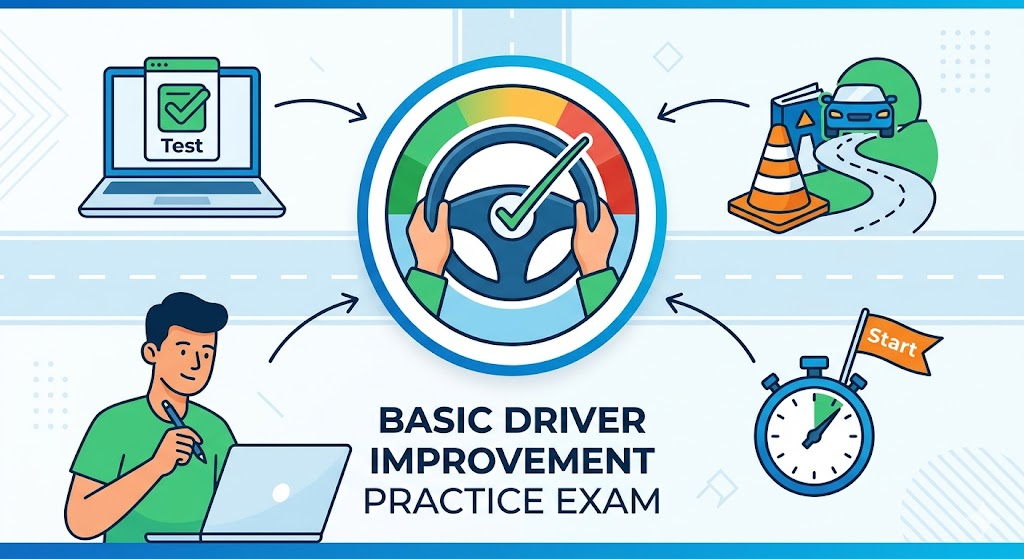
Additional Information
What the Course Entails and Exam Details
The BDI course covers a wide range of essential topics focused on safe and lawful driving practices. While specific curricula may vary slightly, core subjects typically include:
Defensive Driving Strategies: Techniques for anticipating and avoiding hazards, maintaining a safe following distance, and managing visibility.
Traffic Laws and Regulations: A review of state-specific and general rules of the road, right-of-way, speeding, and aggressive driving.
Impaired Driving Prevention: The dangers and legal consequences of driving under the influence of alcohol and drugs.
Distracted Driving Awareness: Recognizing and eliminating distractions such as texting, phone use, and other activities.
Vehicle Control and Safety: Proper steering, braking, and maintenance, as well as understanding vehicle safety features.
Sharing the Road: Interacting safely with other road users, including motorcyclists, bicyclists, and pedestrians.
Adverse Driving Conditions: Strategies for driving in rain, snow, fog, and at night.
The Role of Driver Attitude and Emotions: How your mindset can impact your driving safety.
What to Expect in the Final Exam
The final exam for the BDI course is typically a multiple-choice test designed to assess your understanding of the material covered. Here's a general idea of what you can expect:
Format: Multiple-choice questions, which may include scenarios to evaluate your decision-making skills.
Delivery: The exam is most commonly taken online, integrated seamlessly within the BDI course platform.
Passing Score: Most programs require a passing score of 80% or higher.
Time Limits: Online exams may have time limits, often ranging from 60 to 90 minutes. However, many online courses are designed to be self-paced, allowing you to review materials before attempting the final quiz.
Specific Rules: Always check the specific rules of your chosen course provider, as some states or providers may have varying requirements for passing and completion.
How to Study and Exam Centers
Effective preparation is key to passing the BDI exam with confidence. Utilize these actionable strategies:
Engage with the Course Material: Actively read, watch, and listen to all course modules. Take notes and complete any practice quizzes within the course structure.
Utilize Practice Tests: Seeking out "Basic Driver Improvement Practice Tests" (like this guide and other reputable online resources) is invaluable. These tests can help you identify weak areas and familiarize yourself with the question formats.
Focus on Key Concepts: Pay special attention to areas you find challenging, such as specific traffic laws or defensive driving principles.
Review State-Specific Traffic Manuals: Your state's official driver's manual is a primary source for the laws that will be tested.
Simulate Exam Conditions: Take practice tests in a quiet environment without distractions to build your stamina and confidence.
For the exam itself, the vast majority of drivers take it through state-approved online BDI course portals. These portals deliver the material and the exam in a single platform, eliminating the need to visit physical testing centers. However, always ensure the course and exam are authorized by your state’s DMV or equivalent agency to ensure the results are accepted for ticket dismissal or point reduction.
Job Opportunities from the Course
While completing a BDI course is primarily about maintaining a clean driving record and improving safety, a good driving history is essential for various job roles. Many companies rely on employees to drive as a core part of their operations, and they typically require a clean driving record. The BDI course indirectly supports and protects career paths such as:
Professional Delivery Drivers (e.g., packages, food, medical supplies)
Truck Drivers and Commercial Driver License (CDL) Holders
Rideshare and Taxi Drivers
Bus Drivers (e.g., school buses, public transit)
Fleet Vehicle Operators (e.g., sales representatives, technicians, service providers)
Limousine and Chauffeur Drivers
Completing the BDI course and keeping your driving record free of points and violations can make you a more attractive candidate for these positions and help you retain employment in fields that involve driving.
Frequently Asked Questions
Reviews
5.0
Based on 0 reviews
Leave a Review
No reviews yet. Be the first to review!