
Basic Firefighter Written Practice Exam
$69.00
- Buy to unlock unlimited access to all Quiz questions and Answers in this Quiz.
- After purchase you can print a PDF of the whole quiz at any point. The PDF will contain the questions and the correct answers.
About this Exam
The Basic Firefighter Written Practice Exam is designed for individuals aspiring to begin their career in the fire service.
It assesses the fundamental knowledge and cognitive skills necessary to excel in entry-level firefighting roles.
This exam is a critical first step for candidates seeking to demonstrate their readiness for fire academy training and subsequent certification as a firefighter.
It is ideal for anyone motivated by public service, teamwork, and the physical and mental challenges of a career in emergency services.
Ready to test your knowledge?
Buy Now to Access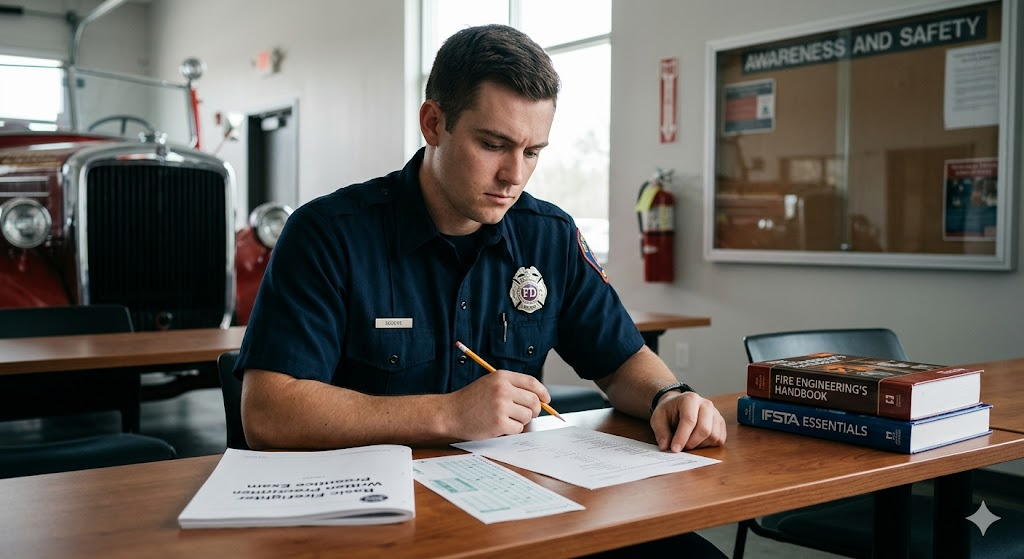
Additional Information
What the Course Entails and Exam Details
This examination is not a course itself, but rather a comprehensive tool to test candidates' knowledge across various domains relevant to firefighting.
It is structured to evaluate your understanding of essential firefighting concepts and protocols.
Candidates are expected to demonstrate proficiency in core topics which often include:
Firefighting principles and practices.
Emergency medical services (EMS) fundamentals.
Hazardous materials awareness and safety.
Fire prevention and public education concepts.
Basic rescue operations and equipment.
Fundamental principles of chemistry and physics related to fire.
What to Expect in the Final Exam
The actual written exam for firefighter candidates usually follows a specific standardized format.
Understanding this format will help you prepare more effectively and approach the test with confidence.
Candidates can generally expect:
Format: The exam typically consists of multiple-choice questions. These questions may involve reading comprehension, mathematical reasoning, and logical thinking, in addition to technical knowledge.
Passing Score: Requirements can vary by jurisdiction or department, but a common passing score is 70% or higher. Some departments might require a higher score due to a competitive application process.
Time Limits: Candidates are typically given a strict time limit to complete the exam. This tests your ability to think quickly and manage your time under pressure.
Specific Rules: Standard testing rules apply. Electronic devices are usually prohibited. You may be asked to bring identification and follow specific instructions regarding the use of pencils and answer sheets (if applicable).
How to Study and Exam Centers
Preparation is paramount for success on the firefighter written exam. It is not just about what you know, but how you apply that knowledge under timed conditions.
Effective study strategies include:
Take Multiple Practice Exams: Utilize resources like this practice exam to familiarize yourself with the question types and time constraints. This helps you identify weak areas.
Review Standard Firefighter Textbooks: Materials such as the IFSTA Essentials of Fire Fighting or similar academy curriculum guides are invaluable primary sources.
Focus on Core Areas: Dedicate specific study sessions to key topics like fire behavior, salvage and overhaul, ventilation, and EMS basics.
Improve Reading Comprehension and Math Skills: Since many questions are designed to test cognitive abilities, sharpening these foundational skills is essential.
Exam Centers:
The actual exam location is determined by the hiring fire department or the state testing agency. It is rarely administered online for final certification. Typical venues include:
Authorized physical testing centers (e.g., local fire academies or government buildings).
Community colleges or universities designated as proctoring sites.
Job Opportunities from the Course
Successfully passing the firefighter written exam opens the door to numerous career paths within the emergency services sector. It is the initial hurdle required for most entry-level positions.
Potential career opportunities include:
Career Firefighter (Municipal or County)
Volunteer Firefighter (Many departments require this test as well)
Industrial Firefighter
Airport Firefighter (ARFF)
Wildland Firefighter
Firefighter/EMT or Firefighter/Paramedic (often requires additional medical certification)
Frequently Asked Questions
Reviews
5.0
Based on 0 reviews
Leave a Review
No reviews yet. Be the first to review!