
Basic Powerboating, Safety and Rescue Practice Test
$69.00
- Buy to unlock unlimited access to all Quiz questions and Answers in this Quiz.
- After purchase you can print a PDF of the whole quiz at any point. The PDF will contain the questions and the correct answers.
About this Exam
This certification is designed to provide participants with the essential skills and knowledge required to operate a small powerboat safely and confidently, with a specific focus on safety and rescue functions. It merges the core principles of safe boat handling with specialized, hands-on techniques for responding to emergencies on the water.
This course is an excellent fit for a wide range of individuals. It is highly recommended for sailing instructors, watersports coaches, and those aspiring to work in marine patrol, police or fire rescue units, and park ranger services. Additionally, regatta personnel, marina staff, and volunteers at boating clubs will find this training indispensable for ensuring the well-being of water users under their supervision. It is the gold standard for anyone tasked with providing on-water support.
Ready to test your knowledge?
Buy Now to Access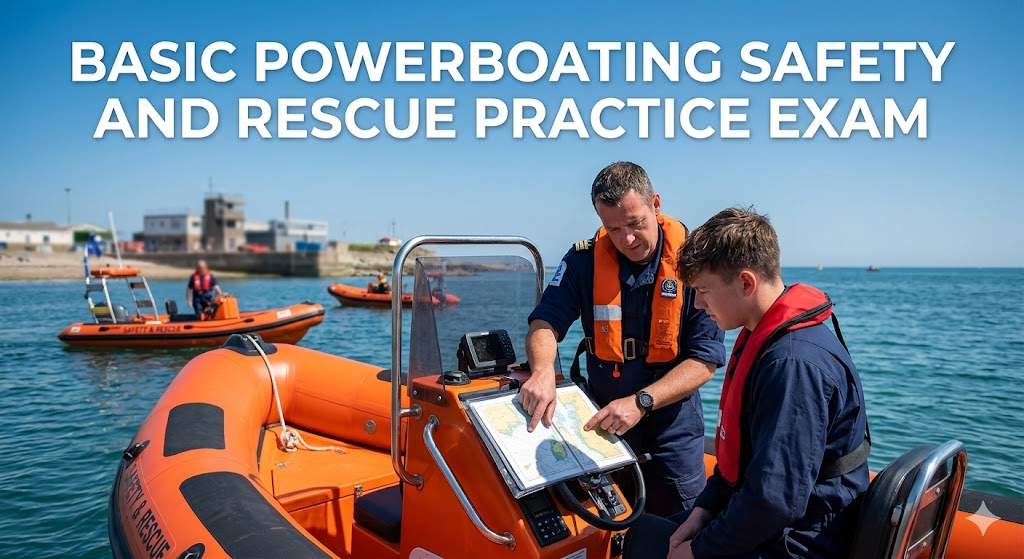
Additional Information
What the Course Entails and Exam Details
The comprehensive curriculum of the "Basic Powerboating, Safety and Rescue" course is typically divided into two core areas: theoretical knowledge and practical skills. Your study preparation and practice tests focus primarily on the theoretical portion, which underpins the actions you will take on the water.
Key theoretical topics covered include:
Vessel Dynamics and Handling: Understanding different hull types, engine considerations, and the fundamental principles of steering and boat control.
Safety Equipment and Regulations: In-depth knowledge of required safety gear (PFDs, fire extinguishers, flares), distress signals, and applicable federal, state, and local regulations.
Weather and Tides: Interpretation of forecasts and understanding the effects of wind, current, and tide on vessel operation and rescue scenarios.
Search and Rescue (SAR) Principles: An introduction to search patterns, communication protocols, and coordinating responses.
Emergency Procedures: The specific, step-by-step methodology for responding to critical situations, including fire, swamping, and grounding.
Key practical, on-the-water skills (which are assessed in a separate, mandatory practical examination) include:
Close-Quarters Maneuvering: Expert docking, undocking, and turning a boat 180 degrees in a confined space.
Person in Water (PIW) Recovery: Executing a quick, safe, and controlled return to pick up a conscious, injured, or unconscious person.
Towing: Proper techniques for taking another vessel in tow, both astern and alongside.
Assisting Capsized or Swamped Boats: Methods for stabilizing and recovering vessels of various types (dinghies, keelboats).
What to Expect in the Final Exam
While the ultimate goal is safe, practical operation, your final certification requires you to demonstrate that your skills are backed by solid theoretical understanding. This is validated through a written or online examination.
The final knowledge exam typically follows a multiple-choice format, designed to test your critical decision-making in safety and rescue situations. For example, a common structure includes 25 scenarios and questions, requiring a passing score of 80% (20 correct answers). Each authorized training body may vary this slightly, so you should always confirm the exact requirements with your instructor or testing center. The exam is often timed, reflecting the need for swift judgment on the water, with a time limit of around 30 to 45 minutes.
How to Study and Exam Centers
Preparation is paramount. Here are actionable study strategies to ensure you are ready to pass the knowledge portion and confidently enter the practical assessment:
Utilize the Practice Test: Take the provided practice exam repeatedly. It is the most accurate reflection of the question style and content you will encounter. Use it to diagnose your weak areas.
Review Your Course Manual: Your course textbook is your definitive guide. Dedicate focused study time to each chapter, particularly the "Rescue and Emergency Procedures" and "Navigation Rules" sections.
Focus on the Core "Whys": Instead of just memorizing the steps of a maneuver, understand why they are performed in that way. For example, grasp the importance of approaching a Person in Water with the engine in neutral.
Study the Terminology: Ensure you know the exact terms for distress signals (MAYDAY, PAN-PAN), boat parts, and rescue equipment.
Exam Centers and Testing:
This exam is not a standalone academic test; it is an integrated part of a formal training course. To take the exam, you must first register for a "Basic Powerboating, Safety and Rescue" course through an authorized training center. Prominent organizations providing these standardized certifications include:
US Powerboating (a division of US Sailing): Their courses are offered through affiliated community sailing centers, yacht clubs, and specialized schools.
The RYA (Royal Yachting Association): The RYA "Safety Boat" course is delivered through recognized RYA Training Centres globally.
Typically, the knowledge exam is administered during the course, either physically in a classroom environment or through a secure online learning portal provided by the training organization.
Job Opportunities from the Course
Earning your Basic Powerboating and Safety Rescue certification unlocks a direct career path into marine safety, instructional, and operational roles.
Specific job titles and career paths this qualification makes accessible include:
Certified Sailing or Watersports Instructor
On-Water Coach (e.g., Windsurfing, Kayaking, Rowing)
Professional Safety Boat Operator (Regattas, Swimming Events, etc.)
Marina Safety Officer or Lead Dockmaster
Harbor Patrol Support Officer
Water-based Tour and Event Marshall
Beach Lifeguard with Powerboat Endorsement
By successfully navigating this practice exam and the subsequent course, you are taking a critical step toward a professional, safe, and rewarding career on the water.
Frequently Asked Questions
Reviews
5.0
Based on 0 reviews
Leave a Review
No reviews yet. Be the first to review!