
Basic Vehicle Rescue Technician Proboard Practice Test
$69.00
- Buy to unlock unlimited access to all Quiz questions and Answers in this Quiz.
- After purchase you can print a PDF of the whole quiz at any point. The PDF will contain the questions and the correct answers.
About this Exam
The Basic Vehicle Rescue Technician certification is designed for emergency responders—including firefighters, EMS personnel, and technical rescue teams—who are responsible for extricating victims from passenger vehicles involved in accidents.
This Proboard-accredited certification validates a responder’s ability to perform critical tasks safely and efficiently under pressure. Earning this credential demonstrates that an individual has met the rigorous professional qualification standards set by the National Fire Protection Association (NFPA), specifically within the NFPA 1006 standard for Technical Rescuer Professional Qualifications. This practice test is a vital tool for verifying your knowledge before challenging the official exam.
Ready to test your knowledge?
Buy Now to Access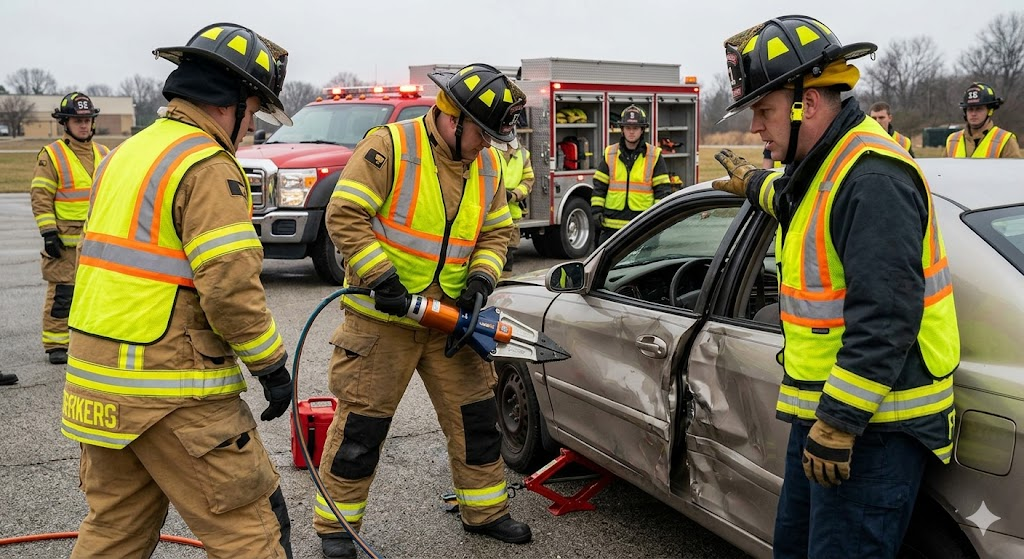
Additional Information
What the Course Entails and Exam Details
The comprehensive curriculum for a Basic Vehicle Rescue Technician covers a wide spectrum of essential skills and theoretical knowledge required for safe and effective extrication operations.
Key topics generally covered include:
Scene Size-Up and Safety: Assessing hazards (e.g., traffic, utilities, hazardous materials), establishing a safe work zone, and scene management protocols.
Vehicle Anatomy and Construction: Understanding standard passenger vehicle structures, crumple zones, supplemental restraint systems (airbags), and alternative fuel vehicle considerations.
Vehicle Stabilization: Utilizing cribbing, struts, and other stabilization tools to secure a vehicle in various positions (on wheels, side, or roof).
Hazard Control: Managing dynamic hazards such as fuel leaks, electrical systems (including high-voltage hybrid/EV batteries), and SRS systems.
Extrication Tools and Equipment: Theory and practical operation of hydraulic, pneumatic, electric, and hand tools used for cutting, prying, and lifting.
Disentanglement Techniques: Step-by-step procedures for gaining access to victims, including door removal, roof displacement, and dashboard techniques (dash rolls/lifts).
Patient Care and Packaging: Coordinated victim management with EMS, focusing on maintaining spinal stabilization and minimizing further injury during removal.
What to Expect in the Final Exam
The Proboard certification process for Basic Vehicle Rescue Technician typically involves a two-part evaluation, encompassing both a cognitive (written) exam and a practical skills demonstration. This practice exam focuses specifically on preparing you for the cognitive component.
Cognitive (Written) Exam:
The actual final exam is a comprehensive, proctored test. While specific formats may vary slightly by accredited agency, you can generally expect:
Format: Multiple-choice questions.
Content: Questions are derived directly from the NFPA 1006 standard objectives and standard rescue textbooks.
Passing Score: Typically requires a minimum score of 70% or higher.
Time Limit: The exam is usually timed (e.g., 60–90 minutes).
Practical Skills Exam:
In addition to the written test, candidates must successfully demonstrate proficiency in a series of hands-on skills evaluated by designated proctors. These evaluations are based on critical skill sheets and often include stabilization, tool operation, and disentanglement scenarios.
How to Study and Exam Centers
Preparation is paramount for success on a high-stakes certification exam like this.
Effective Study Strategies:
Utilize This Practice Test: Take this practice test under timed conditions to identify your weak areas and familiarize yourself with the question format.
Master the Standard: Thoroughly review the relevant sections of NFPA 1006 (Standard for Technical Rescuer Professional Qualifications), specifically the Vehicle Search and Rescue subsections.
Review Core Textbooks: Study standard technical rescue manuals used in your training programs.
Form Study Groups: Reviewing content and discussing scenarios with peers can significantly improve retention.
Exam Centers and Registration:
Proboard is an accrediting body, not a direct testing center. To take the official certification exam, you must register through an accredited entity. These entities are often state fire academies, specific large fire departments, university fire service training programs, or state emergency management agencies.
You will need to contact your local or state-level fire training authority to find an approved testing site, review upcoming exam schedules, and understand their specific registration prerequisites.
Job Opportunities from the Course
Successfully achieving the Basic Vehicle Rescue Technician certification unlocks various career paths and enhances professional standing within the emergency services sector.
This credential is high valued for roles such as:
Firefighter (specifically on Engine, Ladder, or Rescue companies)
Technical Rescue Technician / Heavy Rescue Specialist
Search and Rescue (SAR) Team Member
Emergency Medical Technician (EMT) or Paramedic
Flight Paramedic / Flight Nurse
Industrial Rescue Team Member
Private Safety and Rescue Contractor
Frequently Asked Questions
Reviews
5.0
Based on 0 reviews
Leave a Review
No reviews yet. Be the first to review!