
Basic Wastewater Operator Practice Exam
$69.00
- Buy to unlock unlimited access to all Quiz questions and Answers in this Quiz.
- After purchase you can print a PDF of the whole quiz at any point. The PDF will contain the questions and the correct answers.
About this Exam
This certification is an essential entry-level credential designed for individuals looking to launch a career in the wastewater treatment industry. It is aimed at new operators or those seeking to formalize their foundational knowledge of wastewater management processes, safety protocols, and regulatory compliance. Earning this certification validates that a candidate possesses the necessary understanding of treating wastewater effectively before it is safely returned to the environment.
Ready to test your knowledge?
Buy Now to Access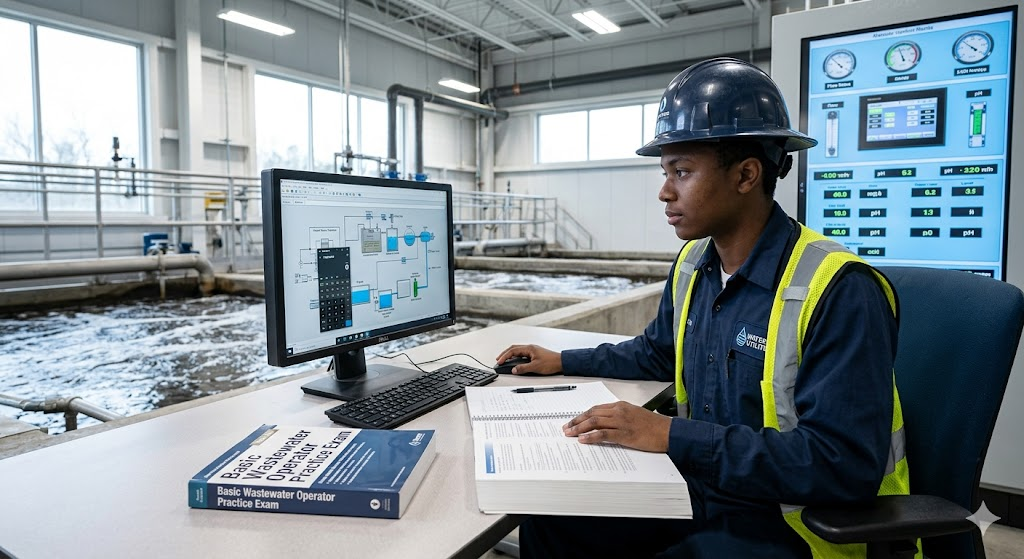
Additional Information
What the Course Entails and Exam Details
Preparing for the Basic Wastewater Operator certification involves acquiring fundamental knowledge of the entire wastewater lifecycle. The core curriculum typically covers the following key topics:
Primary Treatment Processes: Focusing on physical methods of removing solids, such as screening, grit removal, and sedimentation (clarification).
Secondary Treatment: Understanding biological treatment methods where microorganisms break down organic matter, including processes like activated sludge, trickling filters, and oxidation ditches.
Disinfection: Learning critical methods for eliminating pathogens, including chlorination and ultraviolet (UV) treatment.
Solids Handling and Sludge Management: Techniques for processing and disposing of solid wastes generated during treatment, such as digestion, thickening, and dewatering.
Safety and Health Protocols: Essential OSHA standards, chemical handling safety, personal protective equipment (PPE), and recognizing hazards common in wastewater facilities.
Sampling and Laboratory Procedures: Understanding basic water quality testing procedures for parameters like Biochemical Oxygen Demand (BOD), Total Suspended Solids (TSS), and pH.
Basic Wastewater Math: Crucial calculations related to flow rates, detention times, chemical dosages, and process efficiency.
What to Expect in the Final Exam
While specific details may vary slightly based on the state or certifying body, the basic wastewater operator exam typically follows a standardized format. Candidates should be prepared for the following:
Format: The exam almost always consists of multiple-choice questions designed to test knowledge retention and practical application.
Time Limit: Expect a timed examination, usually ranging from two to three hours.
Passing Score: Candidates generally need a score of 70% or higher to pass and receive certification.
Exam Integrity: Tests are proctored (supervised) and usually administered via computer or, sometimes, on paper in an organized setting. Calculator usage is typically restricted to basic, non-programmable models provided or approved at the testing center.
How to Study and Exam Centers
Preparation is key to success on the certification exam. Candidates should adopt comprehensive study strategies:
Review Official Materials: Utilize recommended textbooks, industry manuals (like those from the Water Environment Federation), and any state-specific study guides provided by the licensing board.
Focus on Math: Dedicate significant time to practicing wastewater-related math problems, as these are often a challenging section of the exam.
Take Practice Tests: Regularly use specialized practice exams to familiarize yourself with the question style and time constraints.
Attend Training Classes: Enroll in preparatory courses often offered by local community colleges, state rural water associations, or professional training organizations.
Regarding Exam Centers, the certification process is managed by each state’s environmental agency or a specific licensing board. Many states partner with national testing services such as PSI or Pearson VUE to administer computer-based tests at dedicated facilities. Candidates must first register and receive approval from their state’s regulatory body before scheduling their exam with the testing vendor.
Job Opportunities from the Course
Earning the Basic Wastewater Operator certification is the critical first step in opening doors to a vital public service career dedicated to public health and environmental protection. This certification qualifies you for numerous essential positions within municipal wastewater departments, public utility districts, and private industrial treatment facilities.
Potential job opportunities include:
Wastewater Plant Operator (Level 1/Entry Level)
Wastewater Technician
Utilities Operation and Maintenance (O&M) Technician
Wastewater Collection System Operator
Industrial Wastewater Treatment Operator
Process Operator Trainee
Frequently Asked Questions
Reviews
5.0
Based on 0 reviews
Leave a Review
No reviews yet. Be the first to review!