
BDOC Navigation and Seamanship (NSS) Practice Exam
$69.00
- Buy to unlock unlimited access to all Quiz questions and Answers in this Quiz.
- After purchase you can print a PDF of the whole quiz at any point. The PDF will contain the questions and the correct answers.
About this Exam
The BDOC Navigation and Seamanship (NSS) certification is a crucial qualification for maritime professionals, particularly those seeking to advance their careers in naval or commercial maritime operations. This comprehensive exam validates fundamental knowledge and practical skills required for safe and effective vessel operation. It is designed for personnel involved in navigation, watchkeeping, and general seamanship duties on board various classes of vessels. Achieving this certification demonstrates a strong commitment to maritime safety standards and operational proficiency.
Ready to test your knowledge?
Buy Now to Access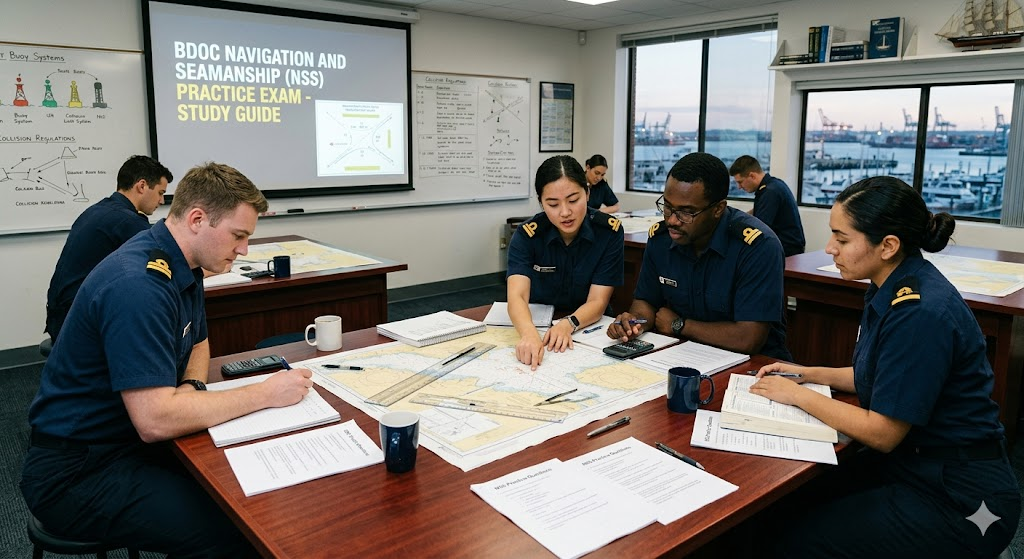
Additional Information
What the Course Entails and Exam Details
This course provides rigorous training in the core principles of nautical science and practical seamanship. Candidates for the NSS exam must demonstrate proficiency in a broad range of subjects, including navigation techniques, rule-of-the-road regulations, vessel handling, and maritime communication. Key topics typically covered include:
Terrestrial and Coastal Navigation: Mastering chart work, plotting courses, calculating position, and understanding navigation aids.
Seamanship Fundamentals: Knowledge of knot tying, mooring, anchoring, cargo handling, and underway replenishment procedures.
Rules of the Road: In-depth understanding of international (COLREGs) and inland navigation rules to prevent collisions.
Bridge Resource Management: Principles of effective communication, leadership, and decision-making on the bridge.
Safety and Emergency Procedures: Procedures for fire, flooding, man overboard, and vessel abandonment.
What to Expect in the Final Exam
The NSS final exam is a comprehensive assessment designed to evaluate both theoretical knowledge and the practical application of navigation and seamanship principles. While specific formats can vary by testing authority, candidates should typically expect a multi-part examination.
Format: The exam often consists of a significant multiple-choice section covering the theoretical aspects of the syllabus, followed by practical charting problems or scenario-based questions that require candidates to apply navigational techniques.
Time Limit: Candidates are usually allocated a specific timeframe (often several hours) to complete the written and practical components.
Passing Score: A passing grade (often 80% or higher, particularly in Rules of the Road) is typically required to demonstrate proficiency.
Materials: Specific materials, such as nautical charts, parallel rulers, and non-programmable calculators, are typically allowed during the exam.
How to Study and Exam Centers
Preparation for the NSS exam requires a disciplined study plan combining theoretical review and practical application.
Study Official Materials: Utilize the provided course manuals, training materials, and relevant maritime publications (e.g., COLREGs).
Practice Charting Problems: Dedicate significant time to practical charting exercises, including plotting positions, calculating course-to-steer, and determining estimated time of arrival.
Form Study Groups: Collaborating with peers can help clarify difficult concepts and reinforce learning.
Take Practice Exams: Utilize available practice exams, such as the BDOC Navigation and Seamanship NSS Practice Exam, to assess your knowledge, improve your time management skills, and familiarize yourself with the exam format.
Exam Centers: The NSS exam is typically administered at authorized Navy testing centers, maritime academies, or designated military training facilities. Candidates should contact their training coordinator or the relevant authority to schedule their examination at an approved location.
Job Opportunities from the Course
Successfully earning the NSS certification can enhance career prospects and unlock advancement opportunities within the maritime industry and military service. Key job opportunities and roles that benefit from this certification include:
Naval Officers and Enlisted Personnel (e.g., Quartermasters, Boatswain’s Mates): This certification is often required or highly valued for progression into leadership and specialized technical roles onboard naval vessels.
Merchant Mariner Deck Officers: The knowledge gained is essential for those pursuing officer endorsements in the merchant marine.
Commercial Vessel Crew Members: Demonstrates proficiency and enhances employability for positions in the commercial shipping, towing, and offshore industries.
Harbor Pilots and Tugboat Operators: Advanced navigation and vessel handling skills validated by this certification are highly relevant to these specialized roles.
Frequently Asked Questions
Reviews
5.0
Based on 0 reviews
Leave a Review
No reviews yet. Be the first to review!