
Beef Quality Assurance (BQA) Certification Practice Exam
$69.00
- Buy to unlock unlimited access to all Quiz questions and Answers in this Quiz.
- After purchase you can print a PDF of the whole quiz at any point. The PDF will contain the questions and the correct answers.
About this Exam
The Beef Quality Assurance (BQA) certification is a vital, producer-driven program dedicated to ensuring that beef cattle are raised under optimum management conditions. This certification signifies a commitment to producing a safe, wholesome, and high-quality product for consumers while adhering to strict animal welfare and environmental standards. It is specifically designed for everyone involved in the beef supply chain, including cow-calf producers, feedlot operators, backgrounders, stockers, livestock transporters, and veterinary staff. Achieving BQA certification demonstrates that you possess the necessary knowledge to handle animals responsibly and manage an operation sustainably.
Ready to test your knowledge?
Buy Now to Access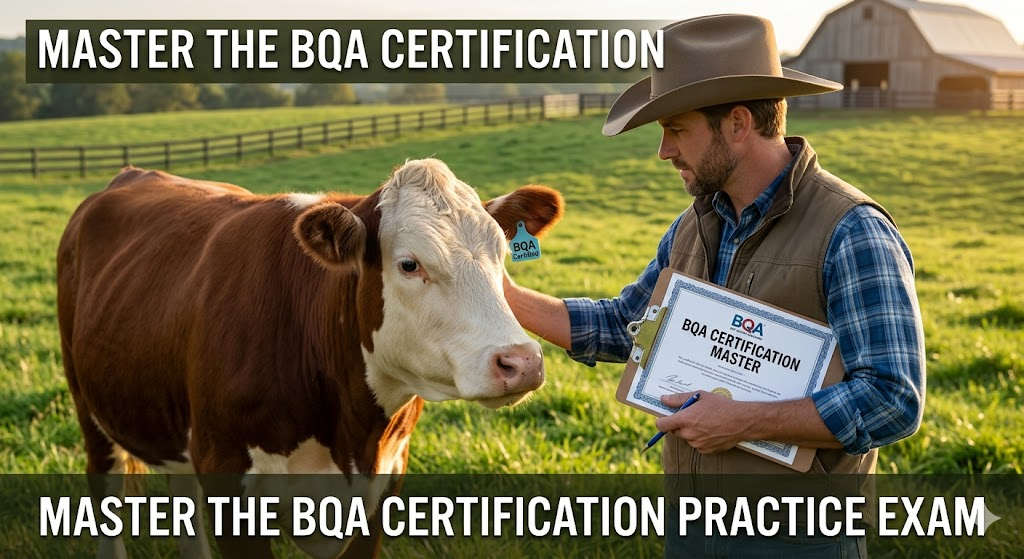
Additional Information
What the Course Entails and Exam Details
The BQA training program provides comprehensive instruction based on scientific research and industry best practices. The course entails several core learning modules that equip participants with actionable skills for their operations. Key syllabus areas include low-stress cattle handling techniques and facility design to minimize animal fatigue and bruising. You will learn the principles of herd health management, including proper vaccine storage, correct injection site selection (emphasizing the neck region), and the importance of adhering to withdrawal times. The curriculum also heavily covers biosecurity protocols to prevent the spread of disease and comprehensive record-keeping practices that track animal health treatments and marketing. For those transporting livestock, specialized modules focus on loading densities, trailer maintenance, and driver safety.
What to Expect in the Final Exam
Upon completion of the training modules, you must pass a final exam to become BQA certified. The exam is typically offered in a multiple-choice format, designed to test your retention of the core principles covered in the course. It may also include true/false questions or scenario-based problem-solving. A passing score is generally required, often around 80% or higher, though this can vary slightly by state or specific program administrator. The exam is usually not timed, allowing you sufficient time to carefully read and answer each question. Certification is typically valid for three years, after which recertification is required to ensure you stay up-to-date with evolving industry standards.
How to Study and Exam Centers
The most effective study strategy is to thoroughly engage with the official BQA training materials. If taking the course online at bqa.org, pay close attention to the video modules and complete any interactive quizzes provided. If attending an in-person workshop, take detailed notes and participate actively in the discussions and hands-on demonstrations. Utilize official practice exams to familiarize yourself with the question formatting and identify any weak points in your knowledge base before the final test. The easiest way to take the exam is through the online portal at the official national BQA website, which is accessible 24/7. Alternatively, exams are frequently administered immediately following in-person training workshops hosted by state cooperative extension offices, local cattlemen's associations, or authorized agricultural schools and community colleges.
Job Opportunities from the Course
Earning your Beef Quality Assurance certification unlocks several specialized career paths and enhances your employability across the agricultural sector. The specific job titles this certification can unlock or support include:
Herd Manager
Ranch Foreman
Feedlot Technician
Cattle Buyer or Procurement Specialist
Livestock Transporter (requiring BQA Transportation certification)
Veterinary Assistant (BQA is often a highly valued bonus)
Animal Health Products Sales Representative
Extension Program Assistant
AI (Artificial Insemination) Technician
Regulatory Compliance Inspector
Frequently Asked Questions
Reviews
5.0
Based on 0 reviews
Leave a Review
No reviews yet. Be the first to review!