
Biomedical Equipment Technician (BMET) CDC Set A Volume 2 Practice Exam
$69.00
- Buy to unlock unlimited access to all Quiz questions and Answers in this Quiz.
- After purchase you can print a PDF of the whole quiz at any point. The PDF will contain the questions and the correct answers.
About this Exam
The Biomedical Equipment Technician (BMET) Career Development Course (CDC) Set A Volume 2 is a crucial component of technical training for individuals pursuing a career in managing sophisticated healthcare technologies.
This course is designed to transition students from foundational engineering concepts into the specific application of technology within a medical environment.
It is intended primarily for apprentice-level technicians, often within military or structured technical programs, who are tasked with maintaining, repairing, and calibrating medical devices to ensure patient safety and regulatory compliance.
Ready to test your knowledge?
Buy Now to Access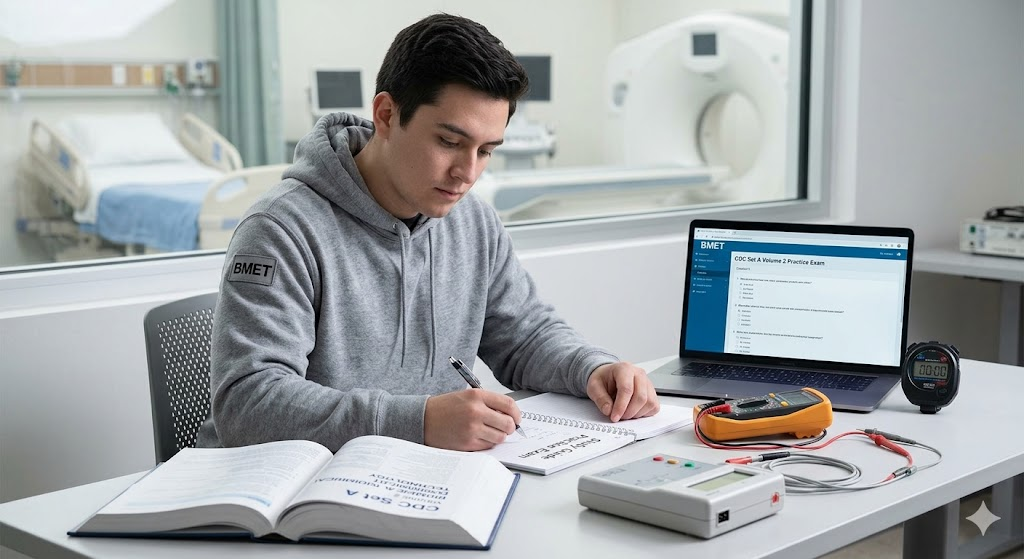
Additional Information
What the Course Entails and Exam Details
This volume moves beyond basic electronics into the integration of technology within the human physiological framework.
The curriculum covers a diverse array of essential topics designed to build a holistic understanding of the BMET role.
Medical Terminology, Anatomy, and Physiology: Technicians must understand the systems they are supporting, including terminology and basic functions of the skeletal, muscular, nervous, cardiovascular, respiratory, and digestive systems.
Foundational Clinical Engineering Principles: This includes the basics of biological signal acquisition (how medical devices pick up signals from the body), fundamental concepts of electro-medical safety, and the regulations governing medical device maintenance.
Initial Diagnostic and Therapeutic Equipment: The course provides an introduction to the operation and maintenance theory of basic medical devices, such as EKG machines, patient monitors, and defibrillators.
Safety Standards: Emphasis is placed on electrical safety standards, leakage current testing, and basic troubleshooting methodologies for medical equipment.
The exam itself is designed to validate knowledge retention across these specific core areas rather than test practical, hands-on repair skills at this stage.
What to Expect in the Final Exam
The BMET CDC Set A Volume 2 Final Exam is a proctored, comprehensive assessment taken upon completion of the coursework.
Understanding the structure will help you minimize anxiety and manage your time effectively.
Format: The exam consists entirely of objective questions, typically Multiple Choice.
Content: Questions are derived directly from the Volume 2 text, including Unit Review Exercises (UREs).
Rules: This is a closed-book examination. No reference materials, notes, or outside electronic devices are permitted during the test.
Passing Score: Students are usually required to achieve a score of 70% or higher to pass, though specific program requirements may vary.
Time Limit: A strict time limit is enforced, usually ranging between two to three hours, which is adequate for the number of questions provided.
How to Study and Exam Centers
Preparation is the absolute key to success on any CDC examination.
Because the material can be dense, an active study strategy is far superior to passive reading.
Master the Unit Review Exercises (UREs): Treat the UREs at the end of each section as if they are the actual exam. If you can answer every URE without looking at the text, you are well on your way to passing.
Utilize Active Recall: Read a section, close the book, and try to write down the main points or explain them aloud to yourself.
Study in Segments: Do not try to cram the entire volume at once. Focus on one major physiological system or one class of equipment at a time.
Use Practice Exams: Take reputable practice exams, such as this study guide, multiple times to simulate the pressure of test day and identify weak areas.
Exam Centers:
CDC exams are rarely administered at public testing centers like Pearson VUE.
Because CDCs are generally proprietary to the military or specific educational institutions, you will take the exam through your program's specific testing office or a military Base Education Center under strict proctoring guidelines.
Ensure you coordinate with your supervisor or training manager to schedule your test date.
Job Opportunities from the Course
Successfully mastering this course is a vital step toward full certification and career advancement.
Completing the Set A CDC series unlocks progression opportunities and qualifies you for increasing levels of responsibility within the biomedical technology field.
Here are the specific job paths and titles unlocked by progression in this field:
Biomedical Equipment Technician I (Apprentice)
Medical Equipment Field Service Representative
Clinical Engineering Assistant
Hospital Medical Device Repair Technician
Medical Imaging Equipment Trainee
Biomedical Equipment Maintenance Officer (Military Path)
Certified Biomedical Equipment Technician (CBET) - (Upon achieving necessary experience and full certification)
Frequently Asked Questions
Reviews
5.0
Based on 0 reviews
Leave a Review
No reviews yet. Be the first to review!