
BMV Practice Test
$69.00
- Buy to unlock unlimited access to all Quiz questions and Answers in this Quiz.
- After purchase you can print a PDF of the whole quiz at any point. The PDF will contain the questions and the correct answers.
About this Exam
The BMV knowledge exam is a critical step for anyone looking to obtain a driver's learner permit or a full driver's license. This test is designed by individual state Bureaus of Motor Vehicles to ensure that all new drivers possess a fundamental understanding of traffic laws, road safety regulations, and the meaning of various traffic signs. Essentially, this exam serves as the gatekeeper, confirming you have the necessary theoretical knowledge to begin safely operating a motor vehicle on public roads. It is specifically intended for first-time drivers, new residents transferring out-of-state licenses that require re-testing, or individuals seeking to reinstate a suspended or expired license.
Ready to test your knowledge?
Buy Now to Access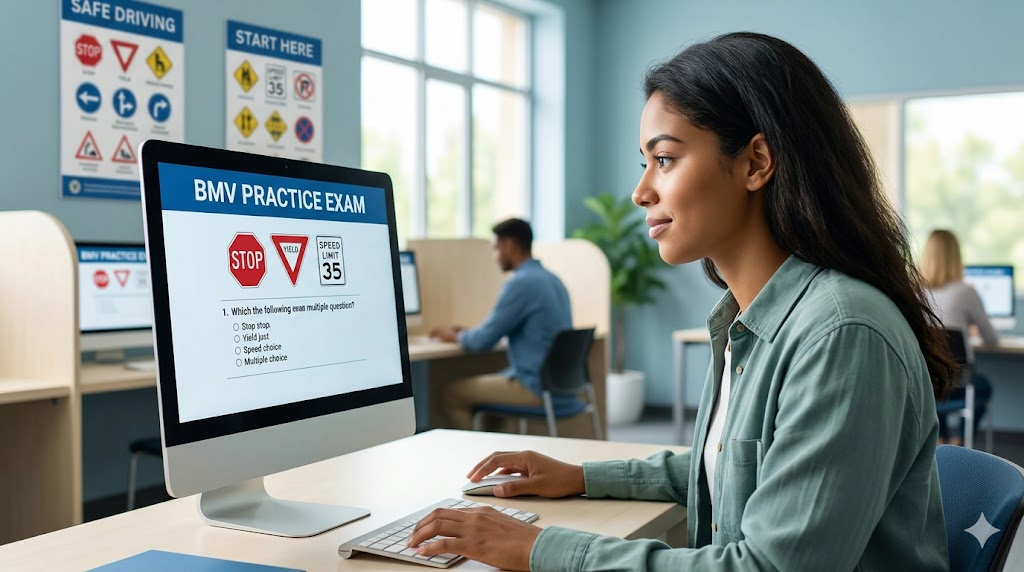
Additional Information
What the Course Entails and Exam Details
The material covered in the BMV exam is almost entirely derived from the information found within your state's official Driver's Manual. While there is rarely a formal "course" required, thorough study of this manual constitutes the preparation needed. The syllabus focuses heavily on key categories of driving knowledge. You must master road sign identification, including the meaning of shapes, colors, and symbols for regulatory, warning, and informational signs. Traffic laws are a primary focus, covering right-of-way rules, speed limits in different zones, signaling requirements, turning maneuvers, and safe passing protocols. Furthermore, the exam evaluates your understanding of safe driving practices, such as defensive driving techniques, handling adverse weather conditions, maintaining proper following distances, and understanding the dangers of driving under the influence of alcohol or drugs. State-specific regulations, such as seat belt requirements and rules for sharing the road with school buses, are also frequently tested.
What to Expect in the Final Exam
The final BMV knowledge exam is almost universally administered via a computer terminal at a physical testing center. The format consists of multiple-choice questions, typically presenting a scenario, a rule statement, or an image of a road sign with three to four possible answers. Some states separate the test into distinct sections, requiring you to pass a road sign identification segment before proceeding to the traffic rules segment. The exact number of questions varies by state, often ranging from 25 to 50 questions. Similarly, the required passing score differs but is generally set around 70% to 80% correct. You are usually not permitted to use your manual or any reference materials during the exam. While some states do not have strict time limits, others may impose a generous timeframe, but the test is generally structured to allow well-prepared test-takers sufficient time to complete it. Immediate results are typically displayed upon submission.
How to Study and Exam Centers
Effective preparation for the BMV exam requires a combination of rote learning and practical application through practice tests. Your first and most crucial resource is your state's official Driver's Manual, which can usually be downloaded from the BMV website or picked up at a branch. Read this manual cover-to-cover, perhaps highlighting key rules, and focus intensely on memorizing the shapes and colors of road signs. Once you feel confident, transition to taking reputable online practice tests, such as those provided directly on the BMV website or trusted educational platforms. These practice tests are invaluable for familiarizing yourself with the wording of the questions and identifying specific areas where you need further review.
To take the actual exam, you must visit an authorized BMV branch office or designated licensing center in your state. You cannot typically take the official knowledge test online from home. Many states require that you schedule an appointment for the test in advance to ensure a computer is available and to manage wait times. When going to the exam center, ensure you bring all required documentation, which usually includes proof of identity, social security number, and residency, as specified by your state's licensing guidelines.
Job Opportunities from the Course
Passing the BMV knowledge exam is the foundational prerequisite for obtaining a driver's license, which is essential for numerous job opportunities across various industries.
Delivery Driver (Food, Packages, Medical Supplies)
Rideshare Driver (Uber, Lyft)
Taxi Driver
Local Courier
Pizza Delivery Driver
Mobile Service Technician
Traveling Sales Representative
Real Estate Agent
Personal Chauffeur
Nanny or Au Pair (often requires driving duties)
Valet Parking Attendant
Car Rental Agency Agent (requiring shuttle driving or vehicle moving)
Agricultural Worker (often requires driving between fields)
Property Manager
Frequently Asked Questions
Reviews
5.0
Based on 0 reviews
Leave a Review
No reviews yet. Be the first to review!