
BNSF Air Brake and Train Handling Practice Test
$69.00
- Buy to unlock unlimited access to all Quiz questions and Answers in this Quiz.
- After purchase you can print a PDF of the whole quiz at any point. The PDF will contain the questions and the correct answers.
About this Exam
The BNSF Air Brake and Train Handling (ABTH) rules are critical for the safe and efficient operation of freight trains across BNSF Railway’s extensive network. This practice test is specifically designed for aspiring and current BNSF employees, including conductors and locomotive engineers, who must demonstrate a thorough understanding of these complex operational procedures. Mastery of these rules is not just a job requirement; it is foundational to maintaining the safety of the crew, the public, and the freight being transported. This practice tool helps candidates prepare effectively for the rigorous internal evaluations required to obtain or maintain certification.
Ready to test your knowledge?
Buy Now to Access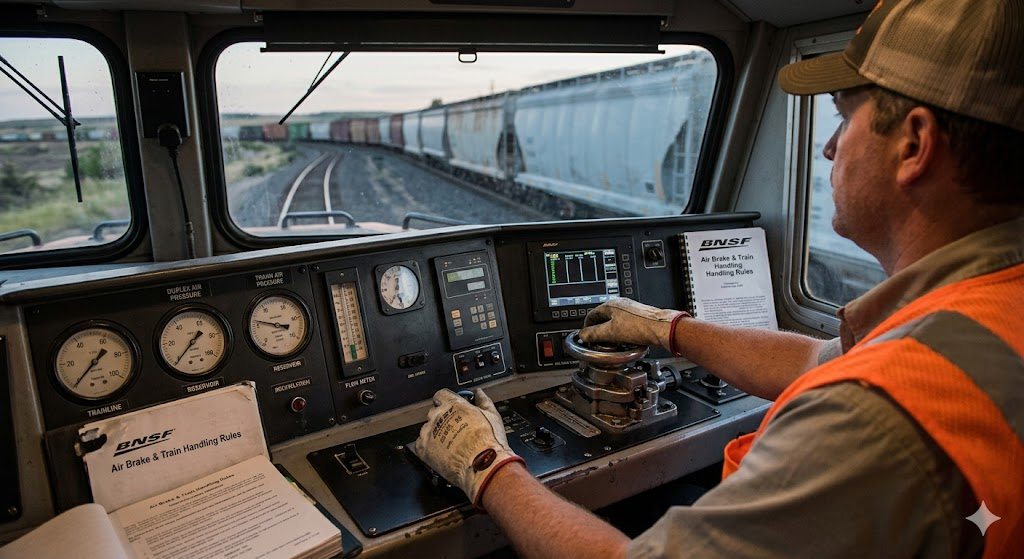
Additional Information
What the Course Entails and Exam Details
The BNSF ABTH guidelines cover a comprehensive array of technical and operational skills necessary for managing train dynamics. Key areas included in the material are the fundamental principles of railroad air brake systems, dynamic braking applications, and complex train handling techniques under various terrain and train-make-up conditions.
Candidates must study the official BNSF Air Brake and Train Handling Rules publication. The syllabus focuses on understanding brake system components, performing required brake tests (such as initial terminal and intermediate tests), and correctly applying rules related to controlling slack action, managing speed on descending grades, and securing equipment.
What to Expect in the Final Exam
The actual BNSF qualification exam on Air Brake and Train Handling is typically a comprehensive written evaluation administered internally by the railway. It often consists of multiple-choice and true/false questions derived directly from the BNSF ABTH rulebook.
To pass, candidates must achieve a high score, often 80% or higher, reflecting the safety-critical nature of this knowledge. There may be strict time limits for completing the exam. The evaluation assesses a candidate's ability to not only recall specific rules but also apply them correctly to simulated operational scenarios they might encounter on the job.
How to Study and Exam Centers
Effective preparation requires consistent and dedicated study of the BNSF Air Brake and Train Handling Rules. It is essential to treat the rulebook as your primary resource. Break down the material into manageable sections, focusing on understanding the intent behind each rule rather than just memorizing the words.
Utilizing practice tests, like the one described here, is an excellent strategy. They help identify knowledge gaps and familiarize you with the types of questions and formatting you will encounter. We recommend taking practice exams multiple times until you consistently score well above the passing requirement. Additionally, forming study groups with colleagues or seeking mentorship from experienced engineers can provide valuable insights and practical context.
The official qualification exams are administered by BNSF Railway. These tests are conducted at specific BNSF training facilities, divisional offices, or designated testing locations for employees and are not available at public testing centers.
Job Opportunities from the Course
Successfully mastering the BNSF Air Brake and Train Handling rules is essential for advancement within several key operational roles at BNSF Railway.
This knowledge base directly unlocks and supports the following career paths:
BNSF Conductor
BNSF Locomotive Engineer
Trainmaster
Road Foreman of Engines
Safety Supervisor or Rules Instructor
Frequently Asked Questions
Reviews
5.0
Based on 0 reviews
Leave a Review
No reviews yet. Be the first to review!