
Board Certified Gerontological Nutritionist (BCGN) Practice Test
$69.00
- Buy to unlock unlimited access to all Quiz questions and Answers in this Quiz.
- After purchase you can print a PDF of the whole quiz at any point. The PDF will contain the questions and the correct answers.
About this Exam
The Board Certified Gerontological Nutritionist (BCGN) designation is a premier specialty certification for Registered Dietitian Nutritionists (RDNs) dedicated to the older adult population. It is awarded by the Commission on Dietetic Registration (CDR) to recognize practitioners who possess advanced knowledge and expertise in the nutritional needs of aging individuals. This certification is designed for RDNs working in skilled nursing facilities, assisted living, long-term care, home healthcare, and community health organizations who want to validate their clinical skills and enhance their career trajectory.
Ready to test your knowledge?
Buy Now to Access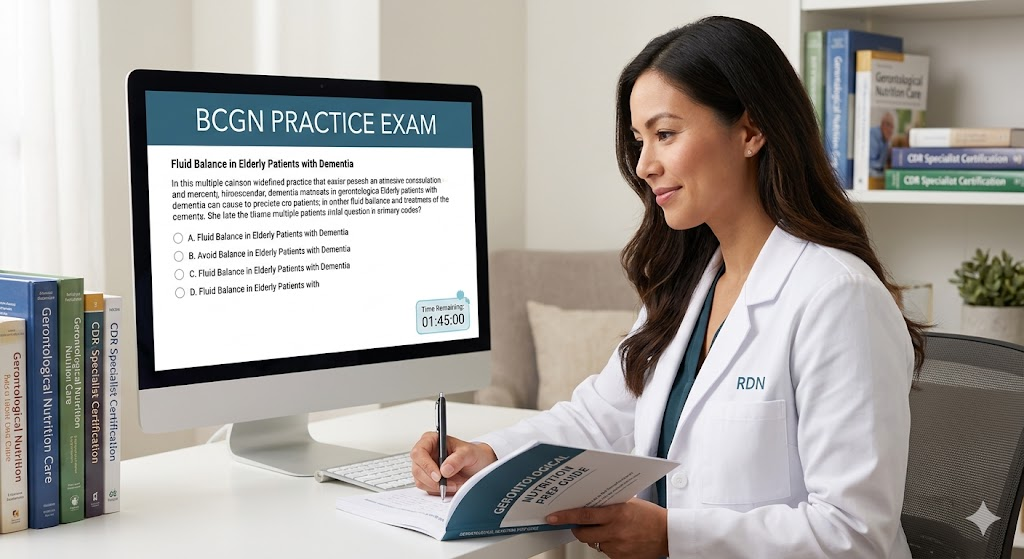
Additional Information
What the Course Entails and Exam Details
This specialty certification does not require a specific mandatory course; rather, it assesses the competency acquired through years of focused experience and self-study. The examination is based on a comprehensive content outline developed by the CDR, which defines the scope of practice and necessary skills for a specialist. Key domains covered within the syllabus include:
Nutritional Screening and Assessment: Mastery of screening tools, clinical indicators of malnutrition, and identifying changes in nutritional status specific to aging.
Nutritional Care Planning: Developing, implementing, and evaluating personalized nutrition interventions for diverse older adult populations.
Medical Nutrition Therapy for Older Adults: Expertise in managing chronic and acute diseases prevalent in seniors, such as dementia, cardiovascular disease, diabetes, osteoporosis, and swallowing disorders.
Physiology of Aging: Understanding normal aging processes, sensory changes, cognitive decline, and their direct impact on nutrition and hydration status.
Regulatory and Professional Issues: Demonstrating knowledge of reimbursement structures, ethics, interdisciplinary team dynamics, and state/federal regulations governing elderly care.
What to Expect in the Final Exam
The BCGN exam is a rigorous, computer-based test designed to evaluate your critical thinking and application of advanced nutritional knowledge. While specific details can vary by test administration window, candidates should generally prepare for the following format:
The final exam consists of approximately 125 to 150 multiple-choice questions, which must be completed within a three-hour time limit. A scaled score system is used for passing requirements, with the minimum passing score set by the CDR for each testing cycle. Candidates must arrive at the test center early for mandatory check-in, where strict security protocols, including valid identification and a digital signature, will be enforced. No reference materials or personal items are permitted in the testing room. A standard, basic calculator is typically provided on the screen.
How to Study and Exam Centers
Preparation for the BCGN examination should be methodical and thorough. Begin by studying the current CDR Gerontological Nutritionist Examination Content Outline and Bibliography to identify the exact weight of each topic and primary resources. Utilize authoritative textbooks such as "Gerontological Nutrition Care" and the Academy of Nutrition and Dietetics’ guides on long-term care.
A cornerstone of your study plan must be the use of comprehensive practice tests. Taking simulated practice exams allows you to familiarize yourself with the structure and pacing, identify weak areas, and build endurance for the three-hour testing session. Analyze each practice question’s rationale, rather than simply memorizing answers.
The BCGN exam is administered at specialized physical testing centers across the United States. To take the exam, you must first complete an eligibility application through the Commission on Dietetic Registration (CDR). Once approved, you will be issued an Authorization to Test (ATT) letter, enabling you to schedule your appointment at a nearby Pearson VUE testing center or other authorized physical facility approved by the CDR for your specific testing window.
Job Opportunities from the Course
Obtaining Board Certification as a Specialist in Gerontological Nutrition unlocks a diverse range of career paths and leadership positions. Job opportunities that value or require this credential include:
Gerontological Nutritionist
Director of Dietary Services for Long-Term Care
Consult dietitian for Skilled Nursing Facilities
Clinical Dietitian specialized in Geriatrics
Home Health Nutrition Consultant
Nutrition Director for Assisted Living Communities
Geriatric Care Manager
Nutritional Educator for Senior Centers and Community Health
Nutrition Policy Analyst for Aging Agencies
Frequently Asked Questions
Reviews
5.0
Based on 0 reviews
Leave a Review
No reviews yet. Be the first to review!