
Board of Certification for the Athletic Trainer (BOC) Practice Test
$69.00
- Buy to unlock unlimited access to all Quiz questions and Answers in this Quiz.
- After purchase you can print a PDF of the whole quiz at any point. The PDF will contain the questions and the correct answers.
About this Exam
The Board of Certification (BOC) for the Athletic Trainer exam is the definitive gateway to becoming a Certified Athletic Trainer (ATC). This prestigious certification validates the knowledge and skills necessary to provide quality healthcare to athletes and physically active individuals. The exam is rigorously designed for graduates of athletic training education programs accredited by the Commission on Accreditation of Athletic Training Education (CAATE). Earning your ATC credential demonstrates a mastery of injury prevention, emergency care, clinical diagnosis, and therapeutic intervention. It is the gold standard required for licensure or regulation in most states, marking you as a trusted healthcare professional in the dynamic field of sports medicine.
Ready to test your knowledge?
Buy Now to Access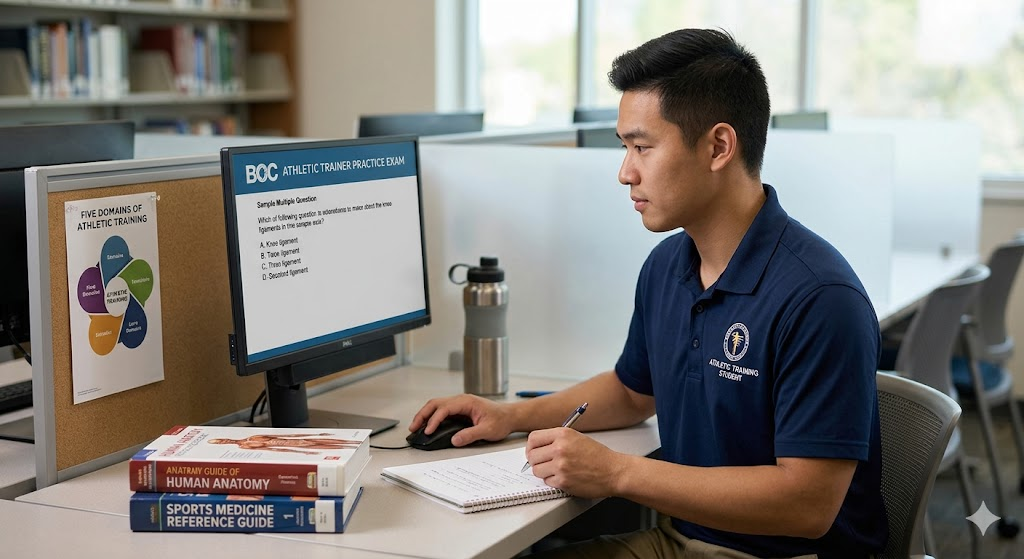
Additional Information
What the Course Entails and Exam Details
While there isn't a single "course" you take, your entire accredited athletic training program is the preparatory journey. The BOC exam assesses your proficiency across five primary practice domains established by the current BOC Practice Analysis. These critical areas include: Domain I: Risk Reduction, Wellness and Health Literacy, which focuses on preventing injuries and promoting healthy lifestyles; Domain II: Assessment, Evaluation and Diagnosis, covering the clinical examination of injuries and medical conditions; Domain III: Critical Incident Management, ensuring readiness for emergency and immediate care situations; Domain IV: Therapeutic Intervention, involving the design and implementation of rehabilitation and treatment programs; and Domain V: Healthcare Administration and Professional Responsibility, which manages the organizational and ethical aspects of practice. Your academic coursework and clinical experiences are directly mapped to these domains.
What to Expect in the Final Exam
The actual BOC certification exam is a computer-based test (CBT) known for being both challenging and comprehensive. It consists of a varied number of items, typically around 175, including a mix of standard multiple-choice questions, multi-select items where you choose all correct answers, drag-and-drop scenario-based problems, and "hot spot" questions requiring you to identify specific anatomical locations. You are allotted a total of four hours to complete the examination. The BOC uses a scaled scoring system; a minimum scaled score of 500 is required to pass, with scores ranging from 200 to 800. There are no scheduled breaks, so time management is essential. Candidates receive official pass/fail results within two to four weeks of their testing date, though preliminary results may be available immediately at the test center.
How to Study and Exam Centers
Preparation for this exam should be a multi-faceted and dedicated endeavor, beginning well before your test date. Start by deeply analyzing the current BOC Practice Analysis to understand the weight and specifics of each domain. Leverage the National Athletic Trainers’ Association (NATA) self-assessment exams, which provide invaluable feedback on your strengths and weaknesses. Create a structured study plan that allocates time to each domain, utilizing textbooks, class notes, and peer-reviewed journals for content review. Forming small study groups can facilitate knowledge sharing and critical discussion. Practice with a variety of mock exams to familiarize yourself with the question formats and to refine your time management skills. When you are ready to test, the BOC partners with a nationwide network of authorized testing centers, typically operated by a company like Pearson VUE. These professional facilities offer a secure, proctored environment. You must apply and register for the exam through your BOC profile, which will then allow you to schedule your appointment at a center that is convenient for you.
Job Opportunities from the Course
Earning your BOC certification as an Athletic Trainer opens a wide spectrum of rewarding career paths. Certified Athletic Trainers are integral members of healthcare teams in diverse settings. While a table is not requested, common job titles and occupational sectors include: Athletic Trainer in Secondary Schools (High Schools), Collegiate Athletic Trainer (Colleges/Universities), Professional Sports Athletic Trainer, Sports Medicine Clinic Athletic Trainer, Hospital-Based Athletic Trainer, Industrial or Occupational Health Athletic Trainer, Military Athletic Trainer (Tactical Athlete), Performing Arts Athletic Trainer, Physician Extender in Orthopedic Practices, and Public Safety Athletic Trainer (Police/Fire Departments). This versatile credential empowers you to work with everyone from youth athletes and Olympians to workers in high-demand industrial environments.
Frequently Asked Questions
Reviews
5.0
Based on 0 reviews
Leave a Review
No reviews yet. Be the first to review!