
Board of Legal SpecializationPractice Exam
$69.00
- Buy to unlock unlimited access to all Quiz questions and Answers in this Quiz.
- After purchase you can print a PDF of the whole quiz at any point. The PDF will contain the questions and the correct answers.
About this Exam
The Legal Specialization Board Practice Exam is an essential diagnostic tool designed for experienced attorneys seeking formal recognition in specific practice areas. Board certification is a mark of professional distinction, indicating that an attorney has been vetted and found to possess advanced knowledge, skill, and proficiency in their chosen legal field. This practice exam is designed to help serious candidates prepare for the rigors of the final certification test, identifying strengths and weaknesses before the official examination date. It is primarily intended for lawyers with several years of focused practice experience in specialized fields such as family law, criminal law, estate planning, or personal injury litigation, who are ready to elevate their career status.
Ready to test your knowledge?
Buy Now to Access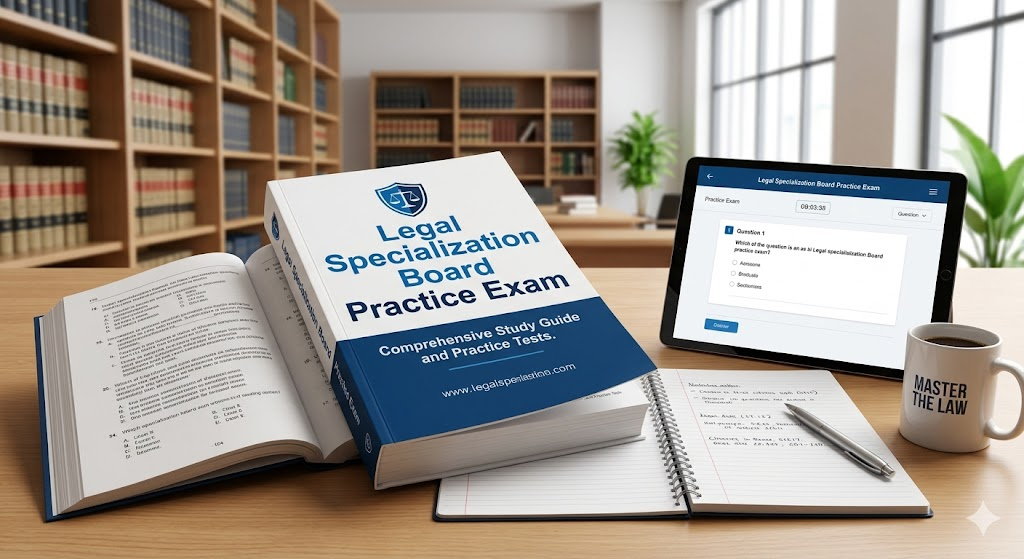
Additional Information
What the Course Entails and Exam Details
While the specific curriculum and course materials vary depending on the chosen practice area, the Legal Specialization Board Practice Exam is designed to comprehensively review the core competencies and advanced topics required for certification. It delves deep into substantive and procedural law specific to the specialization, moving beyond foundational bar exam knowledge to master complex issues and recent legal developments. The practice questions are modeled after real certification exam formats, which typically include complex essay questions requiring sophisticated legal analysis, and a series of challenging short-answer or problem-solving questions. This study process forces a rigorous review of statutes, key case precedents, rule application, and ethical considerations specific to the specialist’s daily practice.
What to Expect in the Final Exam
The final Legal Specialization Board certification exam is a challenging, full-day—and sometimes multi-day—event designed to meticulously test mastery. It is not a standard bar exam. Candidates must be prepared to write extensive essay responses to multi-issue, fact-pattern questions that demand clear, logical, and nuanced legal reasoning. The time limits for these essays are often strict, forcing efficient and high-quality production under pressure. Furthermore, a substantial portion of the exam consists of short-answer questions or performance tests that evaluate practical rule application, procedural fluency, and accurate citation of authority. While a few multiple-choice questions might be included for breadth of coverage, the emphasis is overwhelmingly on written demonstration of expertise. A exceptionally high passing score is required, reflecting the elite nature of board certification.
How to Study and Exam Centers
Effective preparation requires an active and disciplined study strategy. Use this Legal Specialization Board Practice Exam early and often to diagnose specific knowledge gaps. Do not just answer questions; dissect why answers are correct or incorrect. Practice writing full essay responses under timed conditions, then review them against high-scoring sample answers or rubrics. Form a study group with colleagues who are also seeking specialization, or find a mentor who is already board-certified to review your analysis. Mastery of key statutes and rules must be absolute. Regarding exam centers, these high-stakes tests are rarely administered loosely. They are usually held at centralized, secure locations such as specific state bar headquarters, major conference centers designated for professional licensing exams, or via authorized, secure digital proctoring platforms. Review your specific state board's candidate guide immediately to understand the official and authorized locations for your particular exam date.
Job Opportunities from the Course
Earning the designation of a Board-Certified Specialist dramatically distinguishes an attorney in the legal marketplace, unlocking high-level career opportunities and increased earning potential. The "specialist" title is a powerful marketing tool that allows lawyers to focus on more complex, rewarding, and high-profile cases. Some job opportunities and career paths directly strengthened by this certification include:
Lead or Senior Attorney: Assuming leadership roles within practice groups in major law firms or boutique specialty firms.
Law Firm Partner: Providing a competitive edge and strong credential when applying for partnership positions within established firms.
Highly Compensated Specialist: Commanding significantly higher hourly rates and consultation fees.
Expert Witness: Qualified as a certified expert to provide testimony in relevant complex litigation.
Distinguished Solo Practitioner: Building a highly respected and profitable independent practice around a specific, recognized niche.
Corporate General Counsel (Specialized): Securing leadership roles within industries that are highly regulated or demand specific legal acumen.
Frequently Asked Questions
Reviews
5.0
Based on 0 reviews
Leave a Review
No reviews yet. Be the first to review!