
Boating License Practice Test
$69.00
- Buy to unlock unlimited access to all Quiz questions and Answers in this Quiz.
- After purchase you can print a PDF of the whole quiz at any point. The PDF will contain the questions and the correct answers.
About this Exam
The Boating License, legally recognized in most jurisdictions as a Boating Safety Education Certificate, is a mandatory requirement for operating motorized vessels on public waterways. This certification ensures that all boaters possess the essential knowledge required for safe, responsible, and enjoyable vessel operation. The course is designed for both new and experienced recreational boaters, including operators of powerboats, personal watercraft (PWCs like Jet Skis), and sailing vessels. This study guide is an indispensable tool for helping you master the material required to obtain your official credential.
Ready to test your knowledge?
Buy Now to Access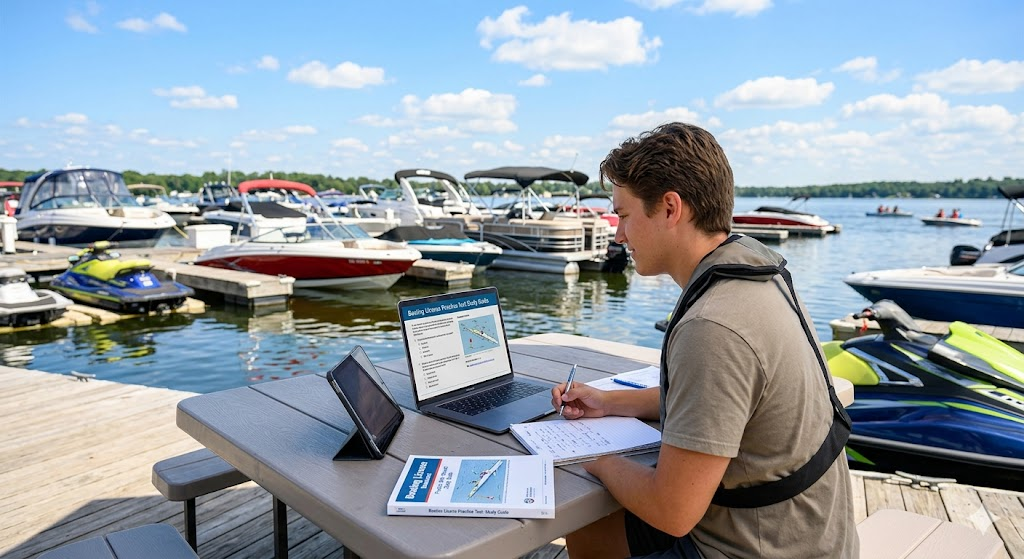
Additional Information
What the Course Entails and Exam Details
A comprehensive boating safety course covers a wide array of topics critical to maritime safety. The core syllabus typically includes:
Vessel Basics: Understanding different types of boat hulls, engines (inboard vs. outboard), and essential terminology (port, starboard, bow, stern).
Navigation Rules: Mastering the maritime "rules of the road," including determining the stand-on and give-way vessel in various crossing, overtaking, and head-on situations.
Safety Equipment: State and federal requirements for personal flotation devices (PFDs or life jackets), fire extinguishers, visual distress signals (flares), and sound-producing devices.
Safe Operation: Procedures for casting off, docking, anchoring, fueling safety, and managing different environmental conditions like wind and current.
Emergency Procedures: How to respond to critical incidents such as a person overboard, capsize, fire, or collision, including issuing a distress call.
State and Federal Laws: Specific regulations regarding registration, titling, age requirements for operators, boating under the influence (BUI/BWI) laws, and environmental protection rules.
Buoys and Markers: Understanding the Lateral System (Red, Right, Returning), non-lateral markers, and other aids to navigation.
What to Expect in the Final Exam
The official final exam is designed to objectively test your comprehension of the boating safety curriculum. While specific details vary by jurisdiction, you can generally expect the following format:
Question Format: The vast majority of official boating exams are comprised of multiple-choice questions, requiring you to select the single best answer from several options. Some questions may involve analyzing diagrams or images.
Passing Score: To successfully earn your certification, you must demonstrate a strong understanding of the material. A typical passing score is usually 80% or higher (e.g., answering at least 48 out of 60 questions correctly).
Exam Length: The exam typically consists of 50 to 75 questions, covering all major topics in the course.
Time Limits: In-person exams usually have a fixed time limit (often 60-90 minutes). Online final exams, provided through approved platforms, may be timed for the session but generally allow ample time for completion if you have studied the material.
Rules: Official exams are closed-book and require independent completion without external assistance. Most online platforms use a state-verified proctoring method to ensure the integrity of the test-taker.
How to Study and Exam Centers
Preparation is paramount to success. Utilize these proven study strategies and access authorized testing avenues:
Effective Study Strategies:
Use the Official Manual: Thoroughly read and review the official state-approved boater safety course manual. This is your primary source of correct information.
Take Practice Tests: Actively engage with multiple Boating License Practice Tests. Practice tests help identify your knowledge gaps, familiarize you with the question wording, and reinforce correct navigation rules and safety procedures.
Focus on State-Specific Laws: Ensure you dedicate specific study time to the unique boating regulations of your particular state or province, as these will be covered on the final exam.
Create Flashcards: Use flashcards to memorize definitions, buoy types, sound signals, PFD requirements, and the specific "rules of the road."
Exam Centers and Testing Locations:
You can complete the official course and final exam through several approved channels:
Online State-Approved Providers: This is the most common and convenient option. Organizations like BoatUS Foundation (often free courses funded by donations) or state-specific approved commercial providers offer NASBLA-approved (National Association of State Boating Law Administrators) online courses and exams. You can take the course and final exam in segments at your own pace from home.
Physical Testing Centers or Classes: Many state agencies responsible for boating safety (such as the Department of Natural Resources or Fish and Wildlife Commission) offer in-person classroom courses. These sessions are led by certified instructors and conclude with the official proctored exam.
Authorized Schools: Specific organizations, including the United States Coast Guard Auxiliary and the United States Power Squadrons, regularly conduct comprehensive public boating safety courses and exams in various communities.
Job Opportunities from the Course
While a recreational Boating Safety Education Certificate is primarily for non-commercial vessel operation, it is an essential foundational safety qualification required for many entry-level marine positions. It demonstrates compliance with safety standards and a prerequisite level of knowledge.
Potential career paths and specific job titles that may require or strongly benefit from this certificate include:
Tour Boat Deckhand: Basic water safety knowledge is essential for supporting passengers and maintaining safety aboard tour vessels.
Boat Rental Attendant: Responsible for explaining safe operation procedures and state laws to customers renting powerboats, Jet Skis, or pontoon boats.
Fishing Guide Assistant/Deckhand: Provides crucial safety and navigational support to a licensed commercial fishing guide. (Note: The lead guide or charter captain must hold a USCG commercial license).
Marina Dockhand: Assists with docking, fueling, and managing vessel movement within a marina, where understanding navigation rules and safety is vital.
Basic Water Safety Instructor Support: Assisting licensed instructors in delivering non-motorized water safety or basic sailing programs where a boater safety card is often a required safety credential.
Recreational Boat Delivery Driver: (In specific non-commercial contexts, such as delivering vessels within limits for private owners, dependent on state laws).
Water Taxi/Ferry Crew: Serving as crew members under a licensed captain on smaller, regional water transport services.
Frequently Asked Questions
Reviews
5.0
Based on 0 reviews
Leave a Review
No reviews yet. Be the first to review!