
BOMA Instrumentation & Controls Practice Test
$69.00
- Buy to unlock unlimited access to all Quiz questions and Answers in this Quiz.
- After purchase you can print a PDF of the whole quiz at any point. The PDF will contain the questions and the correct answers.
About this Exam
The BOMA Instrumentation & Controls (I&C) certification is designed for building engineers, facility managers, and technicians who operate and maintain complex building automation systems (BAS) and control equipment.
This professional designation validates an individual's knowledge of the critical systems that manage a building's environment, safety, and efficiency.
Earning this certification demonstrates a high level of competency in installing, troubleshooting, and maintaining the sensors, controllers, actuators, and communication networks that form modern building control infrastructure.
Ready to test your knowledge?
Buy Now to Access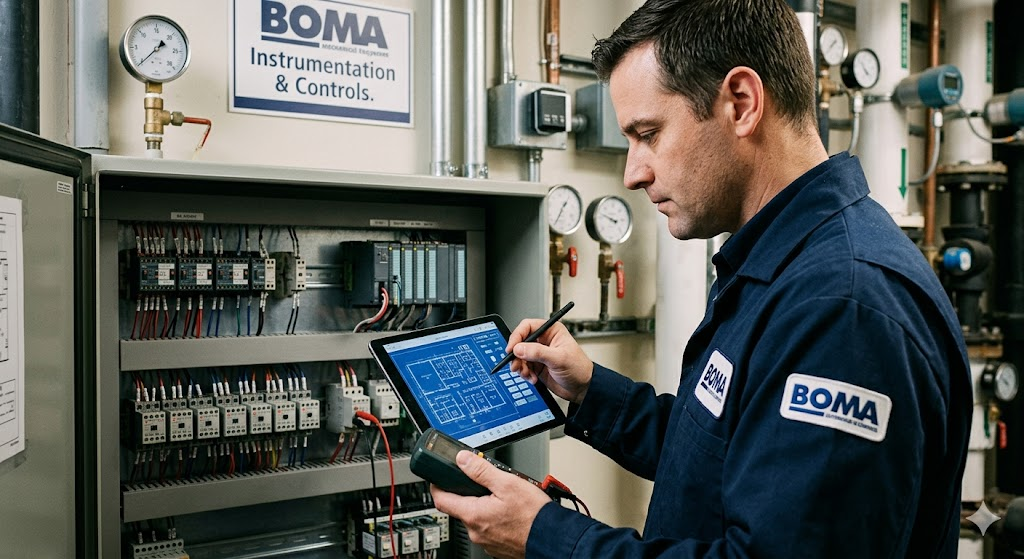
Additional Information
What the Course Entails and Exam Details
This examination covers a broad range of topics essential for effectively managing building systems and energy performance.
Prospective examinees should expect comprehensive coverage of the following core areas:
Fundamentals of Control Theory: Concepts of feedback loops, proportional-integral-derivative (PID) control, and sequence of operations for HVAC systems.
Sensors and Transducers: Operation, calibration, and application of temperature, pressure, flow, humidity, and air quality sensors.
Actuators and Control Valves: Types, selection, and maintenance of dampers and valve actuators used in heating, cooling, and air handling.
Building Automation Systems (BAS) and Networks: Fundamentals of BAS architecture, communication protocols (like BACnet, Modbus, LonWorks), and integration.
Safety and Environmental Systems: Understanding the integration of fire, life safety, security, and lighting controls with the primary I&C systems.
Energy Management and Optimization: Strategies for using control sequences to optimize energy efficiency and building performance.
Troubleshooting and Maintenance: Diagnostic techniques and preventative maintenance practices for ensuring reliability and longevity of I&C components.
What to Expect in the Final Exam
The BOMA Instrumentation & Controls certification exam is a comprehensive assessment typically administered in a controlled testing environment.
It is structured to evaluate both theoretical understanding and practical application of I&C principles.
Key details about the exam format include:
Format: The exam predominantly consists of multiple-choice questions designed to test knowledge retention and critical thinking. It may also include scenario-based questions that simulate real-world problem-solving challenges.
Passing Score: A passing score must be achieved to earn the certification. The specific required percentage is determined based on the statistical difficulty of the unique examination version and is clearly communicated by BOMA upon registration.
Time Limit: There is a strict time limit for completing the exam. This constraint emphasizes the importance of efficient time management and thorough preparation.
Rules and Regulations: The exam is strictly proctored, and candidates are forbidden from bringing any unauthorized materials, including notes or electronic devices, into the testing area.
How to Study and Exam Centers
Effective preparation for the BOMA I&C exam requires a structured approach and commitment to learning both theory and practice.
Consider implementing the following strategies:
Utilize Official BOMA Resources: BOMA offers official study guides, reference materials, and sometimes recommended preparatory courses or workshops. These are the most direct and reliable resources.
Hands-on Experience: Practical experience is invaluable. Whenever possible, spend time working directly with building control systems, sensors, controllers, and BAS software under the guidance of experienced professionals.
Engage with Industry Standard Manuals: Review standard textbooks on HVAC systems, control theory, and building automation technology.
Join Study Groups: Collaborating with peers preparing for the same certification can provide diverse perspectives and help reinforce learning through discussion.
Take Practice Exams: Practicing with simulation exams helps you understand the question formats and identify knowledge gaps. Analyze incorrect answers to focus your remaining study time.
Regarding examination centers, the BOMA Instrumentation & Controls exam is typically administered through standardized testing networks or specific BOMA local association facilities:
Standardized Testing Networks: Many BOMA exams are offered via partners like Pearson VUE, which have numerous testing centers available globally, providing convenience for scheduling.
BOMA Local Associations: In some cases, examinations may be facilitated directly by BOMA local chapters. Check with your local association for scheduled exam dates and locations.
Online Proctoring: For increased accessibility, online proctoring may be available. Candidates can take the exam remotely under strict online supervision.
Job Opportunities from the Course
Earning the BOMA Instrumentation & Controls certification significantly enhances professional credibility and opens doors to diverse career paths in facility operations and management.
Key job titles and career opportunities unlocked by this designation include:
Building Engineer
Chief Building Engineer
Facility Manager
Instrumentation and Controls Technician
Control Systems Specialist
Building Automation System (BAS) Operator
HVAC Control Technician
Commissioning Agent / Specialist
Energy Management Engineer
Technical Services Manager
This certification provides a distinct competitive advantage for professionals looking to advance within the dynamic field of commercial real estate and facilities management.
Good luck with your studies!
Frequently Asked Questions
Reviews
5.0
Based on 0 reviews
Leave a Review
No reviews yet. Be the first to review!