
BPA 1750 Chocolate, Sugar, and Confections Practice Test
$69.00
- Buy to unlock unlimited access to all Quiz questions and Answers in this Quiz.
- After purchase you can print a PDF of the whole quiz at any point. The PDF will contain the questions and the correct answers.
About this Exam
Prepare to master the delicate and delicious arts with the BPA 1750 Chocolate Sugar and Confections Practice Test. This study guide is designed to help students, aspiring chocolatiers, and pastry professionals confidently prepare for the final, comprehensive examination corresponding to advanced culinary courses with the designation BPA 1750. The guide and associated practice material focus on the highly specialized skills required to create professional-quality chocolates, intricate sugarwork, and varied confectionery items. While "BPA 1750" is typically an institutional course code, this resource offers broad practice across the essential topics found in such high-level specialization programs, ensuring you are ready for both the practical artistry and the theoretical knowledge.
Ready to test your knowledge?
Buy Now to Access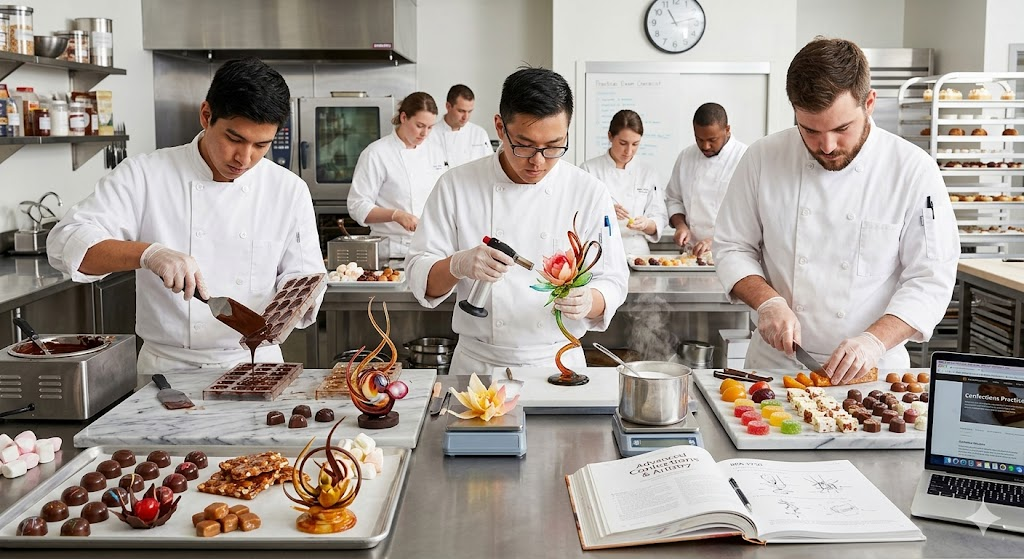
Additional Information
What the Course Entails and Exam Details
A comprehensive BPA 1750 style course or practice test typically covers a wide array of advanced confectionery skills. The core topics, which form the basis of the comprehensive final exam and practice materials, include:
Chocolate Artistry: Mastering chocolate tempering (crucial for both practical and theory), creating molded chocolates, diverse fillings (ganaches, caramels, fruit, nut, etc.), enrobing techniques, chocolate sculpting, introduction to chocolate showpieces, and professional decoration.
Sugar Work: Developing techniques for different sugar phases and boiling methods, creating pulled and blown sugar sculptures (flowers, abstract pieces), casting sugar, and working with other sugar forms like nougatine, poured caramel, fondant, and dragées.
Confections: Understanding and producing diverse confectionery items, including various fruit-based products (pâtes de fruits, fruit jellies), brittle and toffee, marshmallow and aerated confections, distinct fudge and nougat, and various types of candies.
Theory and Professional Practice: In-depth science behind chocolate, sugar, and ingredients, precise troubleshooting, sanitation and hygiene specifically for confectionery production, knowledge of specialized equipment, recipe costing, and professional kitchen organization.
This guide provides a comprehensive framework to test and build proficiency across all these key areas, preparing you for the real-world demands of a confectionery kitchen and the multi-part examination.
What to Expect in the Final Exam
For a course of this nature, the final examination typically follows a rigorous, multi-faceted structure, mirroring professional standards. Students can generally expect a combination of:
A Practical Examination: This is usually the most significant portion of the test, requiring you to demonstrate your skills over a significant time. You will likely be tasked with creating specific, high-quality chocolates (e.g., specific truffles, molded items), a defined sugar sculpture (incorporating pulled and blown techniques), and a variety of confections, all within a set timeframe. Evaluation is based on technical skill, final product appearance, flavor, hygiene, and kitchen organization. The time limit can range from several hours for a single day to multiple sessions spanning several days.
A Written/Theoretical Examination: A separate portion of the final assessment will test your theoretical understanding. This typically covers chocolate science and tempering theory, the various stages of sugar cooking and the science of crystalization, sanitation specific to confectionery, identification of ingredients and equipment, troubleshooting, and potentially calculation-based questions related to recipe scaling or math specific to the trade.
The exact format, number of questions, practical requirements, and the specific weight of each section are determined by the individual educational institution or program administering the BPA 1750 final exam. A passing score is typically set between 70% and 80%, with higher standards often applied to the practical demonstration. Always check your specific course syllabus and program guidelines for definitive information.
How to Study and Exam Centers
Effective preparation for the BPA 1750 confections final and practice tests requires a dedicated combination of practical work and theoretical review:
Actionable Study Strategies:
Practice, Practice, Practice: The most crucial element is physical practice. Temper chocolate multiple times, work with pulled and blown sugar, and make each type of confection repeatedly. Focus on timing yourself, improving efficiency, and achieving consistent results. Try to replicate the conditions you expect in the practical exam.seek feedback from instructors and peers.
Theoretical Mastery: Thoroughly review all lecture notes, textbooks, and resources. Memorize the critical temperatures for different stages of sugar cooking and all phases of tempering different types of chocolate. Create flashcards for key definitions, ingredient functions, and hygiene protocols.
Simulate the Exam: Utilize the comprehensive knowledge in this guide and any other practice materials to create a full mock exam experience. For the practical part, give yourself the same constraints you anticipate in the final. For the written part, answer practice questions under exam-like conditions.
Exam Centers and Location: Because BPA 1750 is linked to a specific academic course or program, the final, official comprehensive exam will be administered directly by your educational institution (e.g., your culinary school, college, or authorized academy). The practical and written portions are typically held on the school's campus, using their specialized pastry kitchens and testing rooms under real, supervised kitchen conditions. While some practice tests or written theory components might be provided online for preparatory study (like the context of this resource), the definitive final exam will not be available through external, general public testing centers (such as Pearson VUE). To confirm the exact location, dates, and procedures for your specific final exam, you must consult your course syllabus and instructors.
Job Opportunities from the Course
Successfully completing a comprehensive advanced confections course and its associated examination opens diverse career paths within the baking, pastry, and confectionery industries. A professional with a BPA 1750 level of specialization can pursue opportunities such as:
Chocolatier
Pastry Chef (specializing in confections)
Confectioner/Candy Maker
Production Chef (chocolate/confectionery focus)
Artisan Chocolatier Shop Owner/Entrepreneur
Confectionery Product Developer
Pastry/Culinary Arts Instructor (focusing on specialization)
Research and Development Chef (confections)
Cake Decorator (with specialized chocolate/sugar artistry skills)
Frequently Asked Questions
Reviews
5.0
Based on 0 reviews
Leave a Review
No reviews yet. Be the first to review!