
BTEC Physical Education Practice Test
$69.00
- Buy to unlock unlimited access to all Quiz questions and Answers in this Quiz.
- After purchase you can print a PDF of the whole quiz at any point. The PDF will contain the questions and the correct answers.
About this Exam
Welcome to your essential study guide for the BTEC Physical Education external assessment. This resource is designed to help students currently enrolled in Pearson BTEC qualifications in Sport or Physical Education to prepare effectively for their final written or on-screen examinations. The BTEC PE pathway offers a practical, vocational approach to learning about the sports industry, combining theoretical knowledge with hands-on application. This guide focuses specifically on the final exam component, which tests your understanding of core concepts that every sports professional must master. If you are aiming for a Pass, Merit, or Distinction in your technical qualification, optimizing your performance on this exam is vital.
Ready to test your knowledge?
Buy Now to Access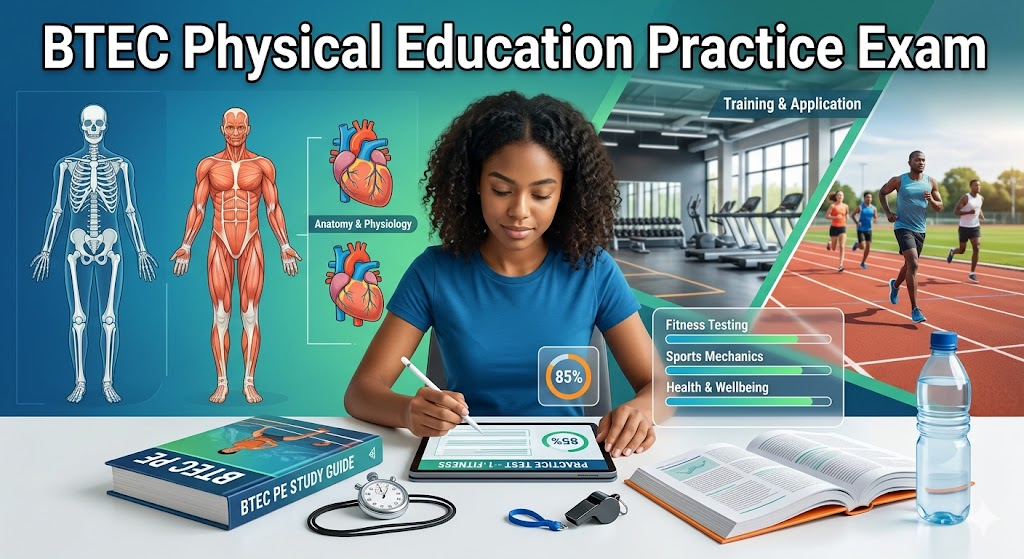
Additional Information
What the Course Entails and Exam Details
A BTEC course in Physical Education goes far beyond standard gym sessions. It provides a comprehensive foundation for understanding how the human body responds to exercise and the principles behind peak performance. The course is typically structured around several core units, with a significant portion assessed through coursework (internal assessment). However, one or more key units are assessed externally through a formal exam, which is the focus of this study guide. Depending on the level (e.g., BTEC Level 2 Firsts or Level 3 Nationals), these external components typically cover critical areas: Anatomy and Physiology, where you will learn about the skeletal, muscular, cardiovascular, and respiratory systems; Fitness Training and Programming for Health, Sport and Wellbeing; and Application of Fitness Testing, which explores how to measure and interpret human performance data.
What to Expect in the Final Exam
The BTEC Physical Education final external assessment is a structured exam that must be taken under strict controlled conditions. It is designed by the awarding body, Pearson, and can be administered either as a traditional paper-based exam or an onscreen, on-demand test at registered centres. The format is varied, moving beyond simple recollection. You should expect a mixture of multiple-choice questions, short-answer questions requiring concise definitions, and more complex, extended-response questions where you must apply your knowledge to specific sporting scenarios or case studies. For instance, you might be asked to describe the function of a specific muscle group during a football kick, or create a six-week training plan for an endurance athlete based on provided data. The exam typically lasts between 60 to 90 minutes.
How to Study and Exam Centers
Effective preparation for this exam requires a balance of active recall and practical application. First, download the official specification and use it as a checklist to ensure you have covered every mandatory topic. Utilizing past exam papers and Pearson’s sample assessment materials is the single most important strategy; practice answering these under timed conditions to get used to the pacing and structure. Create flashcards for key anatomical terms, fitness definitions, and training principles (FITT). Remember that BTEC is vocational, so connect the theory to the real world: when you are studying the cardiovascular system, think about how your own heart rate changes during different types of exercise. These exams cannot be taken at home. They must be sat at authorized examination centres, which are usually the school, college, or training provider where you are enrolled in the course.
Job Opportunities from the Course
A qualification in BTEC Physical Education provides a robust foundation for entry-level roles in the vibrant sport and leisure sector, or serves as a strong stepping stone toward higher education and specialist certifications.
The vocational skills unlocked by this course lead to various career paths, including:
Assistant Sports Coach
Personal Trainer (with additional Level 3 certification)
Fitness Instructor
Gym Manager
Leisure Centre Supervisor
Sports Development Officer
Sports Therapy Assistant
Pathway to PE Teaching (via University)
Outdoor Activities Instructor
Frequently Asked Questions
Reviews
5.0
Based on 0 reviews
Leave a Review
No reviews yet. Be the first to review!