
Building Inspector Practice Exam
$69.00
- Buy to unlock unlimited access to all Quiz questions and Answers in this Quiz.
- After purchase you can print a PDF of the whole quiz at any point. The PDF will contain the questions and the correct answers.
About this Exam
A Building Inspector Practice Exam is the definitive stepping stone for professionals seeking certification in building code inspection. This examination assesses an individual's knowledge of construction practices, safety regulations, and building codes. It is designed for aspiring building inspectors, construction managers, code enforcement officers, and general contractors who need a standardized validation of their skills. Preparing with this practice exam is crucial for passing the actual certification test, which many jurisdictions require for licensing and employment in public or private sectors. This exam validates expertise in structural integrity, fire safety, mechanical systems, and environmental regulations.
Ready to test your knowledge?
Buy Now to Access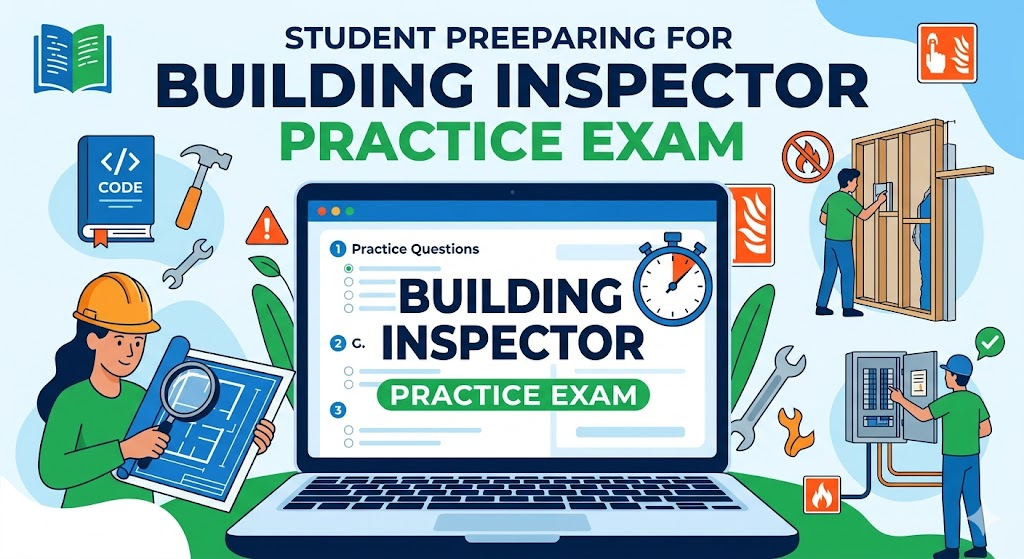
Additional Information
What the Course Entails and Exam Details
A comprehensive preparation course or exam syllabus for building inspector certification covers multiple critical areas. It typically includes an in-depth review of the International Building Code (IBC) and other relevant codes, such as residential (IRC), mechanical (IMC), plumbing (IPC), and electrical (NEC). Students will learn to interpret blueprints, navigate codebooks, and understand the technical requirements for different types of construction (residential, commercial, industrial). The course details specific topics like foundations, framing, fire protection systems, accessibility standards, ventilation, energy efficiency, and hazardous materials. Key focus areas also include proper inspection procedures, reporting requirements, and legal responsibilities associated with the role. The detailed syllabus ensures candidates can apply regulations consistently and effectively during field inspections.
What to Expect in the Final Exam
The final certification exam for a building inspector is a rigorous assessment of knowledge and application. Candidates can typically expect a multiple-choice format, often with scenarios requiring code interpretation. Many exams are computer-based and administered by established testing organizations. The number of questions varies, but it is often in the range of 100 to 150 questions. Time limits are strict, generally providing between three to four hours for completion. The passing score required varies by the specific certification body (e.g., ICC) and jurisdiction, but a score of 70% or higher is commonly the benchmark for success. Strict rules apply, including prohibition of unauthorized materials, specific identification requirements, and a requirement to leave the testing room only during scheduled breaks (if any). The goal is to simulate realistic code-lookup scenarios under pressure.
How to Study and Exam Centers
Effective preparation for the building inspector exam involves structured study and practical experience. Start by obtaining the most current versions of the required codebooks, as they are essential reference materials. Utilize building inspector practice exams to identify knowledge gaps and simulate the testing environment. Create a dedicated study schedule that covers each code section systematically, focusing on frequently tested areas. Join study groups, take accredited prep courses, and use online forums to discuss complex code interpretations. For the exam itself, you must register through a designated testing center or organization, such as the International Code Council (ICC) or specific state regulatory bodies. These exams are often administered through a network of computer-based testing providers like Pearson VUE, or in some cases, through specific community colleges and technical schools approved as testing centers. Always verify the location options and registration process directly with the certification authority.
Job Opportunities from the Course
Obtaining certification as a building inspector unlocks various career opportunities in both the public and private sectors. With this credential, individuals can pursue numerous specific job titles. These roles are essential for ensuring the safety and compliance of built environments.
Specific Job Titles:
Municipal Building Inspector
Commercial Building Inspector
Residential Building Inspector
Code Enforcement Officer
Construction Manager
Plan Reviewer
Home Inspector
Special Inspector (e.g., structural, fire)
Regulatory Compliance Specialist
Risk Manager for Construction Firms
Frequently Asked Questions
Reviews
5.0
Based on 0 reviews
Leave a Review
No reviews yet. Be the first to review!