
C-37 Statutes & Rules Exam (SRE) Practice
$69.00
- Buy to unlock unlimited access to all Quiz questions and Answers in this Quiz.
- After purchase you can print a PDF of the whole quiz at any point. The PDF will contain the questions and the correct answers.
About this Exam
The C-37 Statutes & Rules Exam (SRE) is a crucial requirement for individuals seeking to become a licensed C-37 Sanitation System Contractor.
This examination is specifically designed for professionals within the plumbing and sanitation industry who have mastered the practical aspects of the trade but must now demonstrate a comprehensive understanding of the legal and regulatory framework that governs their business.
Administered by state contractor licensing boards, this certification ensures that plumbing contractors are well-versed in essential laws, safety protocols, business practices, and ethical standards necessary for responsible operation.
Possessing this license is not only a legal necessity in many jurisdictions but also a powerful mark of professional legitimacy that builds trust with clients and opens the door to larger, more complex sanitation projects.
Ready to test your knowledge?
Buy Now to Access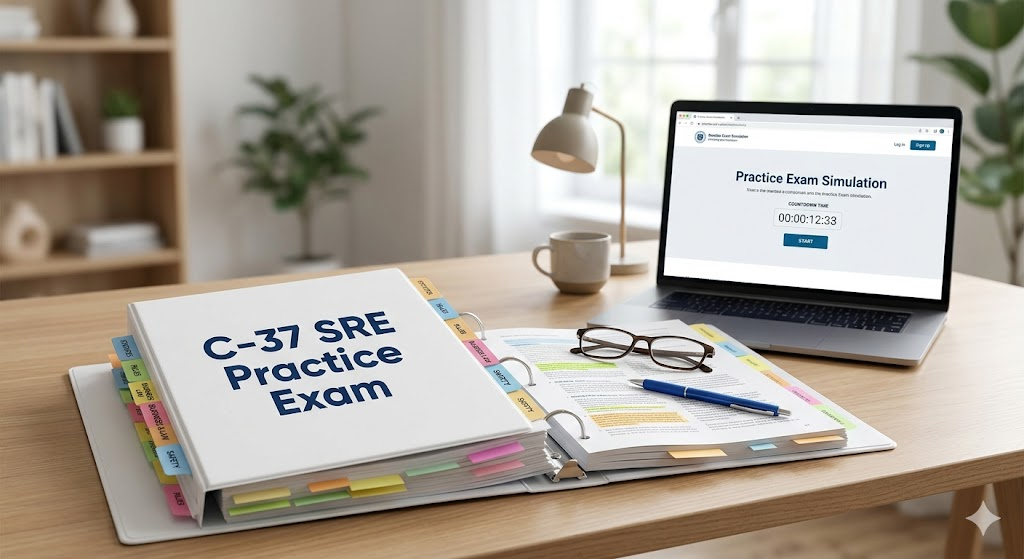
Additional Information
What the Course Entails and Exam Details
While exact syllabi vary by state, a comprehensive study guide for the C-37 SRE covers the primary legal and administrative regulations that affect a plumbing and sanitation contracting business.
Preparation focuses heavily on statutory compliance rather than trade skills. Core topics typically include a detailed review of state-specific contractor licensing laws, including the scope of the C-37 classification, license maintenance, and penalties for non-compliance.
Another vital area is construction law, which delves into contract requirements, mechanics' liens, and dispute resolution mechanisms. Candidates will also study business management principles, such as essential bookkeeping methods, employment regulations, and tax obligations.
Safety regulations are a paramount section, covering state and federal OSHA standards relevant to sanitation work, excavation, and confined space safety. Lastly, the course will touch upon important environmental regulations concerning proper waste disposal and public health codes.
What to Expect in the Final Exam
The C-37 SRE is generally administered as a computer-based, multiple-choice examination. This format is designed for efficiency and objectivity, offering candidates instant results.
Candidates can typically expect between 80 and 125 questions, covering the full spectrum of statutory and regulatory knowledge discussed in the study guides. In many modern licensing structures, this exam might be an "open book" format, focusing on the candidate's ability to locate and interpret complex regulations rather than simple rote memorization.
The time limit for the SRE is often generous, frequently around 3.5 to 4 hours, which allows for thorough reading and reference-checking. The standard passing score is often around 70% or 73%, but it is essential to verify the exact requirement with your specific state’s licensing board bulletin, as these numbers are subject to change.
Finally, it is a high-stakes exam that may limit the number of re-take attempts within a set timeframe.
How to Study and Exam Centers
Effective preparation for the SRE requires a strategy that balances comprehension with efficient information retrieval. If your state allows an open-book exam, you should invest time in "highlighting and tabbing" your official reference materials. This does not mean simply highlighting everything; it means creating a logical, color-coded indexing system for key definitions, deadlines, and numerical thresholds.
Utilize practice exams extensively; they are the best tool for identifying knowledge gaps and simulating the time pressure of the actual test. Many dedicated contractor licensing schools offer online "test simulations" that mimic the state's testing interface.
SRE examinations are typically taken at authorized testing centers. Major states often utilize third-party vendors such as Pearson VUE or PSI, which operate dozens of physical testing sites in major cities.
Alternatively, some states, like Arizona, may offer the SRE exclusively in an online, self-paced format through their official Registrar of Contractors portal, where the candidate takes the exam immediately following the training course from their own location.
Job Opportunities from the Course
Passing the C-37 SRE and obtaining your contractor’s license transforms your career from that of a skilled employee to a business owner.
This certification unlocks a range of lucrative and specialized career paths within the sanitation and plumbing sectors. Here is a list of the specific job opportunities this license enables you to pursue:
Licensed Sanitation System Contractor (Owner/Operator)
Commercial Plumbing & Sanitation Project Manager
Public Works Sanitation Infrastructure Contractor
Wastewater Treatment System Installation Specialist
Residential Sanitation System Designer and Installer
Licensed Plumbing Business Qualifier (RME/RMO)
Specialized Sewer Line and Septic System Contractor
Frequently Asked Questions
Reviews
5.0
Based on 0 reviews
Leave a Review
No reviews yet. Be the first to review!