
CAA Drone Theory Practice Test
$69.00
- Buy to unlock unlimited access to all Quiz questions and Answers in this Quiz.
- After purchase you can print a PDF of the whole quiz at any point. The PDF will contain the questions and the correct answers.
About this Exam
The UK CAA (Civil Aviation Authority) Drone Theory Practice Test is the essential prerequisite for anyone looking to unlock the full potential of commercial drone operations in the UK. Specifically, this guide supports the knowledge required for the A2 Certificate of Competence (A2 CofC). This certification is designed for remote pilots who wish to fly drones (Unmanned Aircraft Systems) that are considered "medium risk," typically weighing between 250g and 2kg (or up to 4kg under specific transitional provisions), within the "Open Category." By obtaining this qualification, pilots are granted increased freedom to operate closer to uninvolved people than is permitted under the basic "Flyer ID" regulations, making it a critical step for professional aerial photographers, surveyors, and inspectors.
Ready to test your knowledge?
Buy Now to Access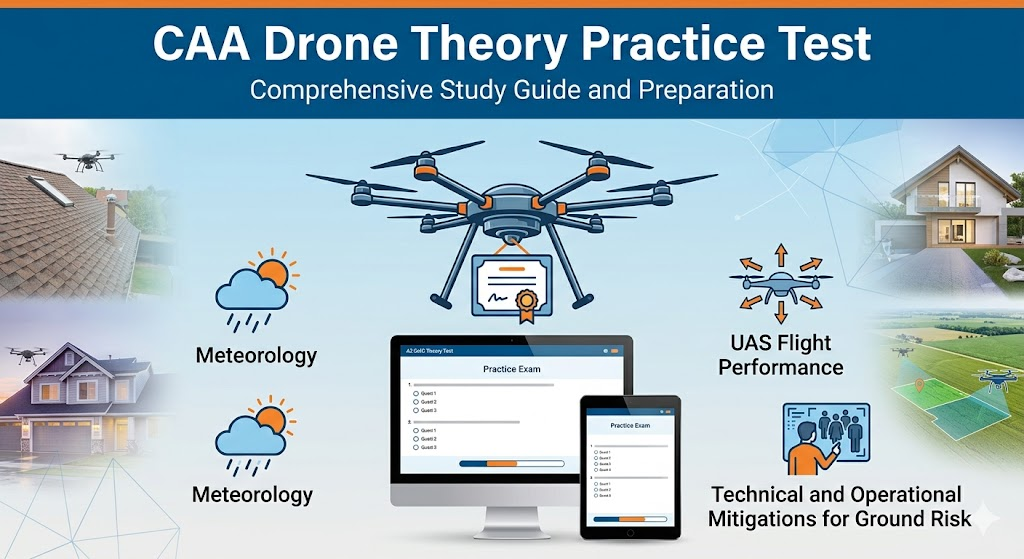
Additional Information
What the Course Entails and Exam Details
This examination does not exist in a vacuum; it is the culmination of a dedicated period of study covering the enhanced theoretical knowledge required for safer, more complex operations. Candidates must demonstrate a thorough understanding of the regulations and technical aspects of flying. The core syllabus covers several critical areas. First, you will study Meteorology, learning how to interpret weather forecasts, understand the impact of wind, visibility, and precipitation on UAS flight safety, and recognize local air currents. Second, the course covers UAS Flight Performance, which dives into the technical specifications of your aircraft, its battery management, and how loading and environmental factors affect handling and control. Third, and perhaps most importantly, you will focus on Technical and Operational Mitigations for Ground Risk. This vital module teaches you how to conduct proper site surveys, assess risks, determine safe distances from people and property, and implement emergency procedures to prevent accidents on the ground.
What to Expect in the Final Exam
The A2 CofC theory exam is designed to robustly test your understanding without being overly intimidating. It is a multiple-choice format, usually consisting of approximately 30 questions derived directly from the syllabus areas mentioned above. The exam is typically "closed book," meaning you cannot refer to your notes during the test. To pass, candidates must achieve a minimum score of 75%. The time limit is generally around 75 minutes, which provides ample time to carefully consider each question, provided you have studied effectively. The test is supervised, ensuring integrity, and can be taken either in-person at a registered facility or, more commonly now, via a secure online proctoring service.
How to Study and Exam Centers
Preparation is the key to success. Your primary study resource will be the course material provided by a CAA-approved Recognised Assessment Entity (RAE). These commercial training organizations are authorized by the CAA to deliver the training and conduct the examination. Many RAEs offer comprehensive online learning portals containing video tutorials, downloadable study guides, and, crucially, practice mock exams. We highly recommend taking these practice tests multiple times to familiarize yourself with the question wording and to identify areas where your knowledge needs reinforcing. A dedicated "self-practical training" period is also a requirement before taking the theory test, where you must practice maneuvers in an environment that simulates A2 operations. When you are ready, you will book your exam directly through your chosen RAE. The exam will be administered through their secure online portal (often using proctoring software that requires a webcam) or at their designated physical testing centers located throughout the UK.
Job Opportunities from the Course
Successfully passing the A2 CofC theory exam and obtaining your certificate opens up a wide range of professional avenues. It is the standard entry point for commercial drone work in the UK.
Specific job titles and career paths this qualification unlocks include:
Commercial Aerial Photographer
Real Estate Videographer
Asset and Building Inspector (e.g., Roofs, Wind Turbines)
Construction Site Surveyor
Infrastructure Inspector (e.g., Bridges, Power Lines)
Agricultural Drone Operator (Crop Monitoring)
Media and Broadcast Drone Pilot
Emergency Services Support (Search and Rescue Support)
Drone Flight Instructor (Assistant Role)
Frequently Asked Questions
Reviews
5.0
Based on 0 reviews
Leave a Review
No reviews yet. Be the first to review!