
CAAHEP Accreditation in Exercise Psychology Practice Exam
$69.00
- Buy to unlock unlimited access to all Quiz questions and Answers in this Quiz.
- After purchase you can print a PDF of the whole quiz at any point. The PDF will contain the questions and the correct answers.
About this Exam
The ACSM Certified Exercise Physiologist (ACSM-EP) designation is a prestigious credential for professionals dedicated to helping individuals improve their health, fitness, and quality of life through science-based exercise prescription. This certification is designed for those with a minimum of a Bachelor’s degree in Exercise Science, Exercise Physiology, or Kinesiology. It bridges the gap between clinical knowledge and practical application, empowering you to work with both healthy populations and those with controlled medical conditions. For many candidates, graduating from a CAAHEP-accredited program is a key step that streamlines eligibility and ensures you possess the foundational knowledge required to excel.
Ready to test your knowledge?
Buy Now to Access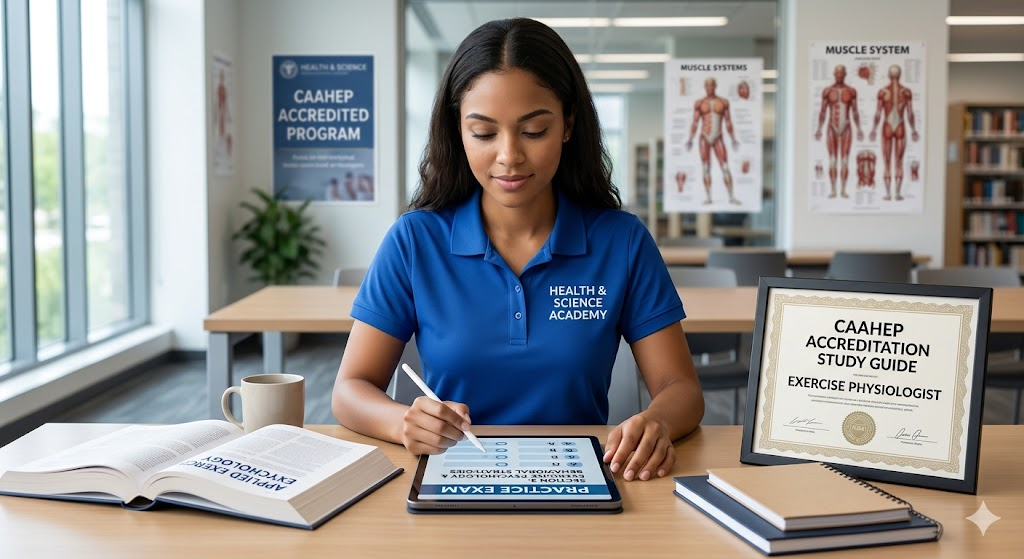
Additional Information
What the Course Entails and Exam Details
Preparing for the ACSM-EP requires a command of four core domains that constitute the practice of an exercise physiologist.
First, Health and Fitness Assessment focuses on interpreting medical history, conducting pre-participation screenings, and administering assessments for cardiorespiratory fitness, muscular strength, flexibility, and body composition.
Second, Exercise Prescription and Implementation covers the development of tailored programs using the FITT-VP principle (Frequency, Intensity, Time, Type, Volume, Progression) for various populations, from athletes to seniors.
Third, Exercise Counseling and Behavioral Strategies is the critical psychology domain, where you learn to apply motivational theories, such as the Transtheoretical Model, to promote long-term adherence to exercise and healthy lifestyle habits.
Finally, Risk Management and Professional Responsibilities details safety protocols, emergency procedures (including CPR/AED requirements), and legal and ethical guidelines for practice. The total syllabus is designed to ensure you are safe, effective, and ethically grounded in your practice.
What to Expect in the Final Exam
The ACSM-EP exam is a comprehensive assessment of your competency.
It consists of 140 multiple-choice questions, which include 115 scored questions and 25 non-scored pre-test questions used for future exam development.
You are given 3.5 hours (210 minutes) to complete the test.
The exam uses a scaled scoring system ranging from 200 to 800, with a passing score of 550 required.
It is delivered in a standard computer-based format. Upon completion, candidates receive a pass/fail status immediately. Detailed score reports outlining performance by domain are typically provided shortly after. Candidates must also hold valid Adult CPR/AED and First Aid certifications at the time of application.
How to Study and Exam Centers
Effective preparation for the ACSM-EP requires a strategic blend of academic study and practical application.
Start by utilizing official ACSM resources, particularly the latest editions of ACSM's Guidelines for Exercise Testing and Prescription and ACSM's Resources for the Exercise Physiologist. These are the primary blueprints for the exam content. Integrate the domains into your study plan, focusing on practical implementation rather than just memorization. Utilize recognized practice exams to familiarize yourself with the question format and identify knowledge gaps. Form study groups with peers who graduated from your CAAHEP-accredited program to discuss complex concepts like metabolic calculations and behavioral counseling case studies.
The exam is administered globally through Pearson VUE testing centers. Candidates have two primary options: taking the exam in person at an authorized professional testing center or utilizing the Online Proctored (OP) delivery method, which allows you to take the exam from the comfort of your home or office while being monitored by a live proctor via webcam.
Job Opportunities from the Course
Earning the ACSM-EP credential opens doors to diverse and rewarding career paths across the health, wellness, and clinical sectors.
Clinical Exercise Physiologist (within hospital-based cardiac and pulmonary rehabilitation programs)
Health and Wellness Director (managing corporate wellness programs or university recreation centers)
Personal Trainer (Master Level)
Performance Enhancement Specialist
Clinical Research Coordinator (in exercise science or preventative medicine trials)
Public Health Educator (focusing on physical activity initiatives)
Medical Fitness Specialist (working in dedicated medical fitness facilities)
Bariatric Exercise Coordinator (designing programs for weight-loss surgery patients)
Frequently Asked Questions
Reviews
5.0
Based on 0 reviews
Leave a Review
No reviews yet. Be the first to review!