
California Penal Codes For Law Enforcement Practice Test
$69.00
- Buy to unlock unlimited access to all Quiz questions and Answers in this Quiz.
- After purchase you can print a PDF of the whole quiz at any point. The PDF will contain the questions and the correct answers.
About this Exam
The California Penal Codes are the foundation upon which
law enforcement authority rests in the Golden State. For anyone aspiring to
wear a badge, whether as a municipal police officer, county sheriff's deputy,
or state-level investigator, mastering this vast legal document is not
optional; it is mandatory. This practice exam is designed as a rigorous
training tool for students currently enrolled in California POST-certified
academies, those undertaking the P.C. 832 course, or out-of-state officers seeking
a waiver. This test simulates the essential component of your certification
process, ensuring you understand the legal definitions of crimes, the limits of
your authority, and the procedural requirements for an arrest.
Ready to test your knowledge?
Buy Now to Access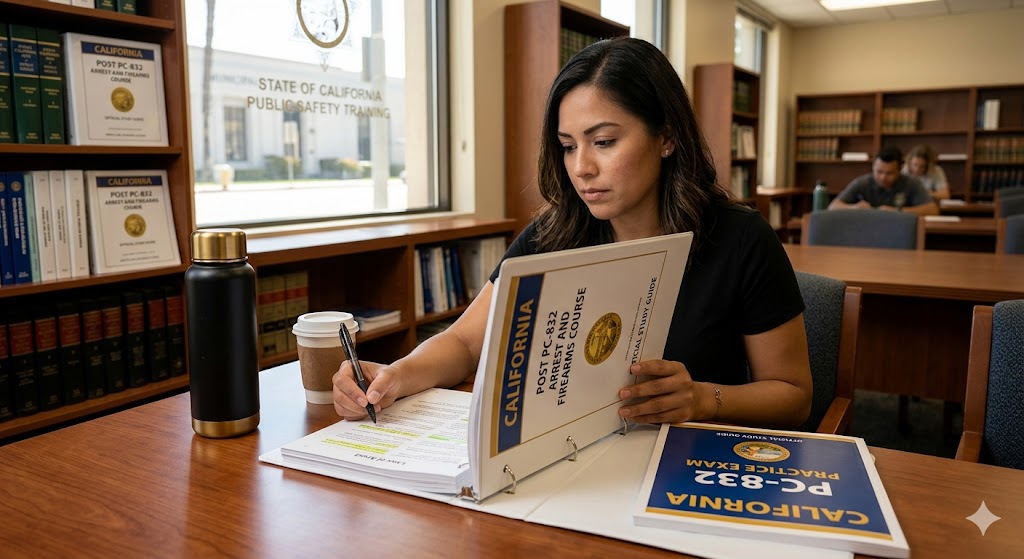
Additional Information
What the Course Entails and Exam Details
Preparing for a California Penal Code exam entails much
more than memorizing code section numbers. The core curriculum focuses on
interpreting black-letter law and applying it accurately to dynamic, real-world
law enforcement scenarios. You will study the definitive elements of felony and
misdemeanor offenses, from ensuring you understand the legal definitions of
crimes, the limits of your authority, and the procedural requirements for an
arrest.
common larceny and
assault to complex conspiracy and financial crimes. The knowledge base required
is comprehensive, covering Part 1 of the Penal Code (Of Crimes and
Punishments), Part 2 (Of Criminal Procedure, including search and seizure
authority), as well as critical sections of the Vehicle Code and Health &
Safety Code relevant to drug offenses. Mastering this material gives you the
legal competence required to make split-second decisions that are both
effective and lawful.
What to Expect in the Final Exam
When you sit for the actual California law enforcement
standardized written examination, usually administered as part of your
academy's "Learning Domain" testing or the final P.C. 832 assessment,
you can expect a demanding, timed experience. The format is typically
multiple-choice, designed to test your proficiency in recognizing elements of a
crime from a written fact pattern. You must demonstrate the ability to
distinguish, for example, between robbery and burglary, or between lawful
detention and an illegal arrest. Passing scores are strictly set by the
California Commission on Peace Officer Standards and Training (POST) and often
require 70-80% proficiency depending on the specific testing domain. Remember,
you must pass all written examinations to successfully graduate from the
academy and obtain your basic certification.
How to Study and
Exam Centers
Effective study strategies are critical for success. Do
not simply read the code; you must learn how to apply it. Use flashcards to
memorize the precise elements required for key felony and misdemeanor charges.
Engage heavily in scenario-based studying, where you are given a set of facts
and must determine if a crime was committed, what specific section applies, and
if you have the authority to arrest. Utilize the POST Learning Domain workbooks
as your primary study resource. Taking repetitive practice tests is highly
recommended to improve your recall speed and accuracy under time pressure.
These exams are typically administered internally at your authorized
POST-certified academy or the physical campus of the training presentation
agency (e.g., a community college) where you are enrolled in your law
enforcement training course.
Job Opportunities
from the Course
Mastery of the California Penal Code is the essential
legal passport required for virtually all sworn law enforcement positions
across the state. This knowledge base unlocks a vast range of career paths
within California’s criminal justice system, including:
- Municipal
Police Officer
- County
Sheriff's Deputy
- California
Highway Patrol (CHP) Officer
- District
Attorney Investigator
- California
Department of Justice (DOJ) Special Agent
- School
District Police Officer
- Transit
Police Officer
- State
Parks Peace Officer
- University
Police Officer (UC/CSU systems)
- Reserve
Peace Officer (Level I and II)
- Arson
Investigator
- Correctional
Officer (requires Supplemental training)
Frequently Asked Questions
Reviews
5.0
Based on 0 reviews
Leave a Review
No reviews yet. Be the first to review!