
Call for Fire (CFF) Practice Test
$69.00
- Buy to unlock unlimited access to all Quiz questions and Answers in this Quiz.
- After purchase you can print a PDF of the whole quiz at any point. The PDF will contain the questions and the correct answers.
About this Exam
The Call for Fire (CFF) examination is a critical
assessment designed to validate a service member's proficiency in requesting
and adjusting indirect fire support, such as artillery and mortars. It is
primarily intended for forward observers, Joint Terminal Attack Controllers
(JTACs), and combat arms officers who operate on the front lines. This
certification ensures that personnel can accurately identify targets and
coordinate with Fire Direction Centers (FDCs) to deliver timely and effective
firepower. Mastering this skill is vital for battlefield success and minimizing
risk to friendly forces.
Ready to test your knowledge?
Buy Now to Access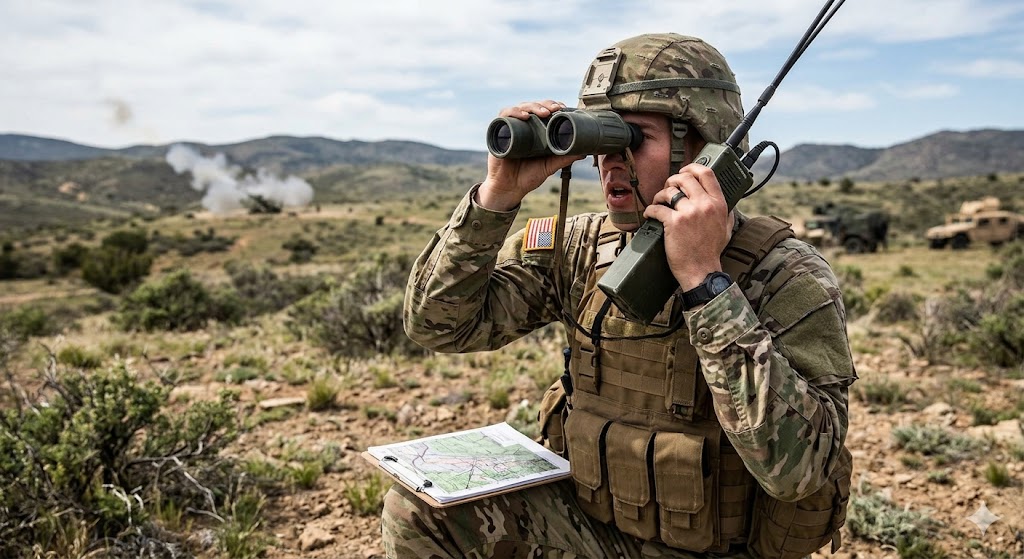
Additional Information
What the Course
Entails and Exam Details
This course provides comprehensive training on the
standardized procedures used across the US military for fire support requests.
Candidates must master the "six elements" of the Call for Fire
request: Observer Identification, Warning Order, Target Location, Target
Description, Method of Engagement, and Method of Fire and Control. The training
covers several mission types, including Adjust Fire, Fire for Effect,
Suppression, and Immediate Smoke. You will learn to calculate adjustments using
bracketing techniques to shift impact toward the target precisely. The course
details emphasize clear radio communication, map reading, and the use of
specialized equipment like laser rangefinders and digital command systems.
What to Expect in
the Final Exam
The final Call for Fire exam is often a two-part
assessment involving a written test and a strict practical evaluation. The
written portion focuses on terminology, the ordering of information
transmissions, and the theoretical application of adjustment procedures. The
practical exam is typically the decisive factor, requiring the candidate to
engage targets in real-time. This often takes place within a Call for Fire
Trainer (CFFT) simulator or a live-fire range scenario. You will be expected to
identify a target, formulate and transmit the initial three messages correctly,
and achieve a "fire for effect" on the target within a specified
number of adjusting rounds and a strict time limit. Accuracy, clarity, and
safety procedures are paramount, and certain errors, such as sending fire onto
a friendly position, result in automatic failure.
How to Study and Exam Centers
Preparation for the CFF exam demands consistent practice
to build muscle memory and mental accuracy. Start by memorizing ATP 3-09.30
(Observed Fire) or the relevant Marine Corps reference manual until you can
recite the six elements of CFF and standard adjustment procedures without
hesitation. Use flashcards for terminology and target descriptions. Practice
bracketing targets on a terrain model or a marked-out grid map with a partner
acting as the Fire Direction Center (FDC). If available, utilize digital simulation
tools to familiarize yourself with the pace of a real mission.
This examination is not available through public online
portals or standard commercial testing centers. It is administered strictly
within the military schoolhouse system. Training and testing are conducted at
authorized physical centers, such as the US Army Fires Center of Excellence at
Fort Sill or specific Marine Corps training detachments. Units also possess
internal capability to evaluate CFF proficiency for ongoing certification.
Job Opportunities
from the Course
Earning the Call for Fire certification is mandatory for
several specialized career paths and enhances promotion opportunities within
combat arms branches. This certification unlocks several critical job titles,
including:
- Forward
Observer
- Fire
Support Specialist (13F)
- Joint
Terminal Attack Controller (JTAC)
- Field
Artillery Officer
- Fire
Support Officer (FSO)
- Fire
Support NCO
Master the Call for Fire Exam
1. Description
The Call for Fire (CFF) examination is a critical
assessment designed to validate a service member's proficiency in requesting
and adjusting indirect fire support, such as artillery and mortars. It is
primarily intended for forward observers, Joint Terminal Attack Controllers
(JTACs), and combat arms officers who operate on the front lines. This
certification ensures that personnel can accurately identify targets and
coordinate with Fire Direction Centers (FDCs) to deliver timely and effective
firepower. Mastering this skill is vital for battlefield success and minimizing
risk to friendly forces.
What the Course Entails and Exam Details
This course provides comprehensive training on the
standardized procedures used across the US military for fire support requests.
Candidates must master the "six elements" of the Call for Fire
request: Observer Identification, Warning Order, Target Location, Target
Description, Method of Engagement, and Method of Fire and Control. The training
covers several mission types, including Adjust Fire, Fire for Effect,
Suppression, and Immediate Smoke. You will learn to calculate adjustments using
bracketing techniques to shift impact toward the target precisely. The course
details emphasize clear radio communication, map reading, and the use of
specialized equipment like laser rangefinders and digital command systems.
What to Expect in
the Final Exam
The final Call for Fire exam is often a two-part
assessment involving a written test and a strict practical evaluation. The
written portion focuses on terminology, the ordering of information
transmissions, and the theoretical application of adjustment procedures. The
practical exam is typically the decisive factor, requiring the candidate to
engage targets in real-time. This often takes place within a Call for Fire
Trainer (CFFT) simulator or a live-fire range scenario. You will be expected to
identify a target, formulate and transmit the initial three messages correctly,
and achieve a "fire for effect" on the target within a specified
number of adjusting rounds and a strict time limit. Accuracy, clarity, and
safety procedures are paramount, and certain errors, such as sending fire onto
a friendly position, result in automatic failure.
How to Study and
Exam Centers
Preparation for the CFF exam demands consistent practice
to build muscle memory and mental accuracy. Start by memorizing ATP 3-09.30
(Observed Fire) or the relevant Marine Corps reference manual until you can
recite the six elements of CFF and standard adjustment procedures without
hesitation. Use flashcards for terminology and target descriptions. Practice
bracketing targets on a terrain model or a marked-out grid map with a partner
acting as the Fire Direction Center (FDC). If available, utilize digital simulation
tools to familiarize yourself with the pace of a real mission.
This examination is not available through public online
portals or standard commercial testing centers. It is administered strictly
within the military schoolhouse system. Training and testing are conducted at
authorized physical centers, such as the US Army Fires Center of Excellence at
Fort Sill or specific Marine Corps training detachments. Units also possess
internal capability to evaluate CFF proficiency for ongoing certification.
Job Opportunities
from the Course
Earning the Call for Fire certification is mandatory for
several specialized career paths and enhances promotion opportunities within
combat arms branches. This certification unlocks several critical job titles,
including:
- Forward
Observer
- Fire
Support Specialist (13F)
- Joint
Terminal Attack Controller (JTAC)
- Field
Artillery Officer
- Fire
Support Officer (FSO)
- Fire
Support NCO
Frequently Asked Questions
Reviews
5.0
Based on 0 reviews
Leave a Review
No reviews yet. Be the first to review!