
Canadian Plumbing Code Practice Test
$69.00
- Buy to unlock unlimited access to all Quiz questions and Answers in this Quiz.
- After purchase you can print a PDF of the whole quiz at any point. The PDF will contain the questions and the correct answers.
About this Exam
Welcome to your essential resource for preparing for the National Plumbing Code (NPC) of Canada practice test. This comprehensive study guide is designed to equip aspiring plumbers, apprentices, and even experienced professionals seeking recertification with the knowledge and confidence needed to succeed on the actual certification exam. The National Plumbing Code of Canada forms the foundational standard for safe and effective plumbing systems across the country, ensuring public health and safety. Understanding and applying this code is crucial for anyone working in the plumbing industry. This practice test serves as a vital tool for assessing your readiness and identifying areas that require further study.
Ready to test your knowledge?
Buy Now to Access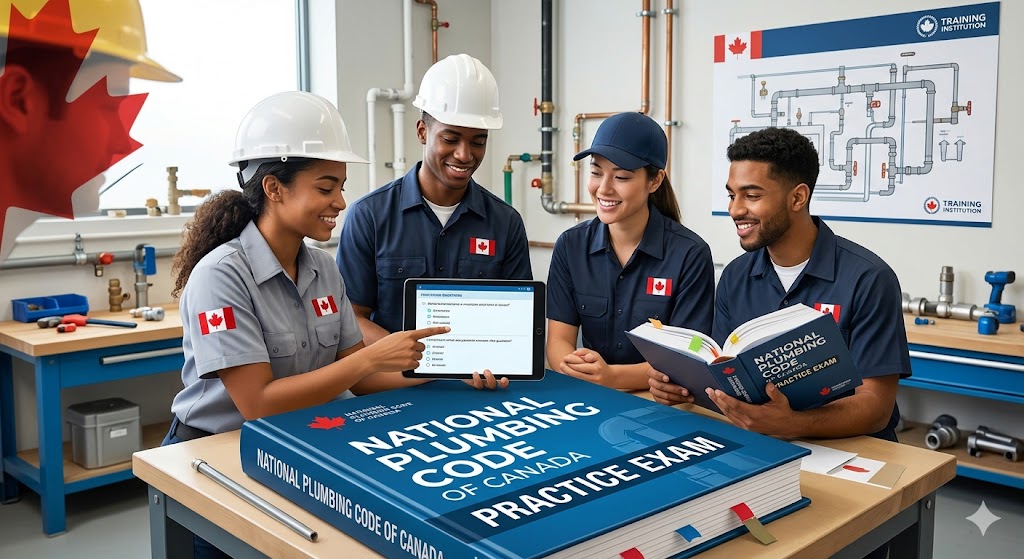
Additional Information
What the Course Entails and Exam Details
The National Plumbing Code of Canada certification exam, for which this practice test is preparation, covers an extensive range of topics related to plumbing systems. It is not a traditional "course" in itself, but rather a practice tool based on the knowledge and skills expected of a qualified plumber in Canada. Key areas covered by the code and this practice test typically include:
Water supply and distribution systems
Drainage, waste, and vent systems
Plumbing fixtures, traps, and interceptors
Materials, tools, and installation methods
Safety requirements and principles
Calculating pipe sizes and flows
Understanding code definitions and interpretations
The exact structure, number of questions, and specific details of the official certification exam may vary slightly by jurisdiction (province or territory) as they often adopt or modify the NPC. However, a standard professional level exam often consists of a significant number of multiple-choice questions, potentially around 50-100, that challenge your ability to recall information from the code book, apply its principles to practical scenarios, and perform necessary calculations. The time limit for the full official exam could range from two to four hours, with a passing score typically set around 70-80% or higher depending on the specific regulating body. The practice test you are considering is designed to simulate this experience as closely as possible to provide a realistic assessment of your skills.
What to Expect in the Final Exam
While you are preparing with a practice test, it's important to understand the typical format and expectations of the actual certification exam to maximize your preparation efforts. The real certification exam will generally feature:
Multiple-Choice Questions: This is the most common format for testing theoretical knowledge. Questions may require you to select the correct code rule, solve problems, interpret diagrams, or identify safe practices.
Time Constraints: Expect a strict time limit to answer all questions, just as you would on a real professional assessment.
Passing Score: Prepare to aim for a high passing grade (e.g., 70-80% or more) as required by the certifying authority.
Closed-Book or Limited Open-Book: Some exams may allow the use of the actual National Plumbing Code book itself, while others may be closed-book, forcing you to memorize key sections or quickly reference information if allowed. Crucially, always confirm the specific rules regarding materials permitted during your official exam with the relevant regulatory body.
Practice as a Simulation: Your performance on high-quality practice tests, such as the one described in this guide, is a strong indicator of your readiness. Use it not just for content review, but to practice managing your time, reading questions carefully, and becoming comfortable with the exam environment and question types.
How to Study and Exam Centers
Successfully mastering the Canadian Plumbing Code requires dedication and strategic preparation. Here's how to effectively study and where you can generally find information about both the practice test and the actual certification exam centers:
How to Study Effectively:
Dive Deep into the Code Book: Purchase or access the most current version of the National Plumbing Code of Canada. Spend significant time reading and understanding its structure, definitions, regulations, and appendices. Take notes, highlight key sections, and actively engage with the material.
Utilize High-Quality Practice Tests: This is one of the single most effective study methods. Multiple practice tests allow you to become familiar with the exam format, identify your strengths and weaknesses across different topic areas, and practice time management under simulated conditions.
Form Study Groups: Collaborating with peers can be incredibly beneficial. Discuss complex code scenarios, test each other on key concepts, and share insights and resources. Explaining concepts to others reinforces your own understanding.
Leverage Online Resources and Courses: Many educational institutions, trade schools, and professional organizations offer preparatory courses, online modules, webinars, and additional study materials specifically tailored to the Canadian Plumbing Code.
Hands-on Experience: Practical experience as an apprentice or working plumber provides invaluable context for the theoretical knowledge in the code book. Relate practical experiences to corresponding code rules for a more comprehensive understanding.
Flashcards and Summaries: Create flashcards for key definitions, calculations, pipe sizing rules, and common violations to aid quick recall. Write summaries of important code chapters or specific regulations for consolidated review.
Exam Centers and Access:
Practice Test Access: Practice tests, including potentially the one this guide references, are typically accessible online through various educational platforms, test preparation websites, and sometimes professional association portals. They are often convenient and can be taken at your own pace from the comfort of your home.
Actual Certification Exam Information: Information about registering for and locating authorized testing centers for the official Canadian Plumbing Code certification exam must be obtained directly from the relevant provincial or territorial regulatory body responsible for plumbing licensing or certification (e.g., specific departments within provincial governments, skilled trades authorities, or professional associations designated to administer exams). These organizations provide official details on:
Exam schedules and locations
Registration processes and fees
Specific exam rules and formats for your region
Recommended study materials and resources
Always consult with the official governing body in your specific province or territory for the most accurate and up-to-date information regarding certification requirements, exam schedules, and accredited testing centers.
Job Opportunities from the Course
Successfully completing your plumbing certification, for which this practice test is essential preparation, significantly expands your career opportunities within the skilled trades. Here are specific job titles and pathways unlocked by this achievement:
Licensed Journeyperson Plumber: As a fully qualified plumber, you can work independently or lead crews, perform complex installations, maintenance, and repairs, and command higher wages.
Plumbing Contractor: After gaining significant experience and potentially additional business qualifications, you can start your own plumbing company, offering residential, commercial, and industrial services.
Foreman/Supervisor: Take on leadership roles within larger plumbing companies, overseeing projects, coordinating teams, and ensuring adherence to safety and quality standards.
Plumbing Inspector: Gain employment with municipal or provincial governments to inspect residential and commercial properties, verifying plumbing system compliance with relevant codes and regulations.
Estimator: Utilize your code knowledge and practical experience to estimate project costs, prepare quotes, and manage budgets for plumbing jobs.
Maintenance Plumber: Work in diverse settings such as hospitals, schools, commercial buildings, or manufacturing facilities, ensuring plumbing systems operate efficiently and safely.
Specialized Plumber: Pursue further training and certification in specific areas such as residential construction, commercial systems, hydronic heating, gas fitting (where permitted/qualified), and more.
Frequently Asked Questions
Reviews
5.0
Based on 0 reviews
Leave a Review
No reviews yet. Be the first to review!