
Canadian Practical Nurse Registration Examination (CPNRE) Practice Exam
$69.00
- Buy to unlock unlimited access to all Quiz questions and Answers in this Quiz.
- After purchase you can print a PDF of the whole quiz at any point. The PDF will contain the questions and the correct answers.
About this Exam
The Canadian Practical Nurse
Registration Examination (CPNRE) is the ultimate gatekeeper for aspiring
Licensed Practical Nurses (LPNs) and Registered Practical Nurses (RPNs) outside
of Quebec. This rigorous exam is designed to validate that candidates possess
the essential, entry-level competencies required to practice safely, ethically,
and effectively in Canada’s complex healthcare environment. Successfully
passing the CPNRE is a mandatory step for provincial or territorial
registration, making it one of the most significant milestones in a new nurse’s
career journey.
Ready to test your knowledge?
Buy Now to Access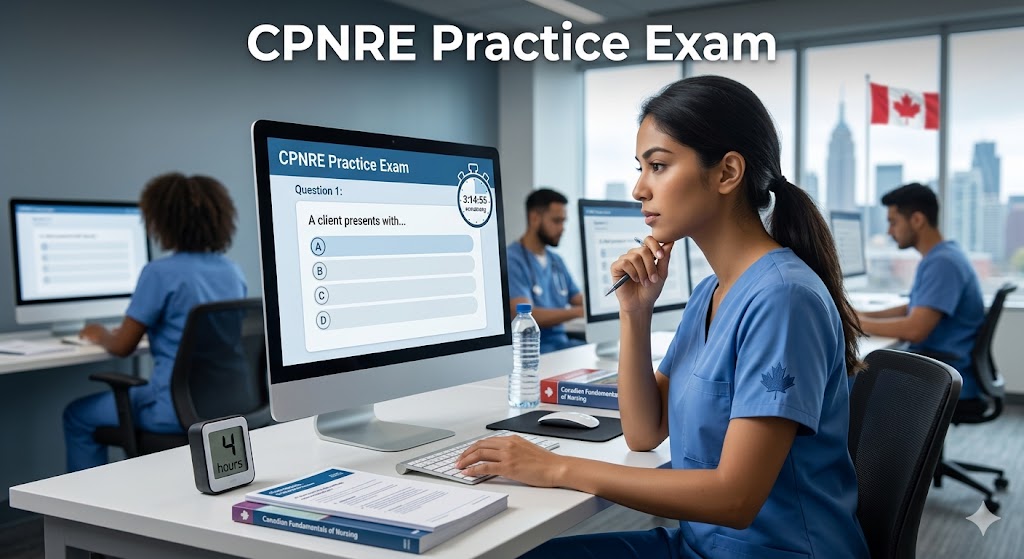
Additional Information
What the Course Entails and Exam Details
While the CPNRE is an examination
and not a traditional 'course,' preparation for it demands a comprehensive
review of the entire practical nursing curriculum. The exam is built upon a
detailed blueprint structured around four foundational pillars of nursing
practice: Foundations of Practice, Collaborative Practice, Professional and
Ethical Practice, and Legal Practice. Key topics you must master include
comprehensive health assessment across the lifespan, safe and effective
pharmacotherapy, specialized nursing interventions in acute and long-term care,
and a thorough understanding of Canadian nursing legislation and ethical codes.
The exam places a heavy emphasis on evaluating your critical thinking ability,
clinical judgment, and capacity to prioritize care in diverse, scenario-based
situations.
What to Expect in the Final Exam
When you sit for the actual
CPNRE, you will face a standardized, computer-based testing experience
administered at authorized locations. The examination period is strictly four
hours. Within this window, you must complete approximately 165 to 170 objective
multiple-choice questions. A significant portion of these questions are
case-based, requiring you to read a clinical scenario before answering related
questions that test higher-level cognitive skills. The CPNRE is scored on a
pass/fail basis. The minimum passing standard is determined by an absolute
standard, which means it represents the level of knowledge expected of a
beginning practitioner; this standard may fluctuate slightly between different
versions of the test. You will receive your results through your provincial or
territorial regulatory body, generally several weeks after the testing window
closes.
How to Study and Exam Centers
Effective preparation for the
CPNRE requires an active, structured study plan rather than passive reading.
Your first and most crucial step should be to download and thoroughly analyze
the official CPNRE Examination Blueprint, which explicitly outlines the
weighted content areas and cognitive levels that will be tested. Actively use
official preparatory guides and integrate multiple full-length, time-simulated
practice exams into your routine to build endurance and familiarize yourself
with the pace required. Focusing on rationales—understanding why the
correct answer is right and why others are wrong—is far more effective than
simple memorization.
The CPNRE is administered multiple times per year during specific testing windows. You must first apply to your provincial or territorial practical nursing regulatory authority for eligibility. Once approved, you will receive instructions on how to schedule your exam through Pearson VUE, the authorized testing partner. The exam is taken in-person at secure Pearson VUE test centers located throughout
Frequently Asked Questions
Reviews
5.0
Based on 0 reviews
Leave a Review
No reviews yet. Be the first to review!