
Candidate Physical Ability Test (CPAT) Practice Test
$69.00
- Buy to unlock unlimited access to all Quiz questions and Answers in this Quiz.
- After purchase you can print a PDF of the whole quiz at any point. The PDF will contain the questions and the correct answers.
About this Exam
The Candidate Physical Ability
Test, or CPAT, is a mandatory physical exam for individuals pursuing a career
as a firefighter. This standardized assessment is designed to measure a
candidate’s ability to handle the physical demands of fire suppression. Municipal
fire departments across the United States use this practical exam to ensure
potential recruits possess the anaerobic and aerobic power, as well as the
muscular endurance, required to perform the job safely and effectively.
Successfully passing the CPAT is often the first major step in becoming a
firefighter.
Ready to test your knowledge?
Buy Now to Access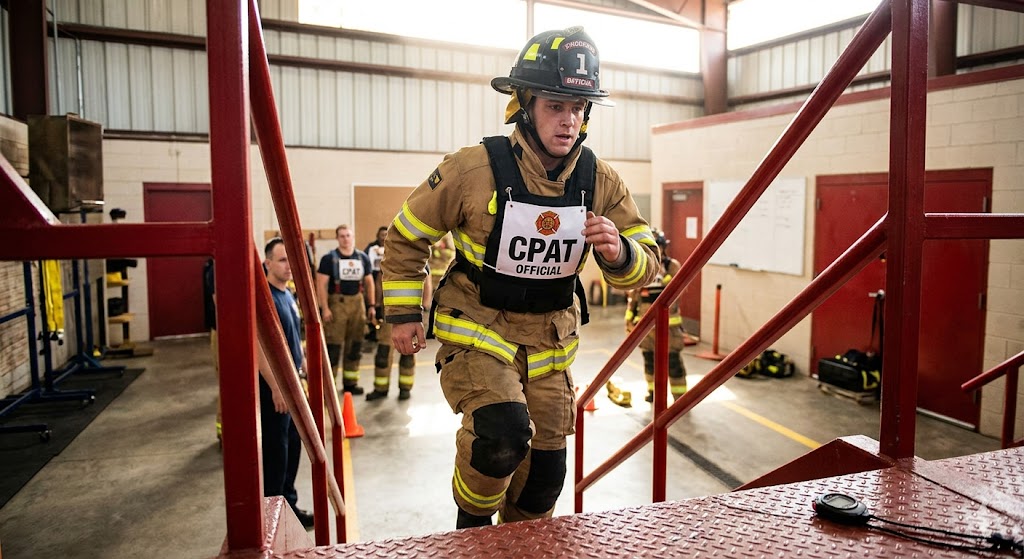
Additional Information
What the Course Entails and
Exam Details
The CPAT is not a written test
but a practical assessment consisting of eight separate events that are
performed in sequence with no break between them. The core skills tested
include physical strength, stamina, endurance, and balance while wearing standard
firefighting equipment. Candidates are required to wear a 50-pound weighted
vest to simulate the weight of protective gear and breathing apparatus, with an
additional 25 pounds added for the stair climb to mimic a high-rise pack. The
specific events cover:
- Stair
Climb (Simulates climbing with equipment)
- Hose
Drag (Tests ability to advance hose lines)
- Equipment
Carry (Tests moving heavy tools)
- Ladder
Raise and Extension (Tests raising and extending ladders)
- Forcible
Entry (Tests using force to open doors)
- Search
(Tests navigation in dark, confined spaces)
- Rescue
(Tests moving a simulated victim)
- Ceiling
Breach and Pull (Tests physical pulling of a ceiling/overhaul tool)
What to Expect in the Final
Exam
The CPAT is a strictly timed
pass/fail practical examination. Candidates must complete all eight events in
sequence within a total time of 10 minutes and 20 seconds. During the test,
strict adherence to protocols is mandatory, and any mechanical failure of the
equipment or violation of the test rules will result in a failure for that
specific event or the entire test. To pass, you must successfully complete all
eight tasks in their correct sequence without exceeding the time limit. If a
candidate fails any single event, the entire test is stopped and must be
retaken. There is no partial scoring.
How to Study and Exam Centers
The most effective way to
prepare for the CPAT is through a targeted physical conditioning program that
emphasizes both strength and cardiovascular endurance, mirroring the movements
required during the exam. Candidates are strongly encouraged to utilize the
"CPAT Orientation" sessions offered by most testing centers, which
provide an opportunity to learn the correct techniques and practice on the
actual equipment.
Actionable study strategies
include focusing on interval training to build aerobic capacity, implementing
compound strength exercises like deadlifts, squats, and lunges, and engaging in
upper body endurance training. Mock training sessions using a weighted vest are
crucial.
CPAT exams are administered by
authorized fire departments, regional training centers, or specialized private
contractors, often requiring candidates to pre-register and pay a testing fee.
Exams are held at designated, physical testing locations equipped with the
standardized CPAT course setup. Candidates should check with their prospective
hiring department to identify authorized testing centers.
Job Opportunities from the
Course
Successfully passing the CPAT
is the primary physical prerequisite required to become a career firefighter,
though it also opens doors to other closely related public safety roles:
- Firefighter
(Municipal, County, or State)
- Volunteer
Firefighter (Depending on specific department requirements)
- Paramedic/Firefighter
(Dual-certified roles)
- EMT/Firefighter
- Industrial
Firefighter (Within private sector chemical or manufacturing plants)
- Warden
(Fire prevention)
Frequently Asked Questions
Reviews
5.0
Based on 0 reviews
Leave a Review
No reviews yet. Be the first to review!