
Cardiovascular System – Heart Anatomy, Function, and Circulatory Pathways Practice Test
$69.00
- Buy to unlock unlimited access to all Quiz questions and Answers in this Quiz.
- After purchase you can print a PDF of the whole quiz at any point. The PDF will contain the questions and the correct answers.
About this Exam
Mastering the complexities of the human heart is a critical
milestone for any aspiring healthcare professional.
This Cardiovascular System Practice Exam is a comprehensive
preparatory tool designed to rigorously assess your understanding of heart
anatomy, function, and circulatory pathways.
It is specifically tailored for students in nursing,
EMT/paramedic programs, pre-medicine, or medical assisting, helping you bridge
the gap between classroom theory and successful performance on academic finals
or professional certification exams.
If you need to move beyond memorization and truly master how
the heart works, this study resource provides the challenging practice
environment you need.
Ready to test your knowledge?
Buy Now to Access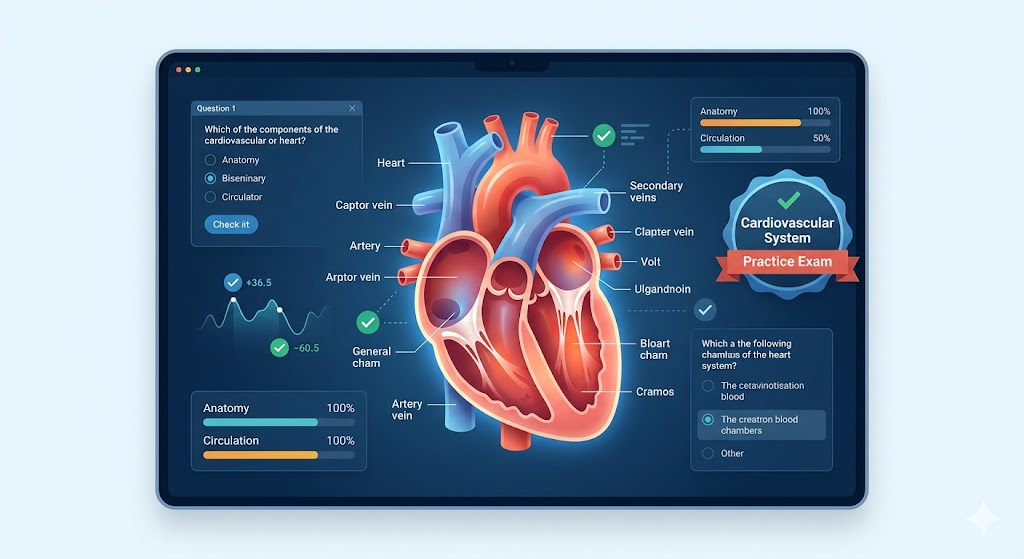
Additional Information
What the Course Entails and Exam
Details
To succeed on this practice exam and in your future career,
you must demonstrate mastery across several core domains.
The primary focus is comprehensive heart anatomy, requiring
detailed identification of the four chambers, valves (atrioventricular and
semilunar), and major vessels (aorta, vena cava, pulmonary artery/vein).
Furthermore, you must grasp heart function, moving from the
mechanical structure to the dynamics of blood pressure, cardiac output, and the
electrical conduction system (SA and AV nodes) that drives the heartbeat.
Finally, the study material covers critical circulatory
pathways, assessing your ability to trace blood flow through both the pulmonary
circuit (to and from the lungs) and the systemic circuit (to and from the rest
of the body).
What to Expect in the Final Exam
While this is a practice environment, it simulates the types
of rigorous tests you will face in your academic program or professional board
exams.
You should expect the material to be presented primarily
through computer-based, multiple-choice questions.
These questions often incorporate detailed diagrams of the
heart, requiring you to drag-and-drop labels or select correct structural
identifications.
In actual academic settings (which this test prepares you
for), you are generally required to achieve a score of 70% to 80% to
demonstrate proficiency.
Depending on the specific final exam you are preparing for,
time limits typically range from 60 to 90 minutes, making timed practice
essential for success.
How to Study and Exam Centers
Preparation for this subject requires dynamic, active
learning rather than passive reading.
Start by taking this practice exam to establish your
baseline score and pinpoint your specific weak areas (e.g., if you consistently
miss questions on the cardiac conduction system).
Create detailed, hand-drawn diagrams and flashcards to
master the pathway of circulation, visualizing the blood’s journey from the
right atrium, through the lungs, back to the left side, and out to the body.
Utilize interactive anatomy apps and 3D models to move
beyond two-dimensional charts.
When you are ready to take your actual academic or
professional certification exam (which this resource prepares you for), testing
will occur at an authorized location.
These exams are usually proctored either through your
academic institution's testing center, standard professional testing portals,
or specific organizations like Pearson VUE, depending on the certification you
seek.
Job Opportunities from the Course
Mastery of the Cardiovascular System is fundamental
knowledge that unlocks a vast array of secure and rewarding healthcare careers.
This core competency is essential for the following
pathways:
Registered Nurse (RN)
Emergency Medical Technician (EMT) or Paramedic
Cardiovascular Technologist
Medical Assistant (MA)
Phlebotomist
Surgical Technologist
Physical Therapist Assistant
Respiratory Therapist
Pre-Medicine Student (Foundational knowledge)
Anatomic Pathology Technician
Frequently Asked Questions
Reviews
5.0
Based on 0 reviews
Leave a Review
No reviews yet. Be the first to review!