
Cayman Islands Public Relations (PR) Practice Test
$69.00
- Buy to unlock unlimited access to all Quiz questions and Answers in this Quiz.
- After purchase you can print a PDF of the whole quiz at any point. The PDF will contain the questions and the correct answers.
About this Exam
The Cayman History & Culture
Practice Test is a comprehensive assessment tool designed for individuals
needing to demonstrate a formalized knowledge of the unique heritage,
traditions, and societal evolution of the Cayman Islands.
This exam is most notably
recognized as a mandatory component for applicants navigating the Permanent
Residency points system, serving as a metric for an applicant’s integration
into Caymanian society.
However, it is also an excellent
resource for educators, tour guides, public servants, and anyone seeking to
deepen their understanding and appreciation of the three islands’ distinct
identity.
Ready to test your knowledge?
Buy Now to Access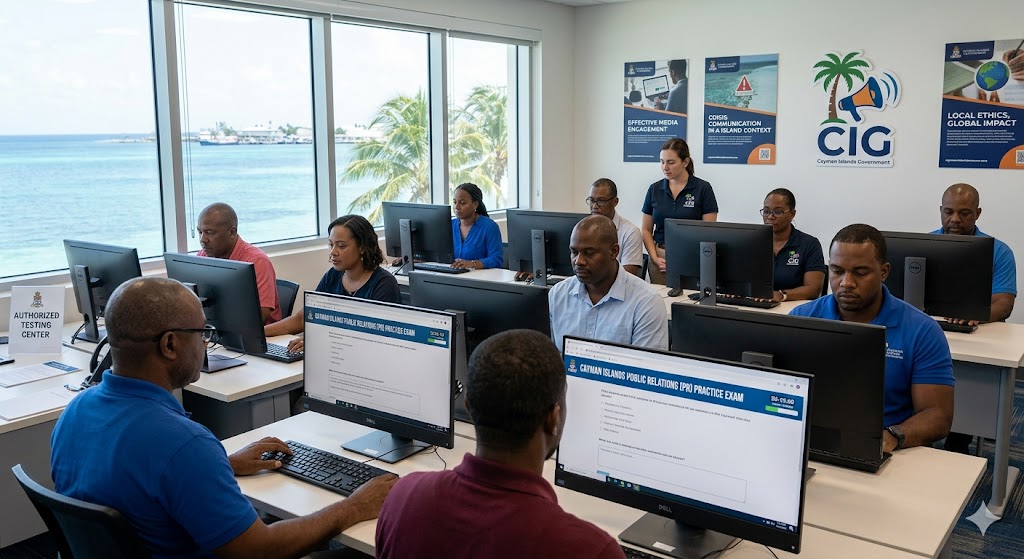
Additional Information
What the Course Entails and Exam Details
This rigorous assessment covers a broad spectrum of topics essential to the Caymanian narrative.
The core pillars of the syllabus include early settlement and demographics, beginning with the initial sightings by Christopher Columbus and subsequent settlement by shipwrecked sailors and former soldiers.
You will explore the evolution of the islands' economy, from the dependency on turtle fishing and mahogany cutting to the development of the modern financial services and tourism sectors.
Political history is also a crucial element, covering the relationship with Jamaica, the path to becoming a separate British Overseas Territory, and the structure of the current government.
Crucially, a significant portion of the exam focuses on "culture," which encompasses national symbols (the coat of arms, flag, national bird, flower, and song), traditional culinary arts, maritime heritage, dialect, and the preservation of customs such as thatch rope making and the annual Pirates Week festival.
What to Expect in the Final Exam
Candidates should prepare for a standardized, objective testing experience.
The official exam is typically a computer-based assessment consisting of 40 multiple-choice questions.
These questions are designed to test recollection of specific dates, names, and landmarks, as well as an understanding of cultural significance and historical context.
The time limit for completing the exam is usually 60 minutes, requiring a steady pace of one and a half minutes per question.
To pass the history and culture component of the Permanent Residency requirement, applicants generally must achieve a minimum score of 80%, meaning you must correctly answer at least 32 of the 40 questions.
How to Study and Exam Centers
Success on this exam requires dedicated study, as the questions often focus on specific, sometimes obscure, historical and cultural details.
Your primary resource should be the official curriculum materials provided by the Cayman Islands National Cultural Foundation (CNCF) and the Department of Worc.
We highly recommend utilizing active recall study methods, such as creating flashcards for national symbols, key historical dates, and significant figures in Caymanian history.
Taking multiple practice tests is essential to familiarize yourself with the question phrasing, identify knowledge gaps, and build the stamina required for the 60-minute time limit.
When you are ready to take the final official exam, you will need to register through the designated government portal.
The exam is administered at authorized testing centers, which often include government training facilities or educational institutions such as the University College of the Cayman Islands (UCCI) on Grand Cayman.
Job Opportunities from the Course
While the primary role of the Cayman History & Culture Test is focused on Permanent Residency acquisition, the knowledge it validates is highly valuable across many career paths.
Demonstrated expertise in local history and culture unlocks unique job opportunities and advantages in several sectors.
Here are specific job paths and titles enhanced by this knowledge base:
• Cultural Heritage Tour Guide
• Museum Curator or Educator (e.g., Pedro St. James, National Museum)
• Hospitality Manager (requiring authentic guest interaction)
• Public Education Teacher (Social Studies or History)
• Public Relations or Communications Officer for Government Agencies
• Immigration and Customs Officer
• Real Estate Agent (specializing in historic properties or community integration)
• Cultural Event Coordinator
Frequently Asked Questions
Reviews
5.0
Based on 0 reviews
Leave a Review
No reviews yet. Be the first to review!