
CDC 4N051 Aerospace Medical Practice Exam
$69.00
- Buy to unlock unlimited access to all Quiz questions and Answers in this Quiz.
- After purchase you can print a PDF of the whole quiz at any point. The PDF will contain the questions and the correct answers.
About this Exam
The CDC 4N051 Aerospace Medical Practice Exam is a critical assessment designed for U.S. Air Force and other military personnel seeking certification as an Aerospace Medical Technician. This examination validates the essential knowledge and skills required to provide primary medical care, preventative services, and specialized support within the unique operating environments of aviation and operational medicine. It is intended for individuals who have completed the necessary training and are looking to advance their careers in aerospace physiology, medical support for aircrew, and operational readiness.
Ready to test your knowledge?
Buy Now to Access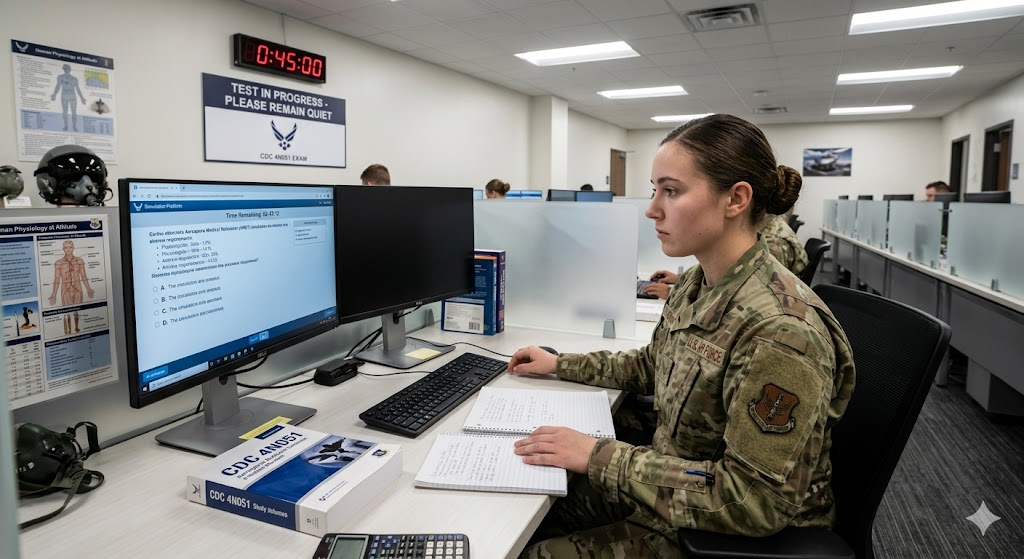
Additional Information
What the Course Entails and Exam Details
The course material covered in the CDC 4N051 Aerospace Medical Practice Exam encompasses a wide spectrum of critical healthcare and operational topics. Students can expect to encounter concepts including:
Human Physiology in Aviation: Understanding the effects of altitude, G-forces, and environmental stressors on the human body is paramount. Topics include hypoxia, hyperventilation, decompression sickness, and spatial disorientation.
Aerospace Medicine Services: Candidates must demonstrate proficiency in administering physical examinations, conducting flight physicals, and managing the unique medical requirements of aircrew.
Preventative Medicine and Public Health: Knowledge of occupational health, sanitation, communicable diseases, and environmental health within operational settings is essential for force health protection.
Operational Medicine and Casualty Care: The exam covers aspects of emergency response, medical logistics, field medicine, and patient transport in challenging environments.
Medical Documentation and Informatics: Proper record keeping, maintaining flight medical records, and utilising military medical systems are crucial for administrative accuracy.
Pharmacology and Medical Equipment: Understanding medication administration protocols and the correct usage and maintenance of aerospace medical equipment is key.
What to Expect in the Final Exam
The final CDC 4N051 Aerospace Medical Practice Exam is typically a comprehensive multiple-choice examination. Here are some key details candidates should be prepared for:
Format: The primary format is multiple-choice questions, which test a broad range of recall, application, and analytical skills across all subject areas.
Passing Score: While specific passing scores can vary slightly by testing cycle and version, candidates generally need to achieve a score of 70% or higher to successfully pass.
Time Limits: There is a defined time limit, often around 3-4 hours, demanding efficient time management and a strong grasp of the material to complete the exam.
Rules and Environment: The exam is typically proctored and taken in a secure testing environment. The use of reference materials, unauthorized electronic devices, or collaboration with others is strictly prohibited.
How to Study and Exam Centers
Preparation for the CDC 4N051 is fundamental to success. Candidates should adopt a multi-faceted study approach and be aware of authorized testing locations:
How to Study:
Review CDC Materials Thoroughly: Your core curriculum (the Career Development Course modules) is the single most important resource. Review and highlight key concepts, terms, and processes in each volume.
Utilize Practice Exams: Incorporating numerous practice exams is crucial. This not only reinforces knowledge but also acclimatizes you to the question format and time pressure. Focus on understanding the rationale behind correct answers.
Group Study: Collaborating with peers can expose you to different perspectives and explanations, helping to clarify complex topics.
Flashcards: Create digital or physical flashcards for definitions, physiological responses to flight, equipment specifications, and protocols.
Hands-on Practice: Where possible, reinforce your learning with practical application during your day-to-day duties or in-unit training.
Exam Centers:
Military Installation Testing Centers: Most candidates will take their final exam at their assigned military installation's dedicated testing and educational center. These secure facilities handle all military-specific examinations.
Pearson VUE (for certain equivalent civilian certifications): While the CDC exam itself is primarily in-house, some related certifications may use Pearson VUE, so always verify specific examination procedures and authorized centers through official military educational channels.
Job Opportunities from the Course
Passing the CDC 4N051 Aerospace Medical Practice Exam unlocks a variety of dynamic and specialized job opportunities within the military healthcare system. A sample of specific job titles and career paths includes:
Aerospace Medical Technician
Operational Medical Technician
Flight Medicine Technician
Independent Duty Medical Technician (IDMT) - with additional training
Aerospace Physiology Technician
Occupational Health Technician
Expeditionary Medical Support (EMEDS) Team Member
Medical Readiness Non-Commissioned Officer (NCOIC)
Physical Exam Manager
I hope this comprehensive guide is highly valuable for your studies and career planning. Good luck with your preparation for the CDC 4N051 Aerospace Medical Practice Exam.
Frequently Asked Questions
Reviews
5.0
Based on 0 reviews
Leave a Review
No reviews yet. Be the first to review!