
CDC Aerial Fire Apparatus Practice Exam
$69.00
- Buy to unlock unlimited access to all Quiz questions and Answers in this Quiz.
- After purchase you can print a PDF of the whole quiz at any point. The PDF will contain the questions and the correct answers.
About this Exam
The CDC Aerial Fire Apparatus Certification is a critical milestone for fire service professionals aiming to advance their careers and take on specialized responsibilities on the fireground. This certification validates a candidate’s proficiency in the safe operation, maintenance, and tactical deployment of complex aerial devices, including ladder trucks, elevating platforms, and water towers. It is specifically designed for experienced firefighters who have completed their basic training and are looking to transition into the demanding role of a Driver/Operator specializing in elevated rescue, ventilation, and master stream operations. This comprehensive program ensures that operators possess the technical knowledge and practical skills necessary to maximize crew safety and operational efficiency during high-consequence incidents.
Ready to test your knowledge?
Buy Now to Access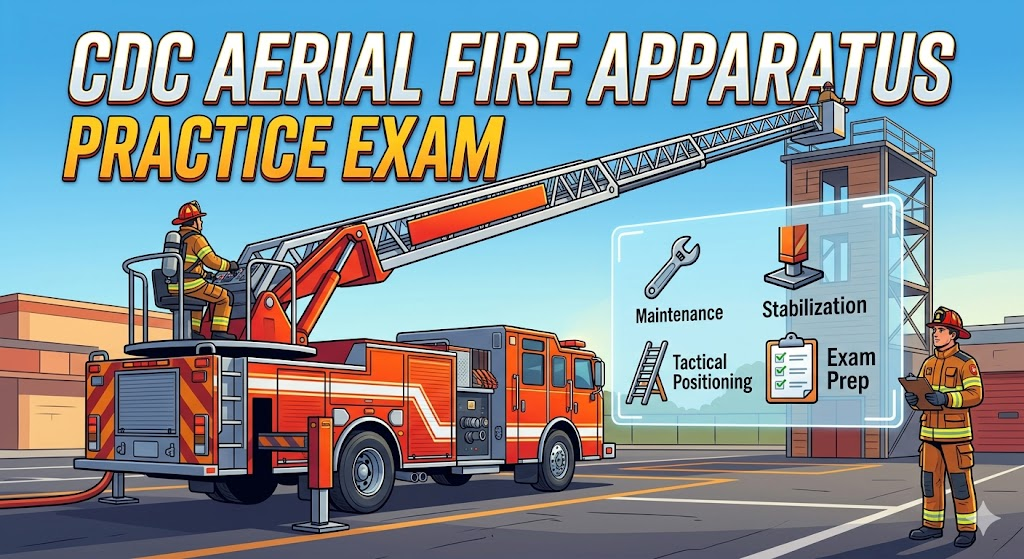
Additional Information
What the Course Entails and Exam Details
A comprehensive course preparing you for this certification covers both fundamental theoretical knowledge and mandatory practical skills derived from NFPA standards. Candidates can expect to delve into detailed studies across several core domains:
Apparatus Familiarization and Systems: You will learn the intricate details of various aerial devices, including detailed studies of hydraulic systems, electrical systems, emergency backup systems, and communication equipment.
Preventive Maintenance and Inspection: The course entails rigorous training on performing visual and operational checks of all vital components to ensure the operational readiness of the apparatus.
Driving and Positioning: Mastering tactical spotting is a key component. You will learn to consider grades, surface conditions, overhead obstructions, building construction, and fireground tactics when positioning the apparatus.
Stabilization Procedures: This area focuses on the safe and proper deployment of outriggers and stabilizers, a crucial step to providing a stable operational platform under varied conditions.
Tactical Operations: Candidates must learn to execute complex maneuvers, including elevated master stream operations, ventilation assistance, and rescue techniques from multi-story structures.
What to Expect in the Final Exam
The final examination for the CDC Aerial Fire Apparatus Certification is split into two distinct and equally demanding parts: a written knowledge exam and a practical manipulative skills evaluation. Both must be successfully navigated to achieve certification.
The Written Exam: The written component consists of a time-limited test, typically containing 75 to 100 multiple-choice questions. These questions are drawn from the comprehensive syllabus, covering maintenance protocols, apparatus design, hydraulic theory, and tactical application. To pass, candidates generally need to achieve a minimum score, often ranging from 70% to 80%, depending on specific jurisdictional requirements.
The Practical Skills Exam: The practical evaluation requires candidates to demonstrate hands-on mastery of the apparatus under the strict observation of evaluators. You will be required to successfully complete several randomized skills from standard skill sheets. Common required skills include performing a detailed pre-trip operational inspection, properly stabilizing the apparatus on an uneven grade, and positioning the aerial ladder to a specific target window within a set time frame. Any failure to meet a mandatory critical safety point during these maneuvers will result in a failure for that specific station.
How to Study and Exam Centers
Preparation is paramount for success in this challenging certification. You should first ensure you have the correct reference material, which is almost always the standard IFSTA Pumping and Aerial Apparatus Driver/Operator Handbook. Develop a structured study plan:
Deep Manual Study: Do not just skim the textbook. Focus intently on chapters covering hydraulic systems diagrams, apparatus stabilization limitations, and standard positioning guidelines.
Utilize Practice Exams: Incorporating a reputable CDC Aerial Fire Apparatus Practice Exam into your routine is vital. Practice exams acclimate you to the testing format and time constraints, helping you identify specific knowledge gaps before the actual test.
Analyze Skill Sheets: Request the exact skill sheet evaluators will use. Familiarize yourself with every required step and mandatory critical point.
Hands-on Practice: There is no substitute for actual seat time. Under supervision, practice stabilizing the apparatus on varied terrain and positioning the ladder to various targets until the motions are second nature.
Finding Exam Centers: The physical CDC Aerial Fire Apparatus written and practical exams are usually administered through authorized state fire training academies or regional training centers. While written exams may sometimes be offered through secure online portals or recognized testing vendors like Pearson VUE, the practical skill evaluation always requires physical presence at a sanctioned facility equipped with the correct apparatus. Consult your department’s training officer to find the nearest authorized location and upcoming testing dates.
Job Opportunities from the Course
Successfully achieving the CDC Aerial Fire Apparatus Certification is a significant career milestone that considerably expands your job opportunities and promotional potential within the fire service. This certification validates specialized technical expertise, often leading to increased compensation and unlocking career paths such as:
Aerial Driver/Operator (Truck Company Operator)
Tillerman (specifically for tractor-drawn aerials)
Fire Engineer
Training Officer specializing in Driver/Operator training
Department Apparatus Maintenance Officer
Safety Officer (focusing on apparatus operations)
Opportunities for promotion to Fire Lieutenant or Captain
By becoming a certified operator, you become an indispensable asset to your department, capable of managing some of the most expensive and tactically versatile pieces of equipment in the modern fire service.
Frequently Asked Questions
Reviews
5.0
Based on 0 reviews
Leave a Review
No reviews yet. Be the first to review!