
Certified Fiber Optics Practice Exam
$69.00
- Buy to unlock unlimited access to all Quiz questions and Answers in this Quiz.
- After purchase you can print a PDF of the whole quiz at any point. The PDF will contain the questions and the correct answers.
About this Exam
The fiber optics industry is critical to modern global
communications, enabling the high-speed data transfer that powers the internet,
telecommunications, and countless industries. The Certified Fiber Optics
certification validates a technician’s knowledge and practical skills in
installing, terminating, testing, and troubleshooting fiber optic networks.
This practice exam is specifically designed for aspiring fiber optic
technicians, network installers, field engineers, and IT professionals who wish
to test their readiness and boost their confidence before sitting for the
official certification exam. It is an essential step for validating expertise
in this essential infrastructure technology.
Ready to test your knowledge?
Buy Now to Access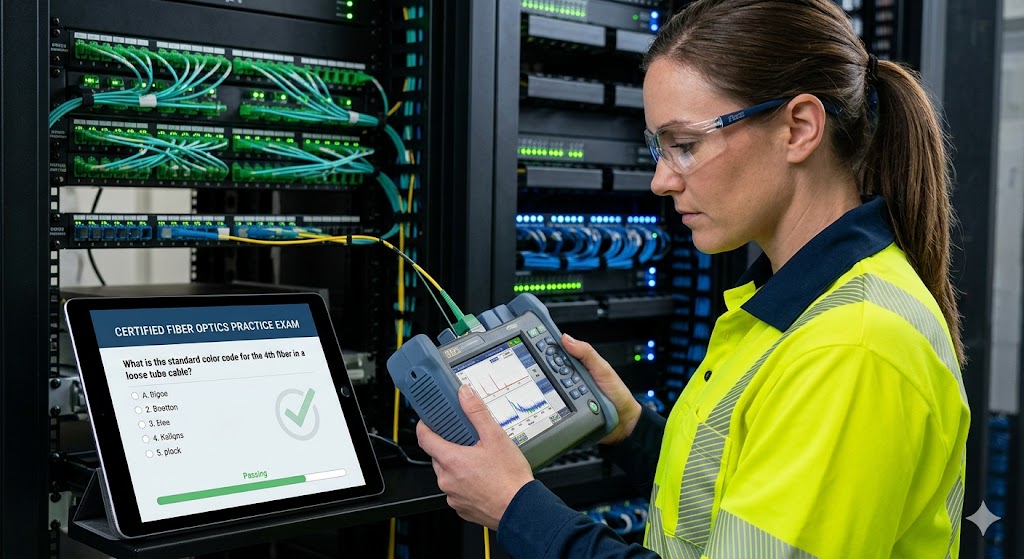
Additional Information
What the Course Entails and Exam Details
This course prepares students for the rigors of the
Certified Fiber Optics exam by focusing on core competencies essential to the
field. The syllabus typically covers fundamental fiber optic theory, different
fiber types (singlemode and multimode), cable construction, and handling best
practices. Key procedural training includes connector termination methods (both
fusion splicing and mechanical splicing), network design basics, and critical
safety procedures. Testing is a massive component, with candidates learning
optical power testing, loss budgeting, and interpreting results from Optical
Time-Domain Reflectometers (OTDRs) and visual inspection equipment. The
practice exam content mirrors these official requirements.
What to Expect in
the Final Exam
While the exact structure of the official Certified
Fiber Optics exam can vary slightly by certifying organization (like the FOA),
it almost universally contains a comprehensive written component that this
practice exam simulates. The practice exam typically presents a series of timed
multiple-choice questions—often around 50 to 100 questions—covering the entire
curriculum described above. A common passing score is 70% or higher, and the
official exam usually has a time limit of 1.5 to 2 hours for the written
portion. Succeeding in the practice exam provides a direct indication of your
ability to succeed on the actual test day under similar timed pressure.
How to Study and
Exam Centers
Effective preparation requires a combination of study and
practical simulation. Start by thoroughly reviewing the official study guide
and manuals provided by your certifying body. Utilize flashcards to memorize
connector types, color codes, safety standards, and key equations like dB loss
calculation. The cornerstone of your preparation should be taking multiple
Certified Fiber Optics Practice Exams to assess your knowledge, review
incorrect answers, and become accustomed to the phrasing and difficulty of the
questions. For the official certification, examinations are usually
administered at authorized testing centers, dedicated vocational schools,
community colleges, or sometimes via secure online proctoring systems provided
by the examining authority.
Job Opportunities
from the Course
Earning a fiber optics certification makes you a highly
desirable candidate in the telecommunications and networking sectors. Employers
actively seek certified individuals to build, upgrade, and maintain essential
data infrastructure.
Potential job titles include:
- Fiber
Optic Technician
- Outside
Plant (OSP) Technician
- Fiber
Optic Splicer
- Field
Service Technician
- Network
Installation Specialist
- Telecommunications
Technician
- Broadband
Infrastructure Technician
- Network
Systems Engineer (with experience)
Frequently Asked Questions
Reviews
5.0
Based on 0 reviews
Leave a Review
No reviews yet. Be the first to review!