
Certified Pediatric Nurse (CPN) Practice Exam
$69.00
- Buy to unlock unlimited access to all Quiz questions and Answers in this Quiz.
- After purchase you can print a PDF of the whole quiz at any point. The PDF will contain the questions and the correct answers.
About this Exam
The Certified Pediatric Nurse (CPN) designation
represents a significant milestone for registered nurses dedicated to providing
exceptional care to children. This certification, administered by the Pediatric
Nursing Certification Board (PNCB), validates a nurse's expertise, commitment,
and proficiency in the specialized field of pediatrics. It is specifically
designed for RNs who have accumulated substantial experience working with
pediatric patients, ranging from infancy through adolescence.
Earning your CPN credential demonstrates your dedication
to evidence-based practice and lifelong learning, ultimately enhancing patient
outcomes and advancing your nursing career. If you are passionate about
pediatric healthcare and seek formal recognition of your skills, the CPN is the
gold standard certification for you.
Ready to test your knowledge?
Buy Now to Access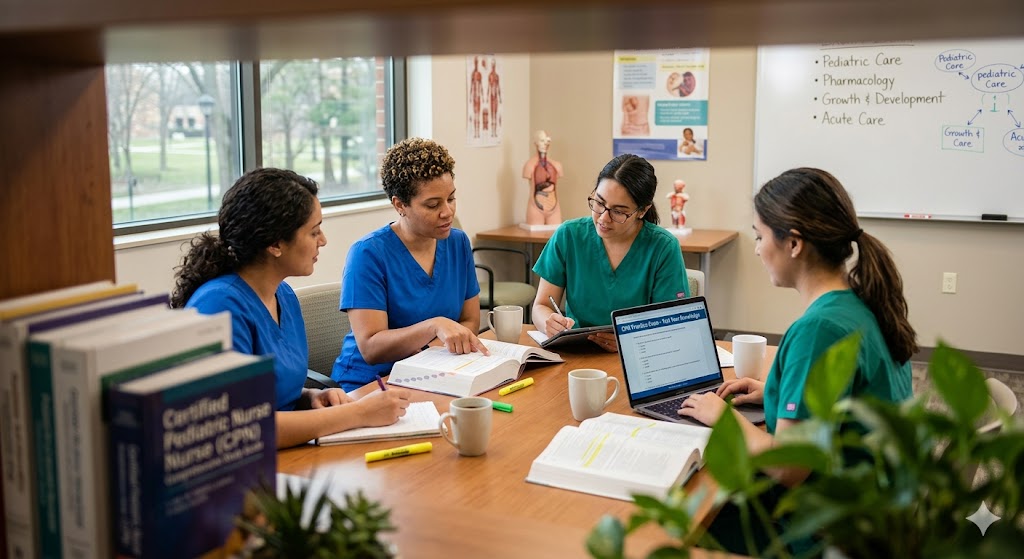
Additional Information
What the Course
Entails and Exam Details
Preparing for the CPN exam requires a thorough
understanding of core pediatric nursing principles. While it's not a single
prescriptive "course," eligibility is based on a combination of your
RN license, pediatric experience, and successful completion of the exam. The
exam content is broadly organized into essential categories:
- Assessment:
Mastery in conducting comprehensive physical, developmental, and
psychosocial assessments of children across different age groups. This
includes identifying normal growth patterns and recognizing subtle signs
of illness.
- Health
Promotion and Management: Expertise in developing and implementing care
plans, administering medications and treatments specifically for pediatric
populations, and managing acute and chronic health conditions common in
children.
- Teaching/Learning:
The ability to educate both patients and their families effectively on
topics like disease prevention, medication adherence, developmental
milestones, and home-care procedures. This involves tailoring
communication to the child’s and family's understanding.
- Professional
Role: Understanding ethical and legal considerations in pediatric nursing,
collaborating with the interdisciplinary healthcare team, advocating for
patient rights, and incorporating the concept of family-centered care into
daily practice.
What to Expect in
the Final Exam
The CPN exam is a rigorous computerized assessment
designed to test your critical thinking and application of pediatric nursing
knowledge. Here are key details:
- Format:
The exam typically consists of approximately 175 multiple-choice
questions. It includes both scored questions and a smaller number of
unscored pretest questions, which are used for statistical analysis on
future versions of the test.
- Time
Limit: You will usually be allocated around 3 hours to complete the
examination.
- Passing
Score: The exam is scored using a criterion-referenced method. PNCB
determines a passing score based on the knowledge needed for entry-level
competence. While specific numeric scores can vary slightly between exam
versions, focus on thorough preparation.
- Rules:
You will be required to bring valid identification, and no personal
belongings, study materials, or unauthorized electronic devices will be
allowed in the testing area.
How to Study and
Exam Centers
Effective preparation is the foundation of success.
Create a structured study plan that aligns with the CPN exam content outline.
Here’s a strategic approach:
- Review
Key Resources: Utilize the official CPN Exam Content Outline and Reference
List provided by PNCB as your primary guide. Comprehensive pediatric
nursing textbooks are also essential.
- Utilize
Practice Exams: Practice is invaluable. Online practice exams designed
specifically for the CPN will help you get accustomed to the question
format and identify areas where you need further study.
- Join
Study Groups: Collaborating with colleagues who are also preparing can
offer motivation, allow you to discuss complex topics, and share study
strategies.
- Focus
on Application: Instead of just memorizing facts, practice applying
pediatric nursing principles to various clinical scenarios.
Where to Take the Exam: The CPN exam is typically
administered through Prometric, a global leader in computer-based testing. They
have an extensive network of professional testing centers across the United
States and internationally. You can easily locate and schedule your exam at a
convenient Prometric site through their online portal after completing the CPN
application process and receiving eligibility.
Job Opportunities
from the Course
Earning your CPN certification opens doors to advanced
roles and enhanced career opportunities within the dynamic field of pediatrics.
Specific job titles and settings include:
- Pediatric
Staff Nurse (Inpatient Units - Med/Surg, PICU, NICU)
- Pediatric
Emergency Room Nurse
- Pediatric
Outpatient/Clinic Nurse
- Pediatric
Home Health Nurse
- Pediatric
Care Coordinator/Case Manager
- Lead
Pediatric Nurse/Charge Nurse
- Pediatric
Nursing Instructor/Educator (often with advanced degrees)
- Pediatric
Clinical Nurse Specialist (CNS) (requires graduate education)
- Certified
Pediatric Nurse Practitioner (CPNP) (requires graduate education)
Frequently Asked Questions
Reviews
5.0
Based on 0 reviews
Leave a Review
No reviews yet. Be the first to review!