
Certified Prevention Professional (CPP) Practice Exam
$69.00
- Buy to unlock unlimited access to all Quiz questions and Answers in this Quiz.
- After purchase you can print a PDF of the whole quiz at any point. The PDF will contain the questions and the correct answers.
About this Exam
The Certified Prevention Professional (CPP) designation
represents a high-level, nationally recognized credential in the field of
substance use prevention and public health. This comprehensive certification
validates your expertise, knowledge, and dedication to creating healthier
communities. It is primarily designed for prevention specialists, community
health workers, substance use counselors, public health educators, and other
professionals working directly to reduce the incidence of substance misuse, addiction,
and related problems. Earning the CPP credential demonstrates your competence
across key domains, from planning and evaluation to ethical practice and
communication. It is a powerful statement of your commitment to evidence-based
prevention strategies that make a tangible difference in the well-being of
individuals, families, and society as a whole. This practice exam is your
essential preparatory tool, meticulously designed to mirror the challenges and
knowledge areas of the actual CPP final examination.
Ready to test your knowledge?
Buy Now to Access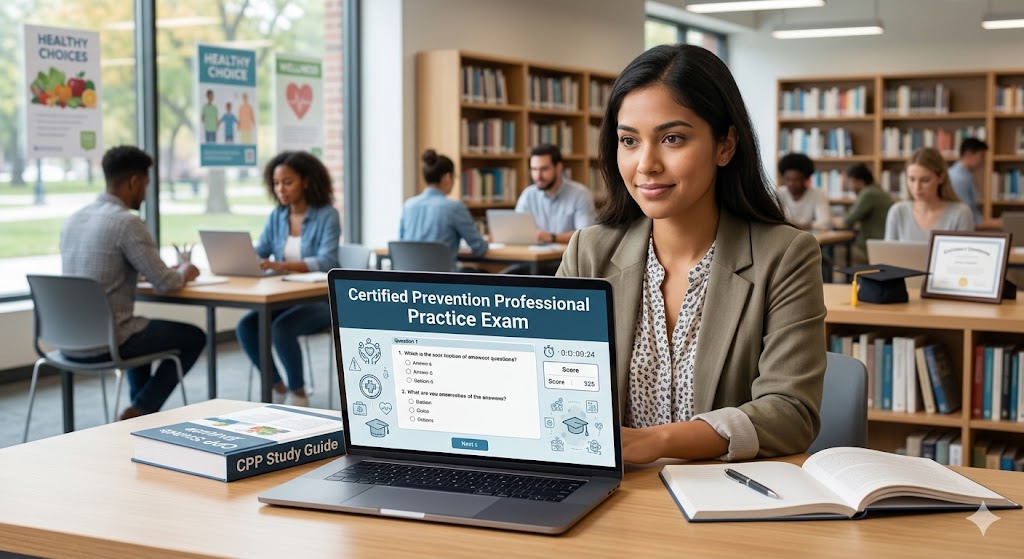
Additional Information
What the Course Entails and Exam Details
This comprehensive practice guide mirrors the core knowledge
domains and skills required for the official CPP certification. The typical
content and structure covered in both the actual exam and this preparation tool
include:
- Planning
and Evaluation: Understanding the fundamentals of needs assessment,
goal setting, program design, and evaluating prevention programs and
initiatives. This domain involves developing logic models, using data for
decision-making, and measuring outcomes effectively.
- Prevention
Education and Service Delivery: Developing and delivering engaging,
age-appropriate, culturally sensitive prevention education and services.
This includes mastering various presentation techniques, understanding
learning styles, and selecting evidence-based programs.
- Communication:
Effective interpersonal, verbal, and written communication in a variety of
contexts, including public speaking, media relations, advocacy, and
collaborating with diverse stakeholders.
- Community
Organization: Understanding community dynamics, mobilizing
stakeholders, building coalitions, and empowering communities to drive
sustainable change. This domain covers strategies for engagement,
leadership development, and cross-sector collaboration.
- Public
Policy and Environmental Change: Identifying and understanding
policy-level interventions, understanding the legislative process,
advocating for policy changes, and implementing strategies that address
environmental and social determinants of substance misuse.
- Professional
Growth and Responsibility: Adhering to professional ethics,
understanding relevant laws and regulations, maintaining confidentiality,
demonstrating cultural humility, and committing to continuous professional
development. This section evaluates your commitment to ethical practice
and ongoing learning.
Mastering these domains equips you with the full spectrum of
skills required for a successful and impactful career as a prevention
professional. The actual exam, which this practice exam simulates, requires
candidates to demonstrate applied knowledge and critical thinking rather than
simple recall.
What to Expect in
the Final Exam
The actual final examination for the Certified Prevention
Professional designation is typically a computer-based, multiple-choice
assessment, often administered through authorized testing centers like Pearson
VUE or specialized board portals. Candidates generally face approximately 100
to 150 multiple-choice questions designed to test both theoretical
understanding and practical application of prevention principles across the
tested domains. While the specific passing score requirements can vary by the specific
certifying board (e.g., your state’s certification board or a larger,
potentially international body), a score of 70% to 75% or higher is commonly
required to achieve certification. The official time limit is usually set at
approximately two to three hours, which should be carefully managed to ensure
all questions can be reviewed. Candidates must typically wait for official
scaled score results, which can take several weeks, although a tentative score
might sometimes be provided immediately at the test center. Electronic devices,
study materials, and unauthorized aids are strictly prohibited during the exam,
and valid government-issued identification is required for entry. Practicing
with our practice exam, which closely mirrors the actual exam's format and
level of difficulty, will significantly reduce anxiety and improve your
preparedness for the real final experience.
How to Study and
Exam Centers
Effective study and meticulous planning are vital for
success on the CPP final examination. We recommend developing a structured
study schedule that allocates ample time to each tested domain, focusing
additional attention on your identified weak areas. Utilize diverse learning
resources, including official study guides provided by your certifying board,
textbooks on prevention science, online courses, and relevant professional
development workshops. A key strategy is to use high-quality practice exams,
like this one, to simulate the actual test conditions. Take the practice
exam multiple times, analyze your performance, review incorrect answers and
explanations, and focus your revision accordingly. Forming a study group with
colleagues preparing for the exam can also be beneficial, providing
opportunities for discussion, clarification, and mutual support. Understand the
exam rules, requirements, and logistics well in advance, and dedicate your
final study sessions to reviewing key concepts, definitions, and ethical
principles.
The actual final examination is typically not taken
online but rather at designated testing centers, commonly affiliated with a
large-scale administrator like Pearson VUE or specific organizations authorized
by your state or national certification board. Some boards might also utilize
specialized test administrators like ISO Quality Testing, where candidates
receive registration details and choose a preferred location and time for their
appointment. To find the correct examination process and centers, you must
first register and be approved by the specific state, provincial, or
international prevention certification board governing your region. Following
application approval, you will receive instructions on how to schedule your
exam, which will usually involve selecting a convenient testing center and
appointment time from their available options. Always verify specific
scheduling procedures and center locations directly with your specific
certifying body.
Job Opportunities
from the Course
Earning the Certified Prevention Professional (CPP)
certification unlocks a diverse range of rewarding career paths and
significantly enhances your job opportunities and earning potential in the
growing field of public health and prevention. The specialized knowledge and
validated competence demonstrated by the CPP credential make you a highly
valued asset to many employers, including public health departments, non-profit
organizations, community health centers, educational institutions, government
agencies, and substance misuse treatment and prevention programs. Some of the
common job titles and career paths this certification opens include:
- Prevention
Specialist
- Public
Health Educator
- Substance
Abuse Prevention Coordinator
- Community
Health Worker / Community Organizer
- Youth
Prevention Coordinator / Specialist
- Mental
Health Promotion Coordinator
- Program
Manager / Director (within public health/prevention)
- Grant
Writer (specializing in public health/prevention funding)
- Prevention
Educator / Presenter
- Public
Health Researcher / Data Analyst (related to prevention outcomes)
- Clinical
Supervisor (with prevention focus for multi-disciplinary teams)
- Coalition
Coordinator / Leader
Frequently Asked Questions
Reviews
5.0
Based on 0 reviews
Leave a Review
No reviews yet. Be the first to review!